
Why Immigrants Build Resilient Mindsets That Last
Immigrants build resilient mindsets because adversity, by necessity, becomes a classroom. The moment someone leaves everything familiar and steps into cultural uncertainty, they begin developing psychological tools that most people never need to sharpen. Optimism, tolerance for ambiguity, cognitive reframing, and a fierce future orientation are not personality quirks. They are survival adaptations. And they compound into something extraordinary.
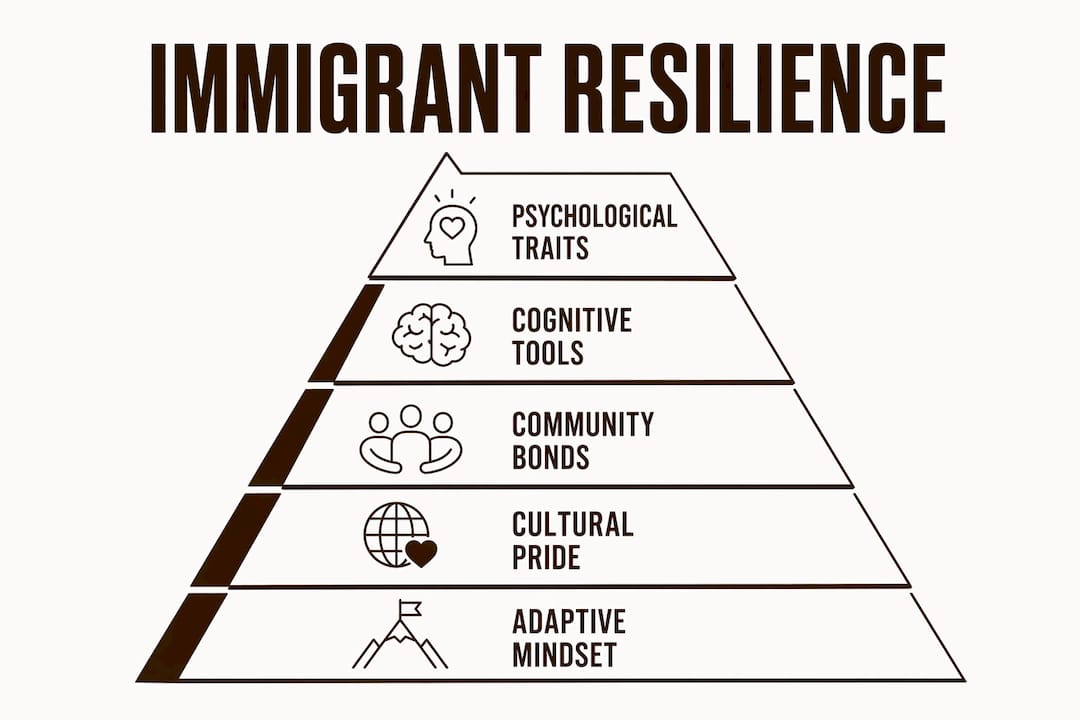
Key drivers of immigrant resilience:
- Cognitive reframing: Viewing hardship as temporary and relative, not permanent
- Self-efficacy: A deep belief that effort produces outcomes, regardless of starting conditions
- Future orientation: Goal-setting anchored to a vision, not current circumstances
- Prosocial behavior: Building genuine community ties that protect mental health
- Cultural pride: Ancestral identity as a source of strength, not nostalgia
Table of Contents
- Why immigrants build resilient mindsets: the psychological foundation
- How cognitive reframing and social bonds protect immigrant mental health
- Balancing immigrant work ethic with protecting your mindset
- How Mrhappinessofficial embodies the immigrant resilience mindset
- How past trauma and adversity forge lasting resilience
- How discrimination shapes coping mechanisms and builds resilience
- Key Takeaways
Why immigrants build resilient mindsets: the psychological foundation
A recent study found that curiosity, confidence, need for achievement, self-efficacy, tolerance for ambiguity, risk-taking propensity, innovation, and optimism together explain 54.39% of entrepreneurial success differences among migrant entrepreneurs. That proportion shows that mindset, not capital or connections, is the primary variable.
Migration researchers describe the immigrant mindset as a high-stakes adaptation to cultural uncertainty. Old status markers disappear. Credentials may not transfer. The social script resets to zero. What fills that void is continuous learning and a recalibrated sense of self-worth built from the inside out.
First-generation entrepreneurs also carry a heightened tolerance for risk paired with strategic decision-making. Without inherited resources or family mentors, every decision carries real weight. That pressure sharpens judgment rather than paralyzing it.
Key psychological traits that drive immigrant resilience:
- Distress tolerance: The ability to sit with discomfort and mine it for information rather than escape it
- Cognitive flexibility: Holding two contradictory realities at once, respecting the past while refusing to be limited by it
- Need for achievement: An internal drive that does not depend on external validation
- Optimism: Expecting positive outcomes even when the evidence is mixed
How cognitive reframing and social bonds protect immigrant mental health
Cognitive reframing is the practice of interpreting an undesirable situation as temporary or relative rather than permanent and defining. For immigrants, it transforms hardship into purpose. Research on undocumented Latinx immigrants identifies five reframing tools: optimism, relativity, impermanence, future focus, and spirituality. Together, they build hope in conditions that could otherwise produce despair.

Social connection runs parallel to that internal work. International Journal of Public Health research identifies prosocial behavior and active social inclusion as modifiable resilience factors, shifting the narrative from passive victimhood to proactive contribution. Belonging is not a comfort. It is a health outcome.
Cultural and ancestral pride adds another layer. Studies among Latinx immigrants show that cultural pride protects self-esteem and increases positive emotions during hardship. The stories passed down through generations carry ingenuity, bravery, and gratitude as inherited tools.
Pro Tip: Build social capital through genuine empathy, not transactional networking. Show up for your community before you need anything from it. That investment compounds in ways that no professional contact list can replicate.
Balancing immigrant work ethic with protecting your mindset
The immigrant work ethic is real. So is its shadow side. Psychologists note that the same drive that fuels extraordinary achievement can slide into an unhealthy scarcity mindset, one that gets passed down through generations long after the original conditions of scarcity have disappeared.
Overworking syndrome looks like productivity from the outside. Inside, it is fear wearing a work schedule. The distinction matters because one builds toward a vision and the other runs from a wound.
How to tell the difference:
- Productive effort is aligned with a clear goal and has defined stopping points
- Reactive overwork is driven by anxiety and has no finish line
- Scarcity mindset treats rest as a threat rather than a resource
- Mindset protection means guarding mental bandwidth as deliberately as financial assets
Resilient immigrants treat their mindset as a first-generation asset worth protecting. They develop what psychologists call selective deafness to external skepticism, tuning out naysayers while remaining open to genuine mentorship. That filter is not arrogance. It is survival.
How Mrhappinessofficial embodies the immigrant resilience mindset
Mrhappinessofficial was built on exactly this premise. Special is not priced, labeled, or given by the world. It is who you are. That is not a marketing line. It is the same internal conviction that carries immigrants through their hardest years.
The brand’s apparel functions as wearable reminders of that conviction. The “Mindset Over Opinion” Pants say it plainly. The “Mind Over Noise” Joggers say it every morning when you put them on. The Happiness Set pairs both into a daily ritual of identity affirmation.
Pro Tip: Use mindset-focused apparel as a physical anchor. What you wear signals to yourself, before anyone else, who you are choosing to be that day. Make the signal deliberate.
Mrhappinessofficial is not about chasing attention. It is about identity. Confidence. Self-worth. Wear the Reminder.
How past trauma and adversity forge lasting resilience
Adversity does not automatically produce resilience. What produces resilience is the meaning made from adversity. Research on immigrant communities shows that individuals who reflect on past challenges, extract lessons, and reframe those experiences as proof of capability develop stronger self-perception and greater psychological endurance.
The process is not passive. It requires courage and flexibility, paired with acceptance. Undocumented immigrants studied across 15 interviews demonstrated six active coping strategies: cognitive reframing, behavioral adaptability, acceptance, sociability, courage, and ancestral pride. Trauma, when processed rather than suppressed, becomes a reference point for future strength.
Resilience is a learned framework, not an innate trait. That distinction matters because it means anyone who has faced real adversity already has the raw material.
How discrimination shapes coping mechanisms and builds resilience
Discrimination is one of the most consistent stressors immigrants face, and it does not disappear with time or achievement. What changes is the coping architecture built around it.
Immigrants who develop cognitive flexibility learn to separate identity from outcome. A rejection, a biased interaction, or a closed door becomes data rather than a verdict. That reframe is not denial. It is a deliberate psychological tool that protects mental bandwidth for what actually matters.
Community merchandise and shared cultural identity also serve as buffers against the isolation discrimination creates. Belonging to something larger than individual experience reduces the psychological weight of systemic exclusion. The goal is not to ignore discrimination but to refuse to let it define the ceiling.
Key Takeaways
Immigrant resilience is a learned, active framework built from psychological traits, cognitive tools, and community bonds, not a fixed personality type.
| Point | Details |
|---|---|
| Mindset explains outcomes | Eight psychological traits account for 54.39% of entrepreneurial success differences among migrant entrepreneurs. |
| Cognitive reframing is protective | Viewing hardship as temporary and relative transforms adversity into purpose and long-term resilience. |
| Prosocial behavior builds health | Active social inclusion and community contribution are modifiable factors that directly support immigrant mental wellbeing. |
| Work ethic needs a boundary | The immigrant drive can become scarcity mindset; protecting mental bandwidth is as critical as financial discipline. |
| Identity is the foundation | Cultural pride and ancestral strength are active resilience tools, not sentimental attachments. |