
Unisex Größen: Sizing Guide With Conversion Charts
Unisex sizes are letter sizes (XS to XXL) built around chest and hip ranges rather than a specific gender. If your bust measures 98 cm, you land in Unisex M, roughly equivalent to Damen 40/42 or Herren 48/50.
Who should adjust from the standard chart:
- Women with narrow shoulders often size down one letter for a closer fit.
- Taller readers (over 180 cm) usually size up for sleeve and torso length.
- Anyone chasing an oversized streetwear look should pick one size above their measured result, not their usual number.
Pro Tip: Grab a hoodie or tee you already love, lay it flat, and measure it. Compare that number against the chart below before you buy anything new.
Key Takeaways
Unisex sizing works when a reader measures chest, waist, and hip against a brand’s own chart rather than guessing from a generic letter label.
| Point | Details |
|---|---|
| Measure before you shop | Chest for tops, hip and waist for bottoms, always with a soft tape measure. |
| Use the XS to XXL chart | A 98 cm chest lands in Unisex M, roughly Damen 40/42 or Herren 48/50. |
| Adjust for fit preference | Size down for a fitted look, size up for an oversized streetwear silhouette. |
| Check the brand’s own table | Letter sizes like “M” shift by several centimeters between labels. |
| Mrhappinessofficial fits true to chart | Oversized tees run roomy by design; the Signature Zip Hoodie follows standard unisex proportions. |
Table of Contents
- What Does Unisex Sizing Actually Mean?
- Unisex Size Chart: XS to XXL in Centimeters
- How to Measure Yourself Correctly
- Converting Unisex Sizes to Damen and Herren Numbers
- Smart Shopping Tips to Avoid a Return
- How Mrhappinessofficial Approaches Unisex Fit
- Ready to Shop Mrhappinessofficial Unisex Sizes?
- Frequently Asked Questions
- Sources
What Does Unisex Sizing Actually Mean?
Unisex means the garment isn’t cut for a specific gender. Instead of separate Damen and Herren blocks, the brand builds one pattern around a shared range of chest and hip measurements, then labels it with a letter size from XS through XXL.
Sport brands, streetwear labels, and basics lines lean on unisex sizing for a simple reason: it cuts inventory complexity and lets anyone shop the same rack like the Head Motion Unisex Sweatshirt that exemplifies product-specific size charts and fit guidance. That’s part of why inclusive letter sizing has become the default for hoodies, tees, and joggers rather than a niche choice.
Who this setup works well for:
- Anyone building a layered or oversized look, where a boxier unisex cut is the point.
- Couples or friends who want to shop the same rack without hunting separate sections.
- Shoppers who prioritize a relaxed silhouette over a tailored one.
If you want a closer, more shaped fit, always check the brand’s own conversion notes first. Pro Tip: Read the product’s fit description before you check out. “Oversized” and “relaxed” mean something different from “slim” or “true to size,” even within the same brand’s unisex line.
Unisex Size Chart: XS to XXL in Centimeters
Here’s the practical breakdown most unisex streetwear and sportswear brands build from. Chest is the primary reference for tops; hip and waist matter more for joggers and shorts.
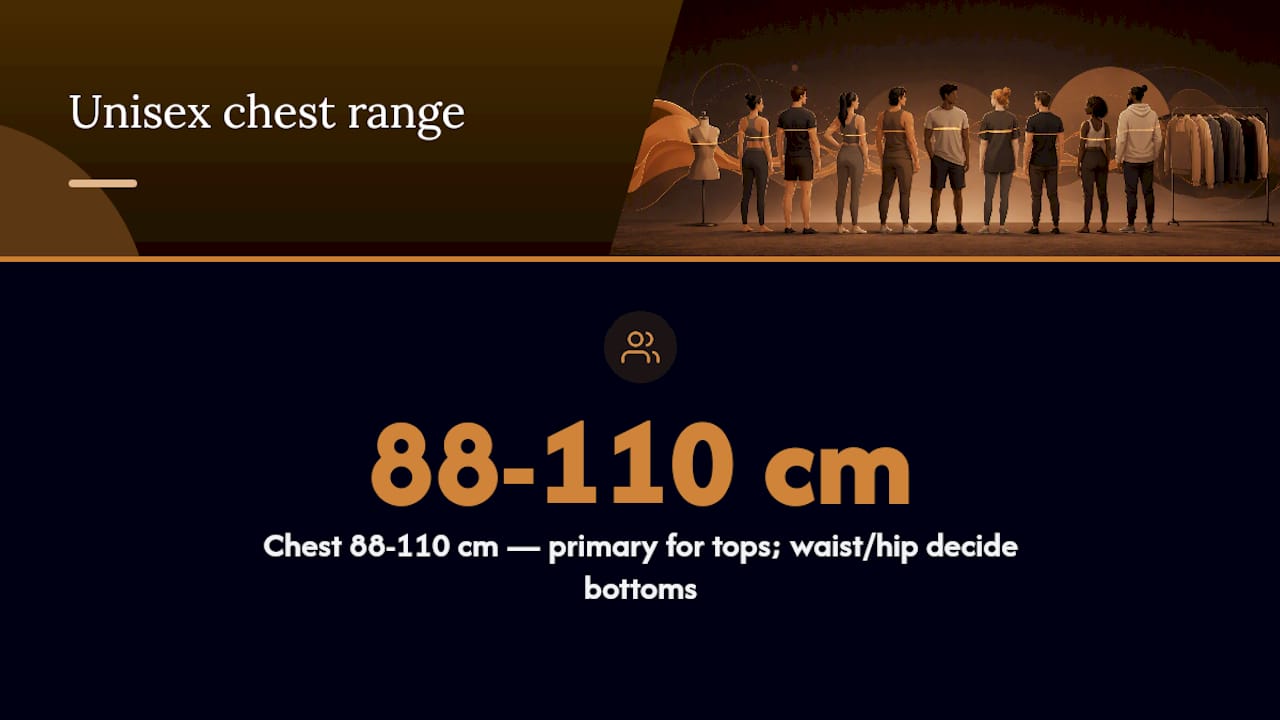
These chest measurements, running from 88 cm at XS up to 110 cm at XXL, form the backbone of most letter-size charts you’ll see across sport and streetwear labels. A chest measurement in that mid-range commonly corresponds to Unisex M on many charts following this convention.
A few things move the numbers around. Knit fabrics with spandex or elastane stretch more than heavyweight cotton, so a “true” M in a stretchy blend can fit like an S in stiff, heavyweight fleece. Style matters just as much: an oversized hoodie is drafted with extra room baked in, while a slim tee follows the body closely. Two garments labeled M from two different brands can differ by several centimeters at the chest.
For tops, measure your chest first and treat waist and hip as secondary checks. For joggers, shorts, and pants, flip that priority. Hip and waist become the numbers that decide whether the garment actually fits, and chest becomes close to irrelevant.
How to Measure Yourself Correctly
Getting an accurate read takes about two minutes with a soft tape measure. Follow these steps in order:
- Measure your chest: wrap the tape across the fullest point of your chest, under your arms and across your shoulder blades. Keep the tape level and snug, not tight, and breathe normally as you read the number.
- Measure your waist: find your natural waistline, usually just above your belly button, and wrap the tape around without pulling it tight.
- Measure your hips: stand with your feet together and measure around the widest part of your hips and backside.
- Measure your inseam (schrittlänge) for pants: measure from your crotch straight down the inside of your leg to your ankle bone. If you’re comparing to a pair of pants you already own and love, lay them flat and measure the inner seam directly instead.
When your own measurements fall between two chart sizes, size up if you prefer a relaxed or oversized fit, and size down if you want something closer to the body.
Pro Tip: Measure over thin, form-fitting clothing rather than bare skin or bulky layers, and take each measurement twice. A half-centimeter difference between attempts is normal; more than that means the tape slipped or wasn’t level.
Converting Unisex Sizes to Damen and Herren Numbers
Unisex letter sizes map to German numeric sizing on a rough but useful scale. Unisex M generally lines up with Damen 40/42 and Herren 48/50, with the rest of the chart shifting proportionally above and below that anchor point.
Worked examples:
- Chest 94 cm → Unisex S → close to Damen 38/40, Herren 46/48.
- Chest 98 cm → Unisex M → close to Damen 40/42, Herren 48/50.
- Chest 106 cm → Unisex XL → close to Damen 44/46, Herren 52/54.
Brands don’t apply this mapping identically, and conversions shift by region and label, so treat these as a starting estimate rather than a guarantee. A woman who wants a fitted silhouette in a unisex cut typically does better sizing down one letter from her converted equivalent. A man layering a hoodie over a sweater often benefits from sizing up instead of trusting the base conversion.
Pro Tip: Before trusting any general conversion chart, check the specific brand’s own size table. A 2 to 4 centimeter gap between two brands’ “same” size is common enough to cause a return.
Smart Shopping Tips to Avoid a Return
A little prep before checkout saves you the hassle of a swap later. Run through this checklist:
- Measure yourself (or a garment you already own) before you shop.
- Cross-check your number against the brand’s own size table, not a generic chart.
- Read the fit notes. “Oversized,” “relaxed,” and “true to size” describe genuinely different cuts.
- Check the fabric. Heavyweight cotton behaves differently than a stretch blend.
- Confirm the return policy before you buy, especially for a first order from a new brand.
International labels trip people up more than any other factor. An “M” from one country’s chart can land closer to an “S” or “L” elsewhere, and manufacturer size tables remain the most dependable reference precisely because generic conversion charts can’t account for every brand’s quirks. Tops and bottoms from the same brand don’t always run the same either, so don’t assume your tee size guarantees the right jogger size.
Trying in person? Bring the garment you already know fits well, and test range of motion: raise your arms, reach forward, sit down. Check where the shoulder seam falls and whether the sleeve hits past your wrist.
Pro Tip: If you’re stuck between two sizes, order both and use the return window to decide. It costs a little more upfront but almost always beats guessing wrong twice.
How Mrhappinessofficial Approaches Unisex Fit
Mrhappinessofficial builds its streetwear around unisex letter sizing on purpose. One chart, one fit language, no separate men’s and women’s blocks to second-guess.
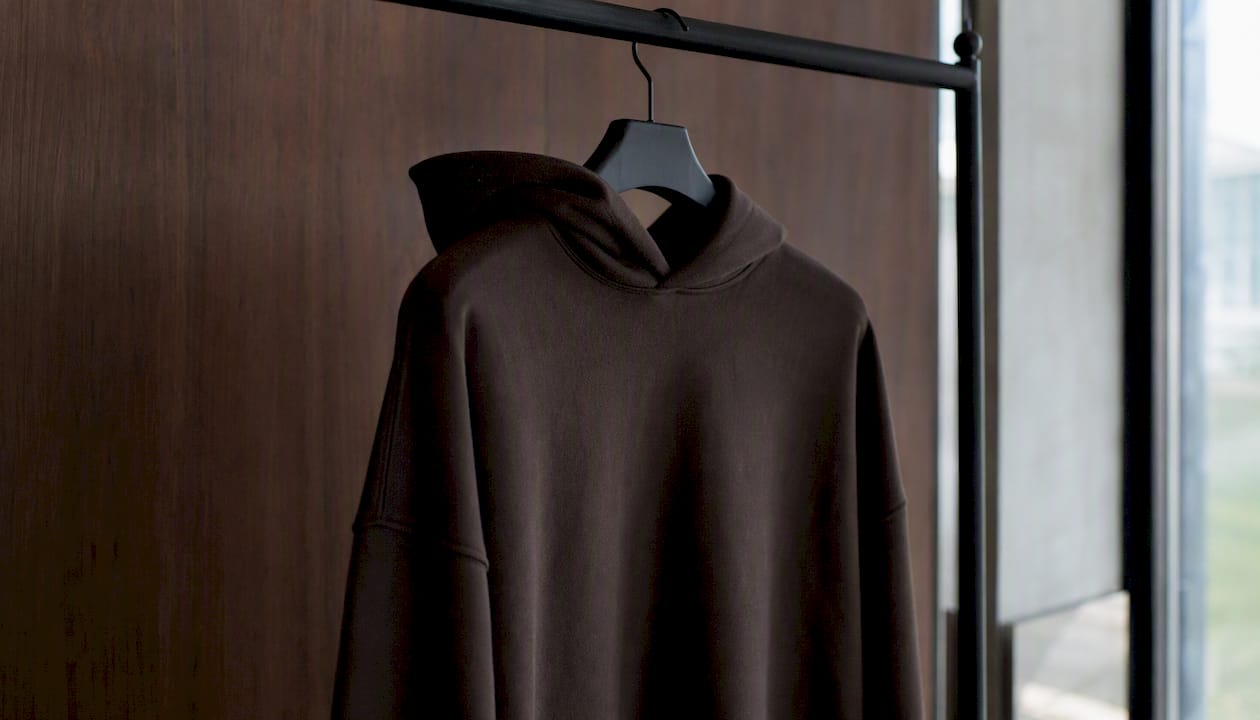
Our oversized tees and tanks run intentionally roomy. If you want that boxy streetwear silhouette, order true to your measured size. Prefer something closer to the body? Size down on the oversized cuts, while our Signature Zip Hoodie fits closer to standard unisex proportions.
Ready to Shop Mrhappinessofficial Unisex Sizes?
Mrhappinessofficial builds every hoodie, tee, and jogger on the same unisex chart, so you measure once and shop the entire collection with confidence.
Start with the Statement Oversized T-Shirt if you want that boxy, relaxed streetwear cut, sized true to your chest measurement. Want something with a bit more structure? The Signature Zip Hoodie and Mind Over Noise Joggers both follow standard unisex proportions, so size down slightly if you prefer a fitted look rather than a relaxed one.
Every product page carries its own size notes next to the chart, and if a size still misses the mark once it arrives, our return policy gives you room to swap it. Browse the full Signature Collection and measure once before you check out. It’s the one step that turns a guess into a garment you’ll actually wear.
Frequently Asked Questions
What does unisex size mean exactly? It means the garment is cut on one pattern for all body types, sized by letter (XS to XXL) instead of separate Damen and Herren numbers.
Is unisex M the same as a men’s medium? Not exactly. Unisex M typically runs closer to Herren 48/50 in the German numeric system, which is often close to but not identical with a standard men’s medium.
Should I size down as a woman buying unisex streetwear? If you want a fitted rather than relaxed look, sizing down one letter is a common recommendation. For oversized styles, buy true to your measured size instead.
How do I know if a garment is oversized versus true to size? Check the product’s fit notes on the listing. Oversized pieces are cut with intentional extra room, so ordering your measured size still produces a loose, roomy fit.
Sources
- ᐅ So sind die Unisex-Größen definiert
- Unisex‑Größen | U | Glossar | outdoortrends
- Kleidergröße bestimmen: Größentabellen nutzen, umrechnen & messen