
Streetwear Layering: Outfit Formulas to Copy Now
Streetwear layering runs on a three-layer system: base, mid, outer. Get those three right and every outfit you build will balance warmth, silhouette, and attitude without looking like you piled on whatever was clean. The one-sentence checklist: start with a fitted or slightly relaxed base, add a mid-layer that shows at the hem or collar, and finish with an outer shell matched to the temperature.
Quick dos and don’ts:
- Do let at least one layer peek out (hem, collar, or cuff) for intentional depth.
- Do pair one oversized piece with one slim piece to keep proportion clean.
- Don’t stack three oversized pieces unless the silhouette is deliberate and the bottoms are slim.
- Don’t match every fabric weight — contrast is what makes layering read as styled, not stuffed.
Pro Tip: Wear a zip-up as your mid-layer instead of a pullover. Half-zip it to vent heat on the move, close it when you step outside. No bulk, no sweating through your outer.
Key Takeaways
Streetwear layering works when each of the three layers has a clear job: base manages fit and visibility, mid adds warmth and personality, and the outer shell controls weather and silhouette.
| Point | Details |
|---|---|
| Use the three-layer system | Base, mid, outer — each layer needs a function for warmth and for the look. |
| Control proportion deliberately | Pair one slim piece with one oversized piece; let hems and collars show for depth. |
| Match fabric to layer role | Merino or cotton blends at the base; fleece or heavy cotton at the mid; down or coated nylon at the outer. |
| Choose outerwear by weather first | Temperature and precipitation determine the outer type; style and silhouette come second. |
| Mrhappinessofficial as your base and mid | The Signature Zip Hoodie, Statement Oversized Tee, and “Mind Over Noise” Joggers are built to layer and hold their shape across a full season. |
Table of Contents
- How does the 3-layer rule work for streetwear?
- How do you balance silhouette so layering doesn’t look bulky?
- Which fabrics and weights work best for each layer?
- Which outer layer should you pick for the look and the weather?
- Six ready-to-copy outfit formulas for every temperature and vibe
- How do you stay comfortable and mobile in layered streetwear?
- How MR. HAPPINESS pieces fit these layering systems
- Why the rules matter less than the intention behind them
- MR. HAPPINESS picks that build these looks
- Sources
How does the 3-layer rule work for streetwear?
The three-layer approach is the backbone of practical winter dressing, and it maps directly onto streetwear by swapping technical outdoor gear for hoodies, shackets, and puffers. Each layer has a job.
Base layer — sits against the skin, manages moisture, and sets the visual foundation.
- Streetwear picks: fitted tee, longline tee, ribbed turtleneck, thermal henley.
- Visual cue: hem should drop below the mid-layer by at least an inch.
Mid layer — traps warmth and adds the outfit’s personality.
- Streetwear picks: heavyweight hoodie, open-front shacket, chunky cardigan, fleece zip-up.
- Visual cue: collar or neckline should contrast with the base (e.g., hood vs. crew neck).
Outer layer — blocks wind and weather, anchors the silhouette.
- Streetwear picks: puffer, overcoat, parka, leather jacket, windbreaker.
- Visual cue: length and structure define the whole look from ten feet away.
Three quick formulas to copy:
- Casual/skater: White longline tee + washed denim shacket + oversized puffer + straight-leg cargos.
- Minimalist: Black ribbed turtleneck + charcoal zip hoodie + tailored wool overcoat + slim joggers.
- Techwear: Moisture-wicking base tee + quilted vest + technical shell jacket + tapered cargo pants.
Pro Tip: Zip-up mid-layers beat pullovers for temperature control. Unzip two inches and the system breathes; close it and you’re insulated. Pullovers give you one setting.
How do you balance silhouette so layering doesn’t look bulky?
The core rule: one slim layer anchors every look. Pair an oversized outer with slim bottoms, or stack graduated widths from slim at the base to regular at the mid to oversized at the outer. Contemporary winter streetwear consistently pairs relaxed, warm uppers with slimmer bottoms and chunky footwear for exactly this reason.
Proportion rules that hold:
- Length contrast: outer should be noticeably longer or shorter than the mid-layer, not the same length.
- Sleeve fit: if the outer is boxy, the base sleeve should be slim enough to show at the cuff.
- Hem visibility: always let the base or mid hem peek below the layer above it.
- Pant width: wide-leg pants work with a cropped outer; slim pants work with a long outer.
Outfit sketch A (oversized outer, slim bottom): Fitted white tee + heavyweight hoodie (hem visible below jacket) + oversized puffer coat + slim black joggers + chunky sneakers. The coat dominates the upper body; the slim leg keeps it from reading heavy.
Outfit sketch B (slim outer, relaxed bottom): Ribbed turtleneck + slim leather jacket + wide-leg cargo pants + low-profile sneakers. The jacket stays close to the body; the pants carry the volume below the waist.
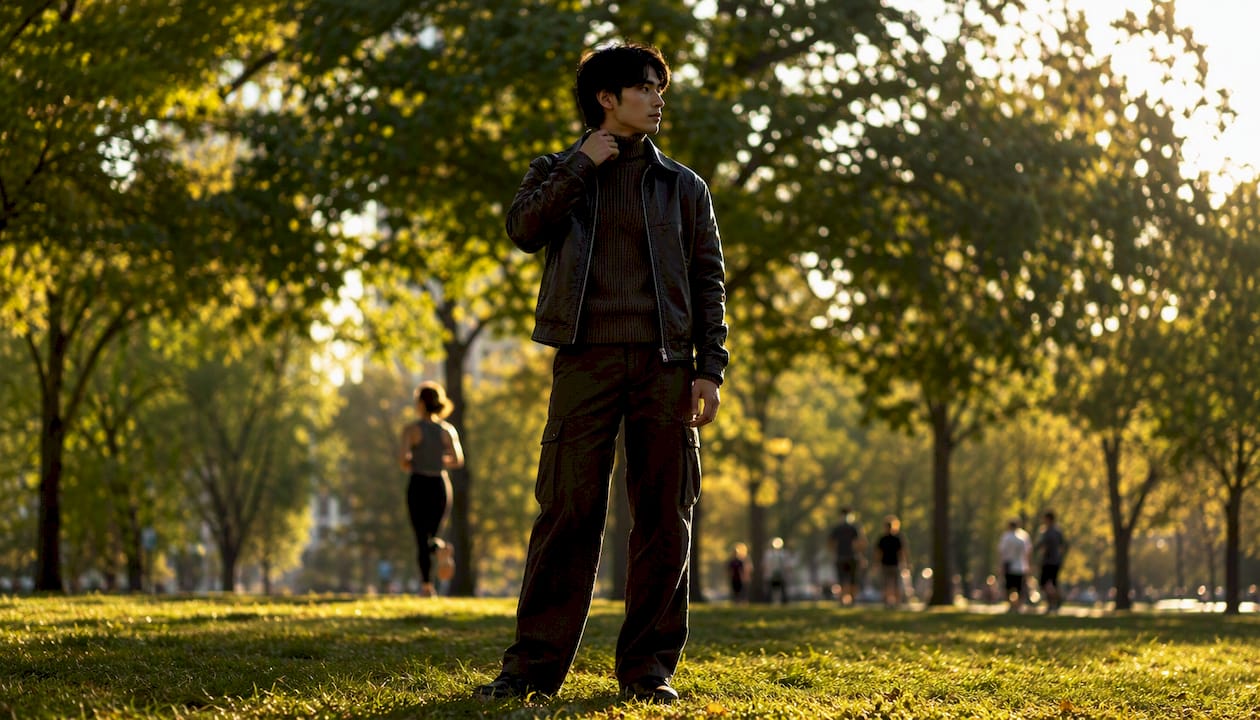
Pro Tip: A single visual break stops the “puffy” read. Tuck the base tee into the waistband, cuff the sleeves once, or add a belt over a long cardigan. One break is enough.
Which fabrics and weights work best for each layer?
Choose low-bulk insulators for the base and mid, structured shells for the outer. The goal is warmth-to-weight efficiency: maximum heat retention with minimum added volume.
Best materials by layer:
- Base: Merino wool (temperature-regulating, odor-resistant, thin), cotton-modal blends (soft, breathable, affordable), or moisture-wicking tech fabrics (polyester blends for high-activity days).
- Mid: Heavyweight cotton fleece (structure + warmth, holds shape), knit wool or acrylic (texture, visual interest), or synthetic fleece (lightweight warmth, compressible).
- Outer: Down or synthetic fill (highest warmth-to-weight ratio), coated nylon or polyester shell (wind and water resistance), wool or wool-blend (structured, elevated, city-appropriate).
| Fabric | Best Layer | Pros | Cons |
|---|---|---|---|
| Merino wool | Base | Thin, regulates temp, odor-resistant | Higher cost |
| Heavy cotton fleece | Mid | Structured, warm, holds shape | Bulky if oversized |
| Down fill | Outer | Best warmth-to-weight | Loses insulation when wet |
| Coated nylon | Outer | Wind/water resistant, packable | Less breathable |
| Wool blend | Outer | Structured, elevated look | Heavier, slower to dry |
Natural fibers like merino and wool breathe better in urban environments where you move between heated interiors and cold streets. Synthetics compress smaller and dry faster, which matters for commuting. Mixing both across your three layers covers all conditions.
Which outer layer should you pick for the look and the weather?
Match the outer shell to the weather first, then fit the shape to the vibe. Different outerwear types suit distinct temperature and aesthetic needs, and choosing by weather before style is what keeps the outfit functional.
Outer layer cheat-sheet:
- Puffer (down or synthetic): Below 35°F. Maximum warmth, bold silhouette. Go oversized for streetwear, cropped for proportion play with wide-leg pants.
- Overcoat (wool or wool-blend): 35–50°F. Smart-casual, city-ready. Pairs with hoodies underneath for the layered-under-coat look.
- Shacket (flannel or heavy cotton): 50–65°F. Transitional weather. Works as a mid-layer or light outer; swap it for an overcoat when temperatures drop.
- Denim jacket: 50–65°F. Classic streetwear. Layer over a hoodie for the hoodie-under-denim formula; add a puffer vest underneath for colder days.
- Parka: Below 30°F with wind or precipitation. Longest coverage, most protection. Tactical aesthetic; pairs well with techwear and cargo bottoms.
- Leather jacket: 40–55°F. Sharp, structured. Best over a slim hoodie or turtleneck; avoid over heavy knits to prevent shoulder bulk.
- Windbreaker: 45–60°F, light rain. Packable, athletic. Excellent as a third layer over a hoodie in mild conditions.
| Temperature | Precipitation | Recommended Outer |
|---|---|---|
| Below 30°F | Snow/wind | Parka or heavy down puffer |
| 30–40°F | Dry or light wind | Puffer (down), heavy overcoat |
| 40–50°F | Dry | Wool overcoat, leather jacket |
| 50–65°F | Light rain | Windbreaker, shacket |
| 65°F+ | Any | Denim jacket, light shacket |
Pro Tip: Layer a slim insulated vest under your outer instead of adding a heavier mid-layer. Core warmth stays high; arms stay mobile and slim. Works especially well under leather jackets and overcoats.
Six ready-to-copy outfit formulas for every temperature and vibe
Six fail-safe formulas. Pick the one that matches your weather and mood, then wear it exactly or swap one piece.
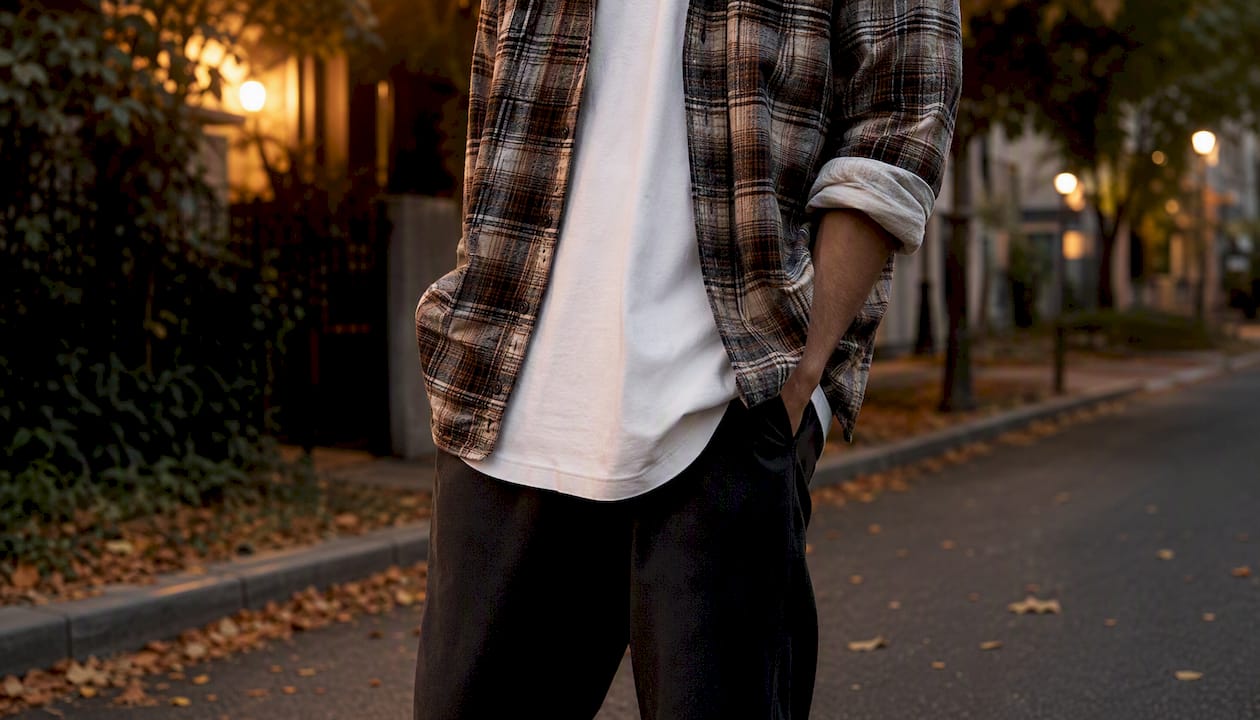
1. Mild (55–65°F) — Casual Everyday Base: white oversized tee. Mid: open flannel shacket. Outer: none needed. Styling note: roll the shacket sleeves once and let the tee hem drop below. Image idea: street-level shot, tee hem visible under open shacket, relaxed stance.
2. Cool (45–55°F) — Minimalist Base: black ribbed turtleneck. Mid: slim zip hoodie (half-zipped). Outer: tailored wool overcoat. Styling note: keep the color palette monochrome; let the turtleneck collar frame the face. Image idea: editorial overhead angle, overcoat open, turtleneck and hoodie layers visible.
3. Cold (30–45°F) — Classic Streetwear Base: heavyweight cotton tee. Mid: oversized pullover hoodie. Outer: oversized down puffer. Styling note: slim joggers or straight-leg pants only; chunky sneakers to ground the silhouette. Image idea: urban backdrop, puffer open to show hoodie, joggers tapered at ankle.
4. Monochrome — Any Temperature Base: white tee. Mid: cream or off-white hoodie. Outer: light gray or stone overcoat. Styling note: vary the texture (cotton tee, fleece hoodie, wool coat) to keep tonal dressing from reading flat. Image idea: clean studio or minimal street backdrop, tonal layers, no logo visible.
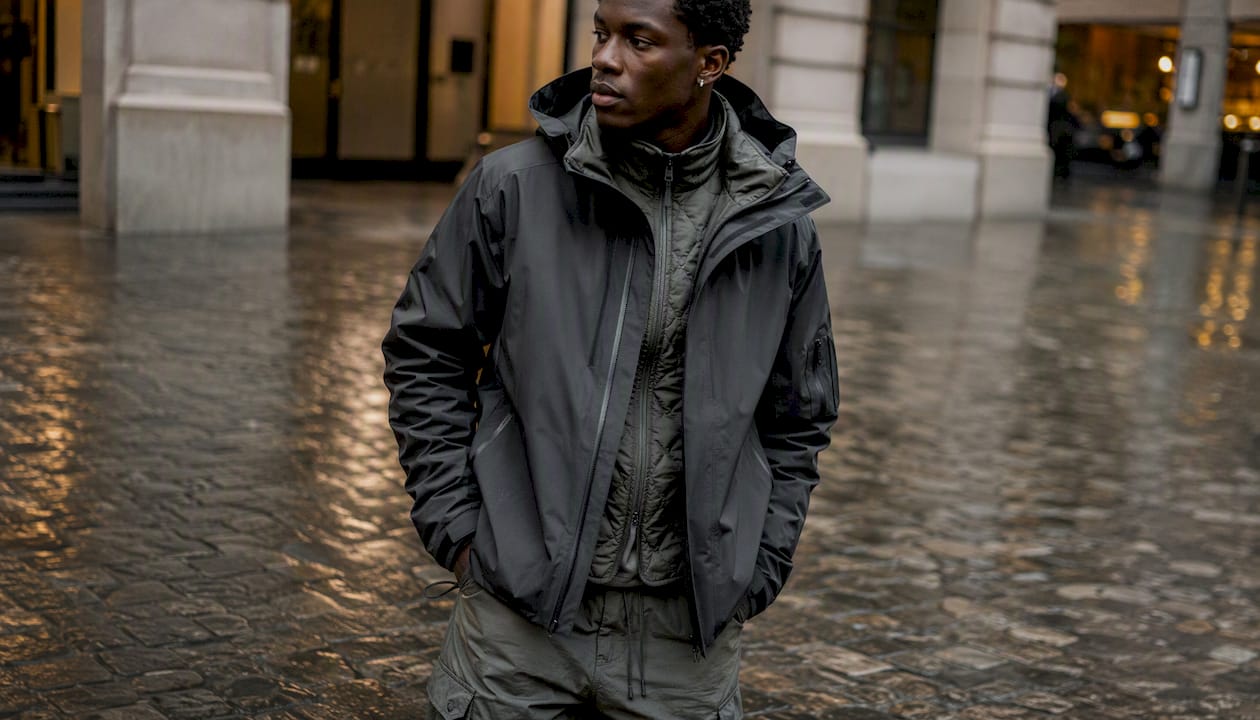
5. Techwear — Cold and Wet Base: moisture-wicking tee. Mid: quilted vest. Outer: technical shell jacket with zip vents. Styling note: tapered cargo pants and trail sneakers complete the utilitarian read. Image idea: wet pavement, shell jacket zipped, vest visible at collar, cargo pockets featured.
6. Retro/90s — Cool to Cold Base: graphic tee or longline tee. Mid: varsity or bomber jacket. Outer: puffer vest over the bomber. Styling note: wide-leg jeans or track pants; color-block the vest against the bomber for maximum 90s energy. Image idea: warm-toned street shot, vest layered over bomber, wide-leg denim, retro sneakers.
Climate-inclusive styling means a single layer swap moves any of these formulas between day and night or warmer and colder conditions. Swap the shacket for an overcoat in Formula 1 when the temperature drops after sunset.
How do you stay comfortable and mobile in layered streetwear?
Plan for movement and microclimates: zip, vent, and stow. The biggest mistake in winter layering is building an outfit that works standing still but becomes a problem the moment you sit on a subway or walk into a heated store.
- Start with zips where possible. Zip-up hoodies and technical shells let you regulate temperature without removing a layer.
- Choose a removable mid-layer. A vest or thin fleece can come off and fold into a bag. Carrying a removable mid-layer preserves warmth options without committing to bulk all day.
- Roll sleeves deliberately. One cuff roll on the mid-layer exposes the base sleeve and breaks up the silhouette.
- Pack a compressible outer. A packable windbreaker or down jacket stows in its own pocket and adds a full layer when needed.
- Check shoulder mobility before leaving. Raise both arms. If the outer restricts movement, size up or choose a different cut.
The 3-3-3 packing rule — three tops, three bottoms, three shoes — adapts well to capsule layering for travel: three pieces that each serve multiple layer roles cover more outfit combinations than six single-purpose pieces.
Pro Tip: A packable down vest weighs almost nothing and fits in a jacket pocket. Wear it under your outer on the coldest part of the commute, stow it when you arrive. Core warmth without the bulk of a full insulated jacket.
How MR. HAPPINESS pieces fit these layering systems
MR. HAPPINESS hoodies, tees, and joggers are built to function as base and mid layers or to stand alone as statement pieces. The heavyweight cotton construction holds structure across multiple wears, which matters when a piece is doing double duty in a three-layer system.
Product roles in the layering system:
- Signature Zip Hoodie: The natural mid-layer. Zip it halfway for ventilation, close it under an overcoat for warmth. The zip construction means it layers cleanly under any outer without bunching at the collar.
- Statement Oversized T-Shirt: The visible base. Sized to let the hem drop below a hoodie or shacket, which creates the intentional length contrast that makes layering look deliberate rather than accidental.
- Reminder Oversized Tee: A graphic base layer that earns its own visibility. Wear it under an open shacket so the graphic reads through the gap.
- “Mind Over Noise” Joggers: The bottom-layer anchor. Slim enough to balance an oversized upper, structured enough to hold a clean silhouette through a full day.
Sizing guidance for layering: Size up one when the piece is a mid-layer worn over a base. True-to-size when it’s a base or a standalone. The oversized cuts are already proportioned for layering, so sizing up on those specifically is rarely necessary.
Pro Tip: Heavyweight cotton holds its shape better than lighter blends when worn under outerwear repeatedly. Less pilling, less compression, longer life in a layering rotation.
Why the rules matter less than the intention behind them
Most layering guides treat proportion rules as laws. They are not. They are defaults — starting points for people who want a reliable outcome before they develop their own eye.
The three-layer system works because it forces a decision at each level: what is this layer doing for warmth, and what is it doing for the look? Once those two questions become automatic, the rules become optional. Monochrome stacks that break the “one slim, one oversized” rule work when the textures are varied enough to create depth. Three oversized pieces work when the silhouette is intentional and the footwear grounds it.
What does not work is randomness dressed up as confidence. Throwing on whatever is warm and calling it streetwear reads differently than building a look with a clear visual logic, even if that logic is unconventional. The formulas in this guide are not the ceiling. They are the floor.
MR. HAPPINESS picks that build these looks
The layered looks above are not theoretical. These pieces from Mrhappinessofficial map directly to the formulas.

Mrhappinessofficial builds premium streetwear for people who want quality that holds up across seasons and layer rotations. No chasing trends. No hollow logos. Just heavyweight construction, clean silhouettes, and pieces that work harder the more you wear them.
- Signature Zip Hoodie: Mid-layer for Formulas 2, 3, and 4. Zip it under a wool overcoat or wear it as a light outer in mild weather.
- Statement Oversized T-Shirt: Base layer for every formula. The hem drop is built into the cut.
- “Be Unforgettable” Hoodie: Cold-weather mid-layer for Formula 3. Heavyweight enough to hold warmth under a puffer.
- “Mind Over Noise” Joggers: Bottom anchor for Formulas 1, 3, and 4. Slim enough to balance any oversized upper.
- Reminder Oversized Tee: Graphic base for Formula 6. Let it show under an open bomber.
Browse the full Signature Collection and build your layered rotation from pieces that were made to work together.
Sources
- Street-wear layering 101: Build your street-style wardrobe with these pieces for winter | GQ India
- 40 Winter Outfits Men Streetwear Ideas
- 30 Stylish Men’s Winter Outfits | Cold Weather Style for Guys
- Streetwear Winter Essentials Every Man Should Own In 2025
- Winter Streetwear for Women: Outfits That Are Cool, Comfy, and Stylish - College Fashion
- 3-3-3 Rule in Fashion: Build 27 Outfits With 9 Pieces - NeceSera