
How to Prevent Pilling on Hoodies: a Complete Care Guide
Preventing and removing pilling on hoodies comes down to three things: reduce friction, wash gently, and de-pill safely when needed. Right now, you can do this without any equipment: turn your hoodie inside out before washing, drop it into a mesh laundry bag, and let it air-dry flat instead of tumbling it in a dryer. Those three steps alone cut the most common causes of pilling before they start.
Immediate actions:
-
Turn the hoodie inside out (protects the outer surface from drum abrasion)
-
Use a mesh laundry bag for delicate knit or cotton-blend hoodies
-
Wash on a gentle cycle at a cool or moderate temperature and skip the dryer when possible
The rest of this guide covers why pills form, which fabrics are most at risk, a full wash-and-dry protocol, and a ranked toolkit for safe removal — including specific care notes for Mrhappinessofficial hoodies.
Key Takeaways
Preventing pilling on hoodies is mostly about reducing friction during washing and wearing, then using the right tool to safely remove what does appear.
| Point | Details |
|---|---|
| Wash prep is the first line of defense | Turn inside out, use a mesh bag, and close all zippers before every wash. |
| Gentle cycle at 20–30 °C | Use liquid detergent, skip fabric softener, and keep spin speed at 400–1,000 rpm depending on fabric weight. |
| Air-dry flat, always | Dryer heat and tumbling break down fiber surfaces faster than friction during wear. |
| Electric shaver with a guard | Use light pressure, slow circles, and test on an inside seam first to avoid thinning the fabric. |
| Mrhappinessofficial hoodies | Heavyweight cotton and tight stitch density reduce pilling risk; follow care label instructions for best results. |
Table of Contents
- What pilling is and why it happens on hoodies
- Which hoodie materials pill most
- Prevention: the golden rules for washing, drying, and wearing
- How to remove pilling from hoodies, ranked safest to riskiest
- How to choose an electric lint shaver that won’t damage your hoodie
- Is pilling a sign of poor quality?
- Care notes for Mrhappinessofficial hoodies
- The short verdict: what actually makes the biggest difference
- Why fabric care is part of the identity
- Mrhappinessofficial hoodies built to last longer
- Sources
What pilling is and why it happens on hoodies
Pilling is what happens when short or loose fiber ends work their way to the surface of a fabric, rub against something, and tangle into small, firm knots. Those knots are the pills you see on the chest, cuffs, and underarms of a well-worn hoodie.
The pill life cycle: Fiber ends loosen from the weave or knit → friction causes them to rub against adjacent fibers or external surfaces → the loose ends tangle and twist → a visible pill forms and anchors itself to the fabric surface.
The friction sources that trigger this on hoodies are specific and worth knowing:
- Backpack straps pressing across the shoulders and upper back
- Car seatbelts rubbing the chest and left shoulder repeatedly
- Rough upholstery on chairs, sofas, or car seats
- Other garments in the wash drum, especially towels, denim, or anything with Velcro
- Repeated folding at the same crease points (cuffs, waistband)
The logic of prevention follows directly from the cause: less friction during wear and washing means fewer loose fiber ends, which means fewer pills. That is the whole principle, applied consistently.
Which hoodie materials pill most
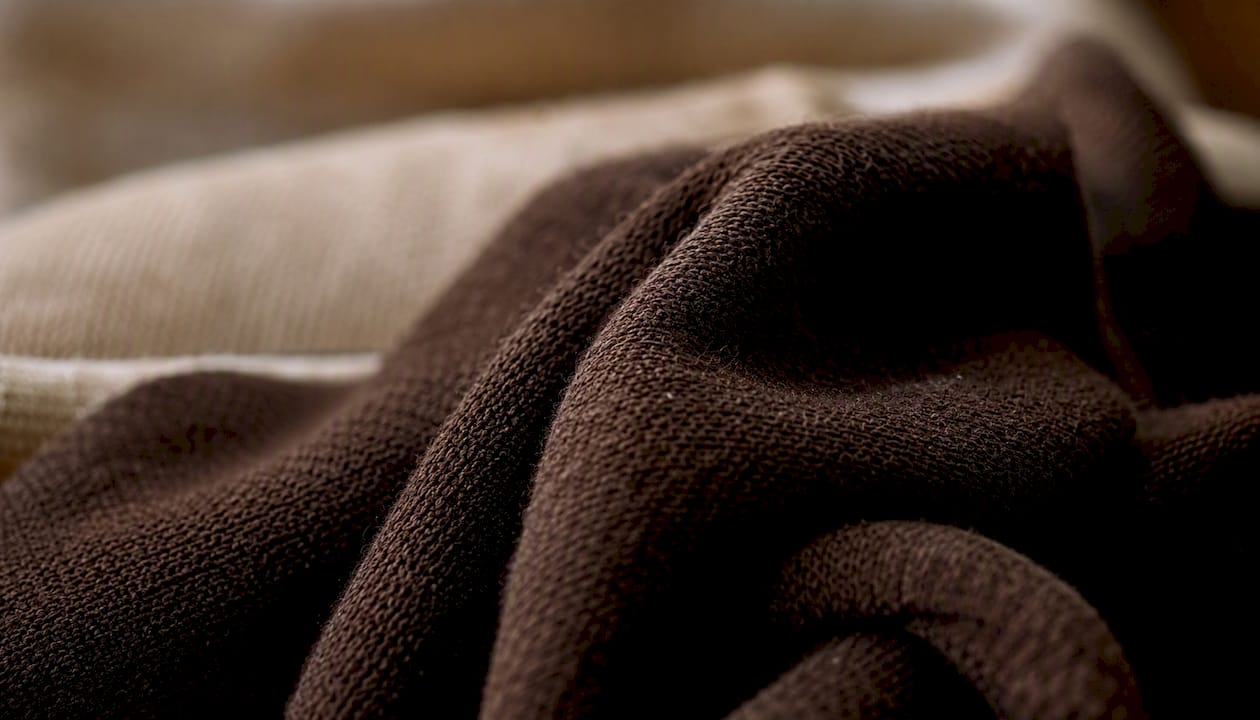
Not all fabrics pill at the same rate. The fiber length, yarn twist, and weave or knit structure all affect how quickly pills appear. New garments often shed loose fiber ends during the first few washes, so washing new hoodies extra gently helps flush those fibers without damaging the surface.
| Material | Pilling tendency | Best care approach | Buying tip |
|---|---|---|---|
| cotton (standard) | Moderate | Gentle cycle, 30 °C, air-dry | Choose tighter knit and longer-staple cotton |
| Cotton/polyester blend | Moderate to high | Gentle cycle, laundry bag, low spin | Check blend ratio; higher cotton content pills less |
| polyester / fleece | High | Laundry bag, cold wash, low spin | Expect pilling; use a fabric shaver regularly |
| Wool blend | Low to moderate | Wool program, cold water, flat dry | Higher-twist yarn = more resistance |
| Merino wool | Low | Hand wash or wool cycle, lay flat | Premium choice for low-pill longevity |
| French terry / loopback | Low to moderate | Gentle cycle, inside out, air-dry | Dense loop structure resists surface pilling |
Quick buying guidance for low-pilling hoodies:
- Prioritize longer-staple cotton (combed or ring-spun) over standard carded cotton
- Look for tighter knit structures and higher yarn twist counts
- Avoid loosely woven fleece if pilling bothers you; French terry is a better everyday option
- Even premium materials will pill if care and friction habits are poor — fabric quality sets the ceiling, not the outcome
Prevention: the golden rules for washing, drying, and wearing
Consistent habits do more to prevent pilling on clothes than any single product. Simple laundry routines like turning garments inside out, using a mesh bag, and washing similar fabrics together often reduce pilling more effectively than specialty products.
Wash prep (do this every time)
- Empty all pockets
- Zip up any zippers; tie drawcords loosely
- Turn the hoodie completely inside out
- Place it in a mesh laundry bag if it’s a delicate knit or cotton blend
- Sort laundry: hoodies with hoodies, not with towels, jeans, or Velcro items
Washing settings
- Temperature: 20–30 °C for most hoodies; cold for wool blends
- Program: Gentle, delicate, or wool cycle
- Detergent: Liquid detergent (powder can be abrasive on knit surfaces)
- Fabric softener: Skip it for most knits — it coats fibers and can accelerate pilling over time
- Spin speed: 400–800 rpm for delicate knits; 600–1,000 rpm for heavier sweat fabrics
- Drum load: Half-full maximum; an overloaded drum creates more mechanical friction
Drying rules
Air-drying is the single best thing you can do for a hoodie’s surface. Lay knit hoodies flat on a clean towel or drying rack rather than hanging them (hanging stretches the shoulders). If a dryer is unavoidable and the care label allows it, use the lowest heat setting and the shortest cycle possible.
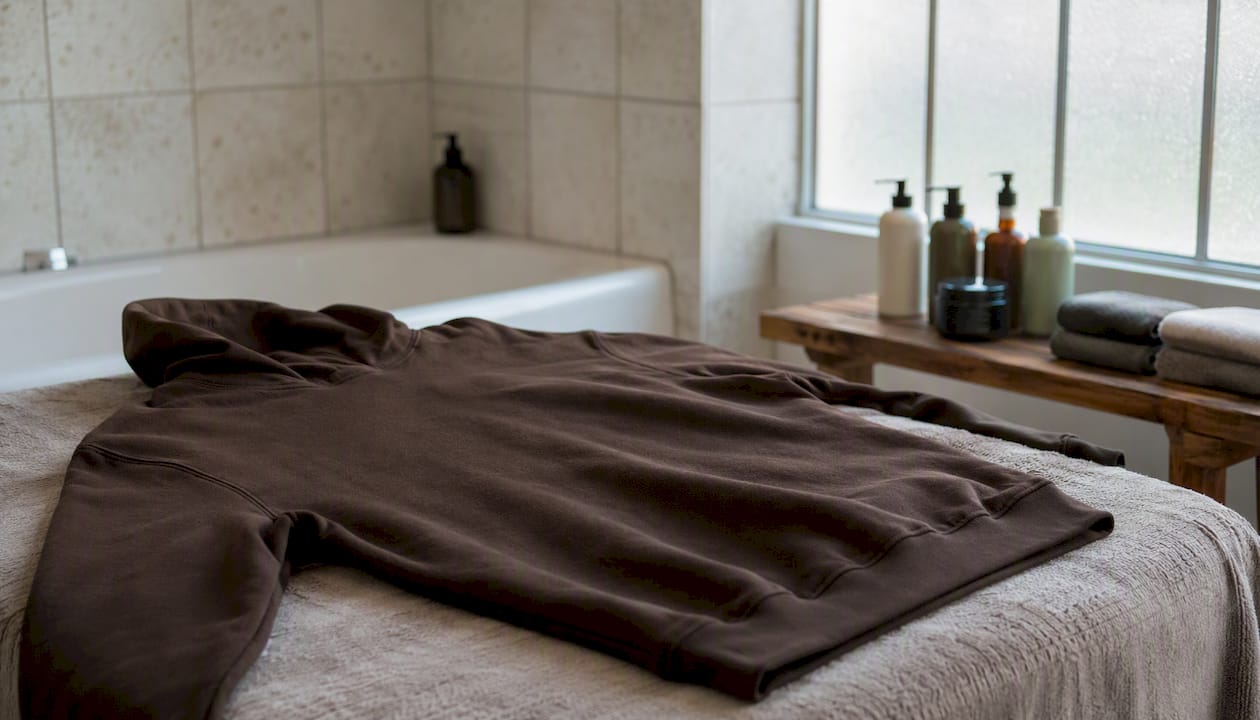
Pro Tip: Clean your dryer’s lint trap before every cycle. A clogged trap traps loose fibers back against the fabric, which accelerates surface wear.
Wearing and storage habits
- Rotate bag styles: a crossbody or tote creates less shoulder friction than a backpack worn daily
- Avoid Velcro closures on jackets or bags worn over hoodies
- Fold delicate knit hoodies instead of hanging them; hanging creates stress at the shoulder seam
- Store hoodies away from rough surfaces in the closet
How to remove pilling from hoodies, ranked safest to riskiest
Pills can be removed. A fabric comb or battery-operated pill remover can usually take care of them, and combining removal with prevention is the most effective long-term approach. Here are the five main methods, ordered from least to most risk of fabric damage.
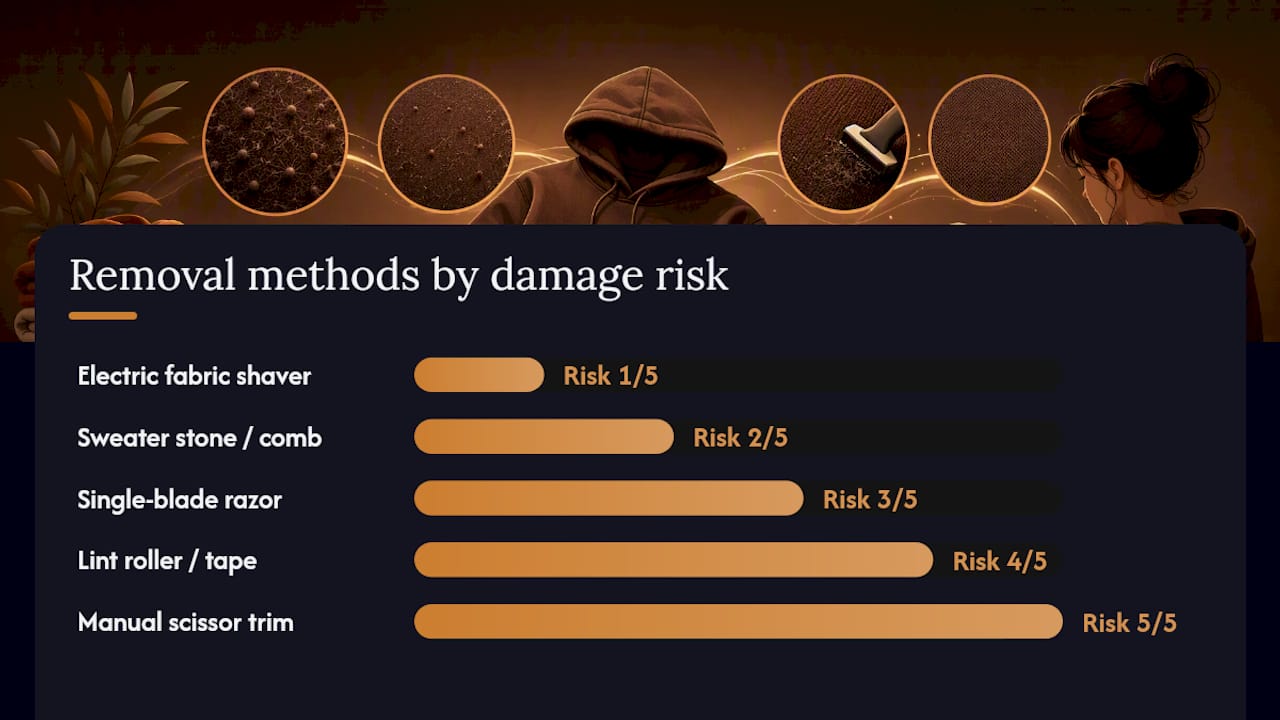
1. Electric fabric shaver (fuzz shaver)
The fastest method for mid-weight fleece and cotton-blend hoodies. Electric lint shavers are effective but need distance guards, low-pressure technique, and fabric-appropriate settings to avoid damaging knitwear.
How to use it:
- Lay the hoodie flat on a hard surface
- Hold the fabric taut with one hand
- Move the shaver in slow, overlapping circles with light pressure
- Empty the pill collector every few minutes
- Test on an inside seam first if the fabric is fine or thin
Safe for: Mid-weight cotton blends, fleece, French terry Risk: Holes or thinning on fine knits if pressure is too high or guard is missing
2. Sweater stone or pilling comb
For fine knits, start with a sweater stone or pilling comb rather than an electric shaver to avoid fabric thinning. Slower than a shaver, but much safer on delicate surfaces.
How to use it:
- Lay the garment flat and hold the fabric taut
- Comb slowly in one direction with short strokes
- Collect pills with a lint roller or tape afterward
Safe for: Fine knits, merino wool, lightweight cotton Risk: Minimal if used with light pressure; snagging possible on very loose weaves
3. Single-blade razor or scraper
Works on smooth, flat fabric sections. Not recommended for textured or loose-knit surfaces.
How to use it:
- Stretch the fabric taut over a flat surface
- Hold the razor at a very low angle (almost flat)
- Use very short, light strokes in one direction
- Stop immediately if the surface thins or a hole appears
Safe for: Smooth, tightly woven cotton panels Risk: High on loose knits or curved seam areas; use only as a last resort
4. Lint roller or tape
Removes surface fuzz and very light pilling. Does not cut pills, so it works best as maintenance between deeper de-pilling sessions.
Safe for: All fabrics Risk: None; ineffective on established pills
5. Manual trimming (scissors)
A last resort for isolated, large pills that other methods missed. Snip each pill individually at its base, never pulling.
Safe for: Any fabric, one pill at a time Risk: Cutting the fabric itself if rushed
Safety callout: Always test any tool on an inside seam or hem first. If pills reappear quickly after removal, the friction source has not been addressed — revisit your wash settings and wearing habits before de-pilling again.
Pro Tip: After de-pilling, run the hoodie through one gentle wash cycle before wearing it. This removes any loose fiber debris the tool left behind.
How to choose an electric lint shaver that won’t damage your hoodie
Consumer tests confirm that modern electric lint shavers are fast and effective; many include guards or intensity settings that protect fabric when used carefully. Choosing the right one matters more than most buyers realize.
Must-have features:
- Adjustable distance guard: Controls how close the blade gets to the fabric. Non-negotiable for knitwear.
- Blade quality and spare availability: Dull blades snag instead of cut. Check that replacement blades are sold separately.
- Motor strength: A stronger motor handles heavy fleece; a lighter motor is safer for fine knits. Look for variable speed if you own both.
- Pill collection chamber: Easy-open chambers save time and encourage regular emptying, which keeps the blade effective.
- Battery vs. corded: Corded models offer consistent power; battery models (USB rechargeable) are better for travel touch-ups.
- Cleaning access: Removable blade heads make cleaning faster and extend the tool’s life.
Typical U.S. price bands:
- Budget (under $15): Basic fixed-guard models. Fine for occasional use on fleece; limited on fine knits.
- Mid-range ($15–$40): Adjustable guard, variable speed, rechargeable. The right choice for most hoodie owners.
- Premium ($40+): Professional-grade blade systems, multiple guard settings, longer warranty. Worth it for frequent use or a large wardrobe.
One rule: When in doubt, choose a model with an adjustable guard and test it on an inside seam first.
For travel: Compact USB-rechargeable shavers fit in a toiletry bag and handle light pilling on the go without needing an outlet.
Is pilling a sign of poor quality?
Not always. Pilling is a mechanical process driven by friction, and it can happen on high-quality fabrics if care habits are poor. That said, there are situations where excessive pilling after minimal wear does point to a manufacturing issue.
Pilling is normal when:
- It appears after repeated wear and washing over several months
- It concentrates at high-friction points (underarms, cuffs, chest where a bag rests)
- It slows or stops after the first few washes flush out loose fiber ends
Pilling may be a quality concern when:
- Heavy pilling appears after just one or two washes with correct care settings
- The fabric surface thins or breaks down alongside the pills
- Care label instructions were followed exactly and pilling is still severe
If you want to raise a complaint or return:
- Photograph the pilling clearly against a neutral background
- Note the number of washes and the settings used
- Keep the care label intact and legible
- Document the date of purchase and the time since first wear
Most reputable brands will review a claim when the evidence is clear and care instructions were followed. When in doubt, contact customer support with photos before returning.
Care notes for Mrhappinessofficial hoodies
Mrhappinessofficial builds its hoodies from heavyweight cotton, chosen for structure, durability, and a surface that holds up to daily wear. The weight and stitch density of the fabric reduce the rate at which loose fibers work to the surface, which means less pilling risk compared to lighter-weight alternatives — but consistent care still matters.
Quick care checklist for the Be Unforgettable Hoodie and Signature Zip Hoodie:
- Turn inside out before every wash
- Use a gentle or delicate cycle at 30 °C or cooler
- Liquid detergent only; skip fabric softener
- Spin at 600–800 rpm maximum
- Air-dry flat; avoid direct heat or a hot dryer
- Fold for storage rather than hanging on a hook
Pro Tip: Wash new Mrhappinessofficial hoodies separately for the first two cycles. New heavyweight cotton sheds a small amount of loose fiber initially; a solo gentle wash flushes those fibers without transferring them to other garments.
For model-specific care symbols and washing guidance, check the care label on your hoodie or visit the product page directly. Customer support is available for any care questions specific to your piece.
The short verdict: what actually makes the biggest difference
Most pilling on hoodies is preventable. The habits that matter most:
- Turn inside out + mesh bag + gentle cycle: This combination addresses the three biggest friction sources in a single wash
- Air-dry flat: Dryer heat and tumbling accelerate fiber breakdown faster than almost anything else
- Sort your laundry: Washing hoodies with towels or denim is one of the most overlooked causes of surface damage
- De-pill only when needed: An electric shaver used monthly on a well-cared-for hoodie is maintenance; using it weekly because friction sources haven’t been fixed is a losing battle
- Check the care label first: Every hoodie has one. Following it is the single fastest way to avoid a mistake.
Prevention and removal work together. Address the friction source, then remove what’s already there. In that order.
Why fabric care is part of the identity
Clothes that last are clothes that mean something. At Mrhappinessofficial, the whole point is wearing something that reflects who you are, not just what you spent. A hoodie that pills and fades after three months doesn’t carry that weight. One that holds its shape and surface after two years does.
Caring for what you wear isn’t a chore. It’s a decision to protect something worth keeping. That’s the same logic behind everything the brand makes: quality that holds up, for people who show up.
Mrhappinessofficial hoodies built to last longer
Premium materials deserve a short-cut to the right choice. The Signature Zip Hoodie and the Be Unforgettable Hoodie are both built from heavyweight cotton with stitch density that resists surface pilling from the start. Less fuzz. More structure. Longer life per wear.

Both product pages include care label details and size guidance. If you’re looking for a hoodie that responds well to the care steps in this guide, either of those is a solid place to start. Visit the Mrhappinessofficial shop to see the full collection and find the right fit.
Sources
- What Is Fabric Pilling & How to Prevent It - Whirlpool
- How to Remove Pilling from Clothes - Patagonia
- Pilling entfernen & vermeiden: 6 Tipps gegen Fussel
- Der beste Fusselrasierer | Test 05/2026 | F.A.Z. Kaufkompass
- Wie verhindert man Pilling bei Strick und Sweat?