
What Your Clothes Are Telling Your Brain
Clothing reliably shapes mindset. That’s not a marketing claim, it’s a pattern confirmed by enclothed cognition research and consumer trend data: what you wear signals identity to others and changes how you carry yourself. Five style directions, a simple wardrobe system, and a few daily rituals turn that science into something you can use tomorrow morning.
TL;DR:
- Fit and high-quality materials more effectively boost confidence and behavior than fleeting trends or flashy logos.
- Wearing structured, well-fitted clothing activates traits like focus and posture, especially when choosing heavier cotton fabrics.
- Style directions like power tailoring and minimalism produce specific psychological effects, guiding wardrobe choices to match desired outcomes.
- Building a capsule wardrobe using the 3-3-3 rule and daily rituals reduces decision fatigue and reinforces confidence routines.
- Starting with a coordinated set designed for ease and quality, such as heavyweight hoodie and joggers, simplifies adopting mindset-driven dressing.
Table of Contents
- What Trend Research Reveals About Mode und Mindset
- How Does Clothing Change Your Behavior?
- Five Style Directions That Build Confidence
- Building a Wardrobe System: 3-3-3, Capsules, and Daily Rituals
- When Bold Fashion Choices Actually Build Confidence
- How Mr. Happiness Builds Mindset Into Every Piece
- Mindset Theories Behind Confidence and Self-Perception
- Cultural Influence on Fashion and Personal Mindset
- Using Clothing to Interrupt Negative Self-Talk
- Real Shifts: How Deliberate Dressing Changes Behavior
- Adapting Style Choices to Your Life Stage and Personality
- Kofi’s Take: Three Moves to Start With
- Try Mindset Dressing With a Ready-Made Starting Point
- Sources
What Trend Research Reveals About Mode und Mindset
Most people don’t dress randomly. A 2025 German study on style trends found that fashion functions as a primary tool for self-expression and identity, not just a way to stay warm or follow rules. One detail stands out. The study noted a notable brand affinity among men, suggesting that identity-driven dressing isn’t a niche interest limited to any one group.
This matters for anyone trying to build a wardrobe around confidence rather than convenience. If fit and material quality genuinely outrank fleeting trends in people’s actual buying behavior, then a mindset-first approach to clothing lines up with what shoppers already prioritize.
Three quick takeaways worth applying immediately:
- Fit beats logo. A well-fitted plain piece reads as more intentional than a branded item that doesn’t sit right.
- Sustainability signals values. Choosing durable, well-made pieces communicates something about who you are, not just what you can afford.
- Brand loyalty isn’t shallow. Sticking with a label that consistently fits your identity is a rational strategy, not laziness.
How Does Clothing Change Your Behavior?
Enclothed cognition is the psychological term for a simple but underrated fact: wearing a specific garment activates the traits associated with it. Put on a lab coat, and attention to detail improves. Put on something sloppy, and focus tends to drift. Fit For Fun’s coverage of this research ties it directly to fashion choices: structured, high-quality materials like heavyweight cotton can improve posture, reduce self-doubt, and sharpen focus.
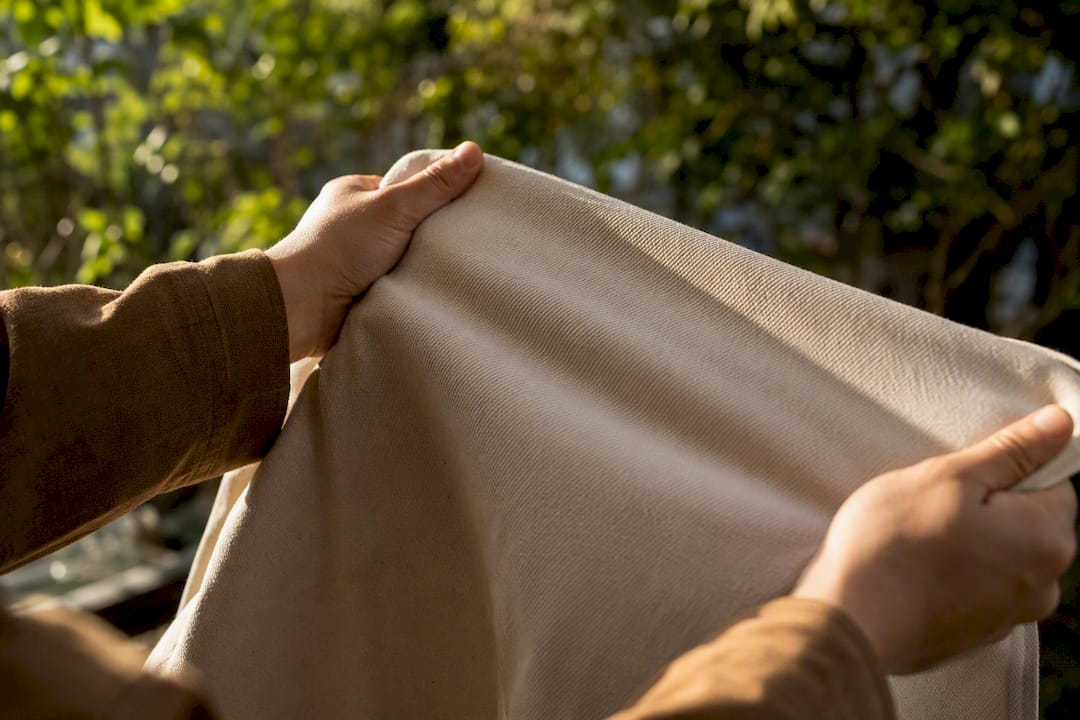
The mechanism isn’t magic. Structured fabric holds its shape, which encourages your body to hold its shape too. Slouchy, ill-fitting clothes give your posture nowhere to anchor.
What actually moves the needle:
- Fit — clothes that sit correctly at the shoulder and waist reduce constant micro-adjustments that pull focus away from your day.
- Structure — tailored or heavyweight pieces create a physical framework that supports upright posture.
- Material — heavier cotton drapes with intention instead of clinging or wrinkling, which reads as put-together even under stress.
Pro Tip: Before a high-stakes day, put on the outfit the night before and stand in it briefly. If your shoulders drop back and your chin lifts without effort, that’s the enclothed cognition effect doing its job.
Five Style Directions That Build Confidence
Distinct style categories produce distinct psychological outcomes, as reporting shows how figures like Victoria Beckham use style deliberately. Each direction below maps to a specific behavioral effect. Pick the one that matches the outcome you actually need, not the one that looks best on someone else.
- Power tailoring. Structured shoulders and a defined waistline signal competence to both the wearer and the room. This is the move before a negotiation or a presentation, when you need your body to communicate authority before you say a word.
- Minimalism and quiet luxury. Fewer colors, cleaner lines, better materials. The psychological payoff is calm: less to decide means less mental noise, and mental noise is where self-doubt creeps in.
- Feminine power. Softness paired with defined tailoring, like a fitted blazer over a flowing piece, creates presence without rigidity. It reads as confident without reading as combative.
- Modern classic. Reliable, well-made staples you return to again and again. Stability here isn’t boring, it’s trust. You know exactly how you’ll look and feel, which removes a whole category of morning anxiety.
- Statement glam. Bold color, texture, or silhouette used strategically to claim visible space. This works when you want to be seen and remembered, not blend in.
Pro Tip: Don’t pick a direction based on what’s trending. Pick it based on the specific feeling you’re missing that day, whether that’s calm, authority, or visibility.
Building a Wardrobe System: 3-3-3, Capsules, and Daily Rituals
Style directions only work if your closet supports them without daily friction. That’s where the 3-3-3 rule comes in: three tops, three bottoms, three pairs of shoes, mixed and matched. Nine items, dozens of combinations, and a measurable drop in decision fatigue. When your closet stops demanding decisions every morning, that mental energy gets redirected toward the goals that actually matter that day.
Fit deserves more attention than most people give it. A few habits worth building:
- Try on new pieces under the same lighting and shoes you’ll actually wear them with, not the store’s flattering angle.
- Budget for one tailoring visit per season. A $20 hem or waist adjustment changes how a garment performs more than a $200 upgrade in brand.
- Favor heavyweight cotton over thin blends when structure matters. It holds shape through a full day instead of wilting by noon.
A short daily ritual reinforces all of it. Lay out tomorrow’s outfit the night before, stand in it briefly as a ‘dress rehearsal,’ and notice how your posture responds. For a deeper dive into building a minimal, high-quality rotation, this capsule wardrobe guide walks through examples built for longevity over trend-chasing.
| Strategy | What it solves | Time to implement |
|---|---|---|
| 3-3-3 rule | Decision fatigue | One afternoon closet edit |
| Fit check ritual | Ill-fitting clothes undermining posture | One tailor visit per season |
| Dress rehearsal | Morning anxiety before big events | 2 minutes the night before |
When Bold Fashion Choices Actually Build Confidence
Visibility can empower or backfire, and the difference comes down to intent. Coverage of style-forward public figures points to a consistent pattern: bold pieces work when they’re chosen deliberately, not when they’re worn to chase attention or mimic someone else’s look. The psychology behind statement dressing is about claiming space you’ve already decided you deserve, not asking for permission to take it.
A few tactical moves make bold choices land better:
- Start small. A single statement accessory, like a bold cap or a graphic tee, is easier to inhabit than an entire loud outfit.
- Rehearse it. Wear the piece around the house or on a low-stakes errand before debuting it somewhere important.
- Anchor it. Pair one loud piece with otherwise neutral, well-fitted basics so the statement item has room to stand out.
Pro Tip: If putting on the bold piece makes you feel like you’re performing for an audience rather than expressing yourself, that’s the signal to scale back. Authentic visibility feels grounding, not exhausting.
How Mr. Happiness Builds Mindset Into Every Piece
Mrhappinessofficial designs around one idea: special isn’t priced or labeled, it’s who you are. That principle shows up in construction choices, not just messaging. Heavyweight cotton across the line supports the structure and posture benefits described earlier. Coordinated sets remove the daily decision fatigue that the 3-3-3 rule targets. Confident, direct language on each piece reinforces identity instead of borrowing someone else’s status symbol.
A few pieces map directly to the psychology already covered:
- The Happiness Set pairs a hoodie and joggers for the modern classic direction, one reliable combination you don’t have to think about twice.
- The Signature Zip Hoodie delivers the structured, heavyweight material that enclothed cognition research links to reduced self-doubt.
- The “Mindset Over Opinion” Pants work as an identity-consistent staple, the kind of piece fashion psychology recommends starting with before adding more performative looks.
Mindset Theories Behind Confidence and Self-Perception
Fashion doesn’t operate on its own. It plugs into broader mindset frameworks that shape how people see themselves in the first place. Self-perception theory, a long-standing idea in psychology, holds that people often infer their own attitudes and traits by observing their own behavior, including how they present themselves physically. Put on structured, confident clothing, and your brain reads that outward signal back as evidence about who you are.
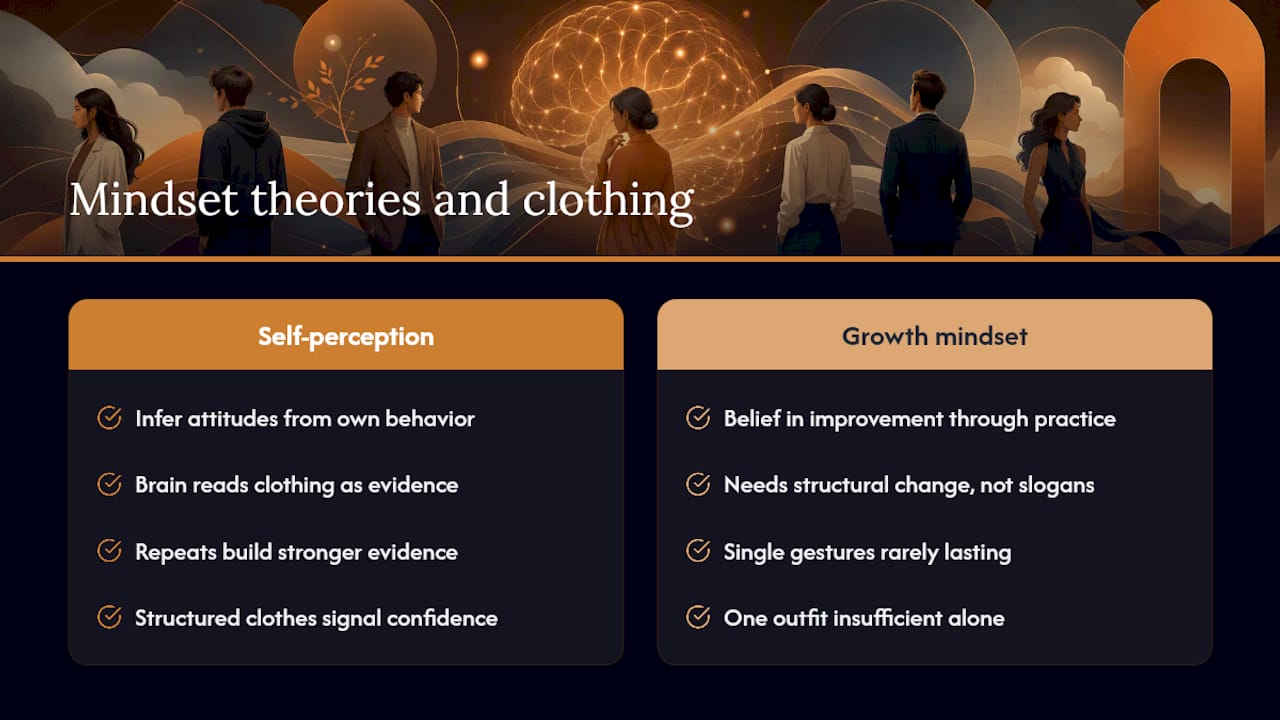
Growth-oriented thinking plays a role too, but it needs to be grounded in real practice rather than slogans. Practitioners have warned that surface-level “growth mindset” messaging, the kind that’s all affirmation and no structural change, rarely produces lasting behavior shift on its own. Clothing works the same way. A single confident outfit won’t rewire self-perception. Repeated, intentional dressing choices paired with real routines will.
That’s the gap between wearing a statement piece once for a photo and building it into a genuine wardrobe rotation. Self-perception shifts happen through repetition, not one dramatic gesture. Someone who wears structured, well-fitted clothing five days a week gathers five days of evidence that they’re the kind of person who shows up prepared. Someone who does it once gathers one data point, easily dismissed.
The practical implication: treat clothing as a repeatable input into your self-concept, not a one-time costume change. Pair it with the wardrobe systems and daily rituals covered earlier, and the psychological effect compounds instead of fading.
Cultural Influence on Fashion and Personal Mindset
Fashion choices never happen in a vacuum. Culture sets the baseline for what reads as confident, appropriate, or bold in a given setting, and that baseline shifts constantly based on region, generation, and social context. What signals authority in one workplace might signal rigidity in another.
Social proof plays a heavier role than most people admit. Seeing peers, colleagues, or public figures wear a certain style makes that style feel more accessible and less risky to try yourself. That’s part of why the brand affinity noted in the trend study matters. When a brand consistently represents a certain identity, wearing it becomes a shortcut for signaling that identity to others without saying a word.
Generational shifts add another layer. Older, more established style categories like power tailoring haven’t disappeared, but they’re now competing with newer categories like quiet luxury that prioritize understated quality over visible branding.
None of this means you should dress to match your environment perfectly. It means understanding the cultural context you’re operating in helps you choose which style direction from earlier sections will land the way you intend. Statement glam in a conservative boardroom sends a different message than the same outfit at a creative studio. Reading the room isn’t compromise, it’s strategic use of the same psychology that makes any of these approaches work in the first place.
Using Clothing to Interrupt Negative Self-Talk
Negative self-talk often shows up as a physical slump before it shows up as a thought. Clothing offers a direct intervention point precisely because enclothed cognition works both ways: slouchy, mismatched clothes can reinforce low mood, while structured, well-fitted pieces can interrupt that spiral before it fully forms.
A few concrete strategies turn this into a usable tool rather than a vague aspiration:
- Name the mood you’re avoiding. If you’re dreading a meeting, ask what specific feeling you’re missing, whether it’s authority, calm, or simple visibility, and choose from the five style directions accordingly.
- Use a single identity anchor. Keep one piece, like a well-fitted hoodie or a jacket that always makes you stand a little straighter, as a go-to reset when self-doubt creeps in.
- Avoid forcing a mismatched look. Enclothed cognition backfires when the clothing doesn’t match the intended role or feels inauthentic to the wearer. Forcing a “power look” you don’t actually feel connected to can amplify self-doubt instead of easing it.
- Rehearse before you need it. Trying an outfit on the night before a stressful event, standing in it, checking posture, gives your brain time to associate the garment with steadiness before the real test happens.
The goal isn’t to dress your way out of every hard feeling. It’s to remove one variable, an outfit that undermines you physically, so your actual mental effort goes toward the real problem instead of fighting your own posture all day.
Real Shifts: How Deliberate Dressing Changes Behavior
Programs that combine wardrobe creation with mindset coaching report that pairing intentional dressing with practice produces more durable confidence gains than either approach alone. One documented example comes from seminar-style programs that combine garment-making or curated dressing exercises with mindset coursework, treating clothing choice as an active skill rather than a passive habit.
The common thread across these cases is repetition paired with reflection. A person doesn’t just buy a tailored blazer and suddenly feel different forever. They wear it into a specific situation, notice a shift in how they carried themselves or spoke up, and that noticed shift becomes evidence they can build on. The clothing initiates the change; the noticing and repeating make it stick.
This also explains why performative dressing, buying an outfit purely to impress rather than to embody a role you’re stepping into, tends to feel hollow. The garment might look identical to one worn with intention, but without the internal alignment, the enclothed cognition effect has far less to work with. Two people can wear the exact same blazer to the exact same meeting and walk away with completely different internal experiences, depending on whether the piece was chosen to express who they’re becoming or to mask who they think they should appear to be.
Adapting Style Choices to Your Life Stage and Personality
There’s no single correct way to apply mode und mindset principles, because personality and life stage change what “confident dressing” actually requires. Someone early in a career often benefits most from power tailoring or modern classic staples, categories that project competence before track record has had time to speak for itself. Someone more established, with less need to prove competence, might find quiet luxury or minimalism more aligned, since the goal shifts from signaling ability to simply removing friction.

Introverts and extroverts also tend to respond differently to statement glam. An introverted person might find one bold accessory, rather than a full loud outfit, delivers the visibility benefit without the social overexposure that leaves them drained. An extroverted person might comfortably wear the full statement look and find it energizing rather than exhausting.
Life transitions matter too. Someone rebuilding confidence after a major change, a new job, a move, a personal setback, often benefits from starting with identity-consistent staples rather than performative pieces, exactly as fashion psychology experts recommend. Build the foundation first. Add the bolder categories once the basics feel like an extension of yourself rather than a costume.
The through-line across every personality and stage is the same: choose the style direction that matches the specific psychological outcome you need right now, not the one that photographs best or matches someone else’s timeline.
Kofi’s Take: Three Moves to Start With
Skip the overhaul. Pick one identity piece, something structured and well-made, and wear it three times this week. Run the 3-3-3 rule for seven days and pay attention to how much mental space it frees up. Book one tailoring appointment for whatever fits worst in your closet right now.
None of this requires a new wardrobe. It requires noticing what changes when the clothes actually fit the person you’re trying to become.
— Kofi
Try Mindset Dressing With a Ready-Made Starting Point
Building a wardrobe around identity and confidence doesn’t require guesswork or a closet overhaul done piece by piece. Mrhappinessofficial built the Happiness Set specifically to remove that friction: a coordinated hoodie and joggers combination in heavyweight cotton, designed so fit and material quality are already handled before you get dressed.
The set delivers the structured comfort that enclothed cognition research ties to reduced self-doubt, without asking you to coordinate separate pieces from scratch. If you want to start with a single flagship piece instead, the Signature Zip Hoodie offers the same heavyweight construction and confident messaging in one wear. Both come in selectable sizes and colors, built for daily rotation rather than a one-time statement. Browse the full shop to see the complete collection and find the piece that matches the identity you’re building.
Sources
- Mode-Mindset 2025: Stiltrends-Studie
- 5 clothing styles that strengthen your self-confidence - FIT FOR FUN
- Power dressing and confidence tips — Brigitte
- Victoria Beckham: 5 clothing styles strengthen self-confidence - BUNTE