
Adjust Jogger Length: DIY, Tailor Cost €20, or Buy Mr. Happiness
Yes, jogger length can be adjusted. A tailor can remove an elastic cuff, shorten the leg cleanly, and reattach the cuff for a finish that looks factory-made. Lengthening is a different story. It’s rarely practical, so if your joggers run short, you’re usually better off styling around it or sizing up next time. Expect professional hemming to run around €20 per pair, and check the “Mind Over Noise” Joggers fit notes before you buy your next pair.
TL;DR:
- Shortening joggers with elastic cuffs typically costs around €20 and involves carefully removing and reattaching the cuff to maintain a factory look.
- Lengthening joggers is rarely feasible, and the best options are styling tricks like removing the cuff or wearing taller shoes to disguise short length.
- Accurate measurements of inseam and ankle placement before purchase help prevent fit issues, especially for cropped or full-length styles.
- Heavyweight cotton joggers resist puckering and hold shape better during alteration than thinner knits, making them easier and more reliable to customize.
- A reliable tailor should perform test stitches, match stitch types, and provide final fittings, with turnaround times generally a few days.
Table of Contents
- Jogger länge anpassen: what tailors actually do
- How to shorten joggers with elastic cuffs yourself
- When joggers are too short: alternatives that actually work
- How to measure for the right jogger length before you buy
- Fabric and construction: what changes the alteration result
- What tailoring costs and how to vet a tailor
- How to avoid damaging jogger fabric during alterations
- Styling around a length that’s not quite right
- Getting the fit right matters more than most people admit
- Why Mr. Happiness joggers are built to skip the alteration step
- Sources
Jogger länge anpassen: what tailors actually do
Shortening joggers with elastic cuffs is one of the more routine jobs a tailor handles. It’s not a rebuild. It’s a controlled removal and reattachment.
An experienced tailor pops the stitching on the cuff, trims the leg to length, then resews the cuff back onto the shortened hem. Guides on jogger alterations confirm that any part of a jogger can be altered, including the waistband, the legs, and the cuffs themselves. That’s different from hemming a dress pant, where you’re just folding and pressing fabric. Joggers need the elastic band separated, measured, and rejoined without puckering.
What to expect from the process:
- A clean, almost invisible seam where the cuff reattaches
- Turnaround of a few days for most shops, longer during peak seasons
- Minimal change to the overall silhouette if the tailor matches your original taper
A tailor is strongly worth the visit when you’re working with a delicate knit, want a precise inseam length rather than a rough guess, or own a tapered fit where a crooked cut would be obvious. If your joggers are heavyweight cotton with a straightforward cuff, the job is fast and cheap. If they’re a tricky-tapered silhouette, don’t risk it solo.
How to shorten joggers with elastic cuffs yourself
If you’ve got basic sewing tools and some patience, shortening joggers at home is doable in an afternoon. The sequence below follows the same logic professional guides use, adapted for a home setup.
What you’ll need: a seam ripper, a washable fabric marker, straight pins, and a sewing needle or a basic machine.
- Put the joggers on. Mark your desired length at the ankle while wearing them, standing normally. Measuring pants flat on a table is the single biggest reason DIY hems come out uneven.
- Lay them flat on a table, matching both legs so the fold lines up symmetrically.
- Seam-rip the cuff away from the leg opening carefully, keeping the cuff panel intact.
- Measure and cut, adding an inch or so of allowance so the cuff has fabric to reattach to. Detailed step guides recommend cutting less than you think you need, since you can always trim more.
- Fold the raw edge, pin the cuff back in place evenly around the opening, and check both legs match before you sew.
- Stitch slowly, using a stretch or zigzag stitch if you’re on a machine, since a straight stitch can snap when the elastic stretches.
- Try them on again before you trim any loose threads, just to confirm the length actually landed where you wanted.
Pro Tip: Cut a half inch less than your measurement suggests on your first attempt. You can always go back and trim more, but you can’t add fabric back once it’s gone.
If your machine skips stitches on the elastic, or the cuff won’t sit flat after two tries, that’s your signal to stop and hand it to a professional instead of forcing it.
When joggers are too short: alternatives that actually work
Lengthening joggers is the alteration most tailors will talk you out of. There’s no leftover fabric to add, matching the original knit is nearly impossible to source, and any added seam tends to show as a visible line around the ankle. A few tailoring guides note lengthening as the hardest and least reliable fix in the entire category, with rare exceptions only for pants with generous folded hems already built in.
Instead of forcing a fix that won’t look right, work with what you’ve got:
- Remove the cuff entirely for an open-hem, relaxed lounge look. It reads intentional rather than accidental.
- Wear taller footwear. Chunky sneakers or boots can absorb an inch of shortfall without anyone noticing.
- Check exchange options before committing. Many jogger lines run multiple inseam lengths, and swapping sizes is faster and cleaner than any alteration.
Before you buy your next pair, look at the return and exchange window on the product page. A five-minute check now saves you from a permanent problem later, and it beats trying to disguise a too-short pair with clever styling every time you wear them.
How to measure for the right jogger length before you buy
Most fit problems start before the joggers ever reach a tailor. Getting your own measurements right avoids the whole issue.
Start with your waist and inseam. To measure inseam accurately, stand straight and measure from your crotch seam down to where you want the hem to sit, ideally using a pair of well-fitting pants as a reference rather than guessing.
Ankle placement depends on the silhouette you’re after:
- Cropped: hem sits above the ankle bone, common in tapered streetwear fits
- Standard: hem breaks right at the top of the shoe
- Full-length: hem rests just past the ankle with a slight break over sneakers
Check the product’s fit notes or size chart before ordering, since sample measurements vary between brands even at the same labeled size. If your measurements fall between two sizes, size up when you plan to layer or size down for a slimmer cropped look, and budget for a small tailoring visit if you’re chasing an exact inseam a size chart can’t guarantee.
Fabric and construction: what changes the alteration result
Not every jogger alters the same way. Heavyweight cotton holds its shape through the cuff removal and resewing process far better than a thin jersey knit does, which is one reason premium streetwear leans on heavier fabric weights in the first place.
Thinner knits tend to bunch or pucker where the new stitch line meets the old seam, especially around ribbed cuffs where the knit direction changes. Tapered seams complicate things further, since a tailor has to match the taper angle on both legs or the finished pair looks lopsided.
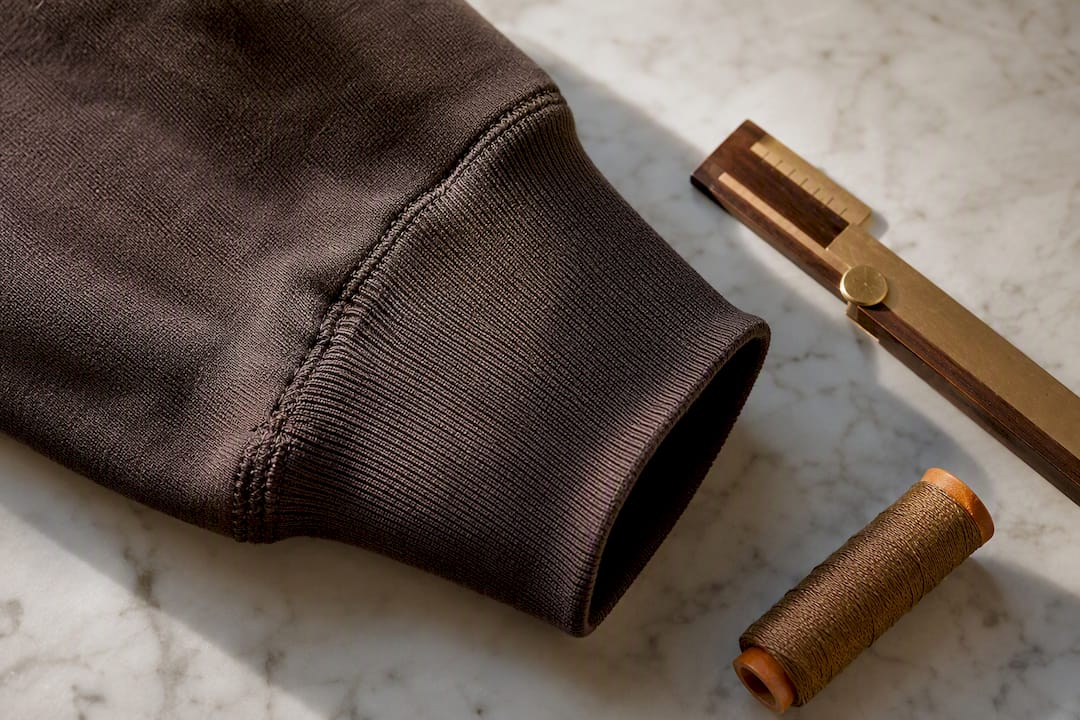
Pro Tip: When you drop joggers off for alteration, tell the tailor the fabric weight and ask them to match your existing stitch type on the cuff. A mismatched stitch is the fastest way to end up with visible puckering.
What tailoring costs and how to vet a tailor
Budget around €20 for a standard hem with cuff reattachment. Tapering a baggy leg tends to land in a similar range, often cheaper than a full reconstruction since it’s a targeted fix rather than a rebuild.
Finding a reliable tailor is mostly about asking the right questions upfront:
- Do they do a test stitch on scrap fabric before touching your joggers?
- Can they match your original stitch type and thread weight?
- Do they offer any guarantee if the length or taper comes out wrong?
- Will you get a final fitting before you leave the shop?
A shop that hesitates on any of these is one to skip. Most turnarounds run a few days, so plan ahead if you need the pair for a specific occasion.
How to avoid damaging jogger fabric during alterations
The biggest risk in any jogger alteration isn’t a bad hem. It’s damage you can’t undo.
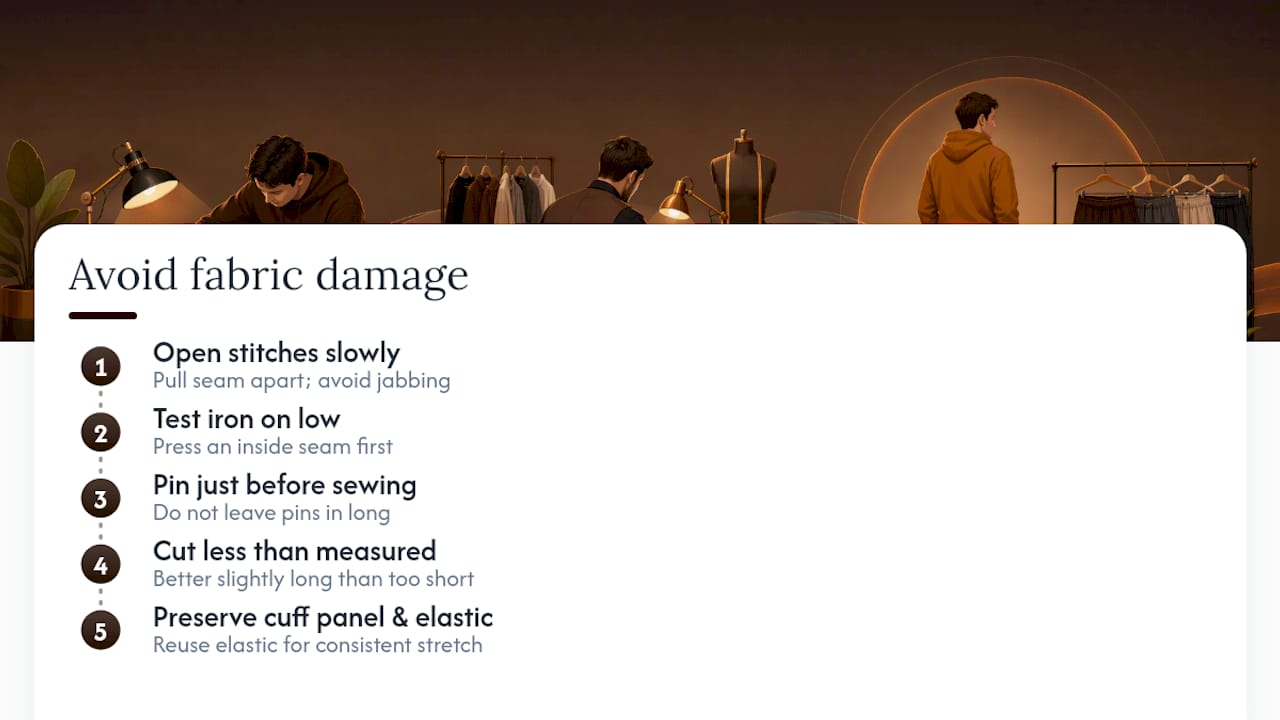
Seam rippers are sharp enough to snag knit fabric if you rush, especially around ribbed cuffs where the threads sit close together. Work slowly, and pull the seam apart rather than jabbing the tool through the weave. If you hit resistance, back off and find the actual stitch line instead of forcing it.
Pressing heat matters too. High heat on synthetic blends can melt or glaze the fibers, leaving a shiny patch that never comes out. Test your iron on a low setting first, on an inside seam you won’t see, before pressing the visible hem.
Pins left in too long can leave permanent holes in tighter knits, so pin only right before you sew, not hours in advance. And when you’re cutting, always cut less than your measurement suggests. A too-short cut on heavyweight cotton is unfixable, while a slightly long cut just means round two with the scissors.
If you’re working with a tapered or ribbed cuff style, keep the original cuff panel intact during removal rather than cutting it apart. Reusing the existing elastic band, rather than sourcing new elastic, keeps the stretch and recovery consistent with the rest of the pair. That single choice is often what separates a home fix that looks intentional from one that looks obviously altered.
Styling around a length that’s not quite right
Sometimes the smartest move isn’t altering the joggers at all. It’s dressing around the length you’ve got.
A pair that runs slightly short works fine with chunky sneakers or boots, since the extra volume at the ankle absorbs the gap and makes the proportion look deliberate. Rolling or cuffing the hem once, a fabric-friendly temporary fix that works especially well on fabrics with enough structure to hold a fold, can turn a fit issue into a style choice without touching a needle.
Layering helps too. A longer hoodie or oversized tee worn over the waistband draws the eye upward, so a slightly-off hem reads less noticeably. If the joggers run long instead of short, a single cuff or roll at the ankle creates the cropped look intentionally, which happens to be one of the more popular silhouettes in streetwear right now anyway.
Socks matter more than people think. A contrasting or visible sock at a shorter hem looks styled. A bare ankle at the same length can look like a mistake. Small detail, real difference.
None of this replaces a proper hem if you want a truly clean finish, but if you’re between alterations or waiting on an exchange, these are legitimate ways to wear the pair now rather than letting them sit in a drawer.
Getting the fit right matters more than most people admit
Exact length changes how a jogger reads on your body. An inch too long kills the taper. An inch too short breaks the silhouette the other way. That’s not vanity, it’s proportion, and proportion is most of what makes streetwear look intentional instead of accidental.
Tailoring makes the most sense when everything else about the fit already works and you’re only adjusting the hem. If the rise, taper, or waist is also off, you’re usually better off returning the pair and getting the right size or style from the start rather than paying to chase a fix. A small tailoring investment on joggers that already fit well protects the silhouette a brand intended far more reliably than folding or rolling a hem that was never right to begin with.
Get the base fit right first. Adjust length second. In that order, tailoring is money well spent.
— Kofi
Why Mr. Happiness joggers are built to skip the alteration step
Mrhappinessofficial builds joggers so you spend less time at the tailor and more time wearing them. The “Mind Over Noise” Joggers use heavyweight cotton construction, the same fabric weight that holds its shape after any cuff work and resists the bunching thinner knits are prone to.

Consistent construction across every size means the fit you see on the size chart is the fit you get in hand, so there’s less guesswork before you buy and less need for adjustment after. Check the sizing details on the product page against your own waist and inseam measurements before ordering. If you’re building a full look, the Happiness Set pairs the joggers with a matching hoodie for a coordinated fit top to bottom. Browse the full shop to compare styles, or head straight to the joggers page and check your size against the chart before checkout.
Sources
- Schneiderei Goldene Hand – tailoring overview
- iFixit: How to hem sweatpants
- Can joggers be tailored? — MagicOfClothes
- How to cuff sweatpants with elastic — TechBloat