
Every Cap Type You Need to Know: A Complete Guide
Cap types, or cap arten in German-speaking fashion communities, cover a wide spectrum of silhouettes, closures, and constructions. The major categories include the baseball cap, trucker, snapback, dad cap, 5-panel, 6-panel, flatcap/ivy, visor, army cap, and docker. Here is a fast-ID list to orient you before the deep dive:
- Baseball cap (fitted, Flexfit, strapback): six panels, curved or flat brim, the most versatile silhouette. Best for everyday wear and sport.
- Snapback (e.g., Yupoong 6606): structured crown, flat brim, plastic snap closure. Best for bold branding and streetwear.
- Dad cap: unstructured cotton, curved brim, strapback or Velcro. Best for relaxed, low-key style.
- Trucker: foam front, mesh back, snapback closure. Best for warm weather and outdoor work.
- 5-panel: single front panel, no seam down the center, minimal silhouette. Best for cycling, running, and minimalist looks.
- 6-panel: standard construction with a center-front seam, the most common cap shape. Best for customization and everyday use.
- Flatcap/ivy cap: low, rounded crown, short front brim, no back closure. Best for smart-casual and heritage styling.
- Visor: open crown, curved or flat brim. Best for sun protection during sport.
- Army/military cap: structured, often olive or camo, six-panel with a short brim. Best for utility and streetwear layering.
- Docker/fisherman cap: brimless, soft crown, knit or cotton. Best for cold weather and casual city wear.
Key Takeaways
Choosing the right cap comes down to three decisions: closure type for fit, profile for silhouette, and material for function.
| Point | Details |
|---|---|
| Closure determines fit | Fitted for precision, Flexfit for stretch comfort, snapback or strapback for adjustability. |
| Profile shapes your silhouette | High-profile caps read bold; low-profile caps read relaxed and proportional on larger heads. |
| Material matches the use case | Mesh for heat and airflow, cotton twill for everyday wear, wool for cold weather. |
| Measure before you buy | Head circumference of 54–62 cm covers most adult sizes; always check against a size chart for fitted caps. |
| Mrhappinessofficial for streetwear | The Monogram Snapback offers structured fit, premium cotton, and clean branding for daily wear. |
Table of Contents
- What are the main cap types and how do you identify each one?
- How does closure type change the fit of a cap?
- Does panel count or brim shape actually change how a cap looks on you?
- Which cap material works best for your situation?
- How to choose the right cap in six steps
- Sizing, fit fixes, and cap care
- Mrhappinessofficial’s design priorities when making caps
- A streetwear designer’s take on pairing caps with outfits
- Mrhappinessofficial caps: quality built for daily wear
- Sources
What are the main cap types and how do you identify each one?
Every cap type has a signature construction detail that gives it away at a glance. Learning those details means you stop guessing and start choosing with confidence.
Baseball cap
Six panels stitched together at a center seam, a structured or unstructured crown, and a curved brim. The baseball cap is the parent category for fitted, Flexfit, and strapback subtypes. Fitted caps have no closure and come in numbered hat sizes (6⅞ to 8+). The Flexfit 6511 uses a spandex-blend sweatband that stretches to fit a range of head circumferences without a visible closure. Strapback versions add an adjustable strap at the back, making them the most size-flexible of the three.
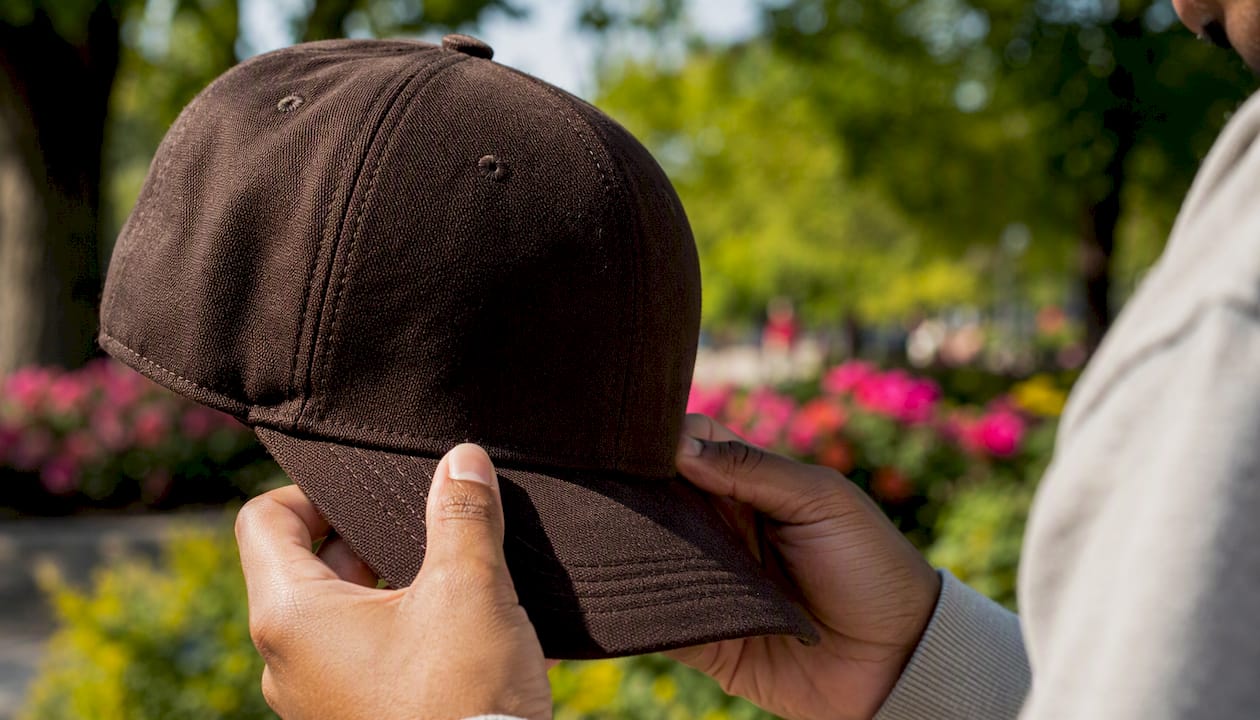
Pro Tip: If you want a clean back profile for embroidery or team logos, choose a fitted or Flexfit over a strapback — the closure hardware can interfere with rear-panel designs.
Snapback
The snapback shares the baseball cap’s six-panel construction but always pairs a structured, stiff front panel with a flat brim and a plastic snap closure. The Yupoong 6606 is one of the most widely recognized snapback blanks in retail and custom printing, known for its high-profile crown and clean front panel. Snapbacks suit large embroidered logos and screen-printed graphics because the rigid front holds its shape under the weight of decoration.
Dad cap
Low profile. Unstructured. The dad cap’s crown collapses slightly when you take it off, which is the fastest visual ID. It uses a curved brim and typically closes with a brass buckle strapback or Velcro. The Richardson 112 is a widely stocked trucker-style variant, while the Richardson 320 sits closer to the classic dad-hat silhouette. Snapbacks carry a structured crown and flat brim; dad hats are unstructured with a curved brim — that structural difference is the core distinction between the two.
Trucker cap
Foam front panel, mesh back panels, snapback closure. Trucker hats originated as promotional giveaways for farm and trucking supply companies, which is why the foam-front and mesh-back construction was designed to maximize airflow during outdoor labor. The high-profile foam front makes truckers easy to spot from across a room. The Yupoong 6006 is a classic trucker blank; the Econscious EC7000 offers an organic-cotton front panel for buyers who want a more sustainable option.
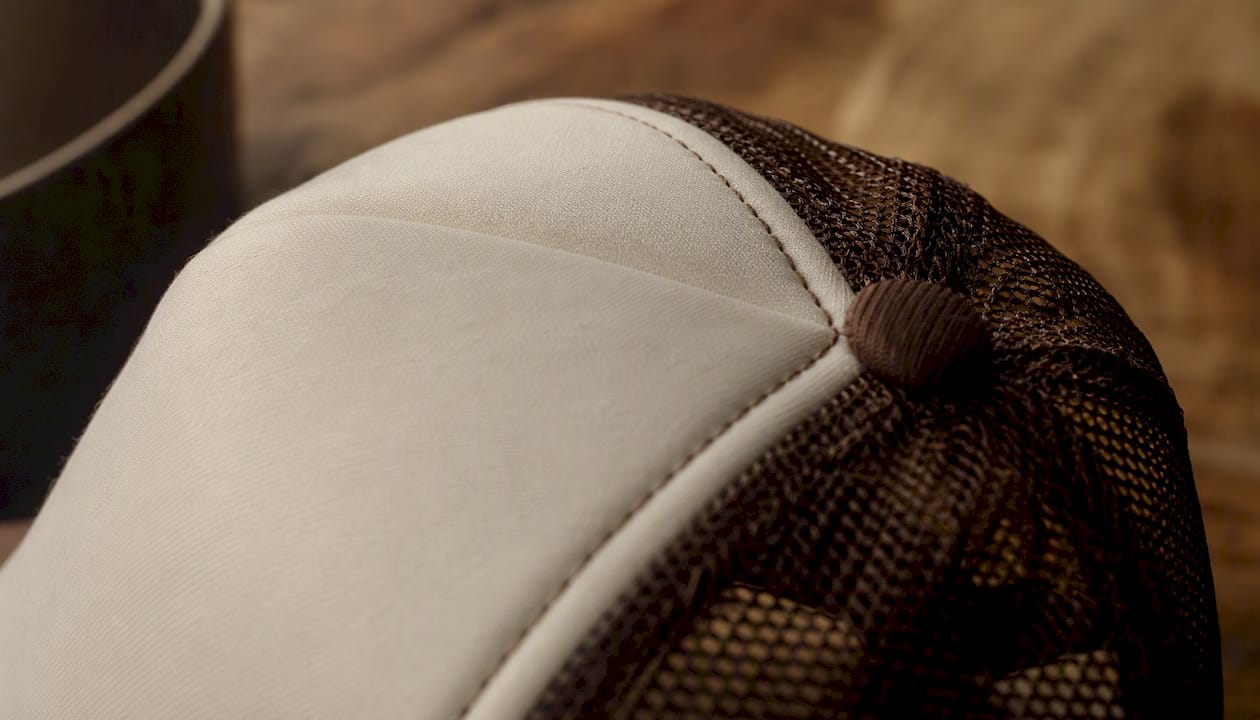
Pro Tip: Pair a trucker with a graphic tee or an oversized tank for a warm-weather look that stays breathable all day.
5-panel cap
One large front panel instead of two smaller ones joined at a center seam. The result is a flat, seamless front face with a slightly shorter, more fitted crown. Five-panel caps are popular in cycling and running communities because the single-panel front sits lower on the forehead without a seam pressing against the skin. Otto Cap produces several 5-panel blanks in lightweight nylon and polyester that work well for sport and outdoor use.
6-panel cap
The standard. Six triangular panels, a center-front seam, and a button on top. Most baseball caps, snapbacks, dad caps, and truckers are 6-panel constructions. The seam down the center front is the quickest way to tell a 6-panel from a 5-panel. This construction is the most common choice for custom branding because the front panels offer a consistent, flat embroidery surface.
Flatcap / ivy cap
A rounded, low crown with a short, stiff brim sewn directly to the front of the cap. No back closure — flatcaps are typically sized (S/M/L) or come in one size with an internal elastic band. Wool, tweed, and cotton are the most common materials. The silhouette reads as heritage and smart-casual, pairing naturally with chinos, denim jackets, and layered streetwear.
Visor
No crown at all. Just a brim and a band that wraps around the head. Visors are purpose-built for sun protection during sport — golf, tennis, and running are the primary use cases. Closure is usually Velcro or a strapback. The open crown means they offer zero warmth, so they are strictly a warm-weather tool.
Army / military cap
Six panels, a structured crown, a short flat or slightly curved brim, and often a metal eyelet at the crown. Olive, camo, and black are the dominant colorways. The silhouette is close to a low-profile baseball cap but with a stiffer, more utilitarian feel. In streetwear, army caps layer well over hoodies and cargo pants.
Docker / fisherman cap
Brimless. Soft, unstructured crown with a small turned-up cuff. Knit wool, cotton, and fleece are typical materials. The docker is a cold-weather cap that sits close to the skull, making it a practical choice for city wear in fall and winter.
How does closure type change the fit of a cap?
Closure is the single biggest factor in whether a cap fits your head. Get this wrong and no amount of style saves you.
- Snapback: a plastic snap with multiple adjustment positions. One size fits most head circumferences, roughly 54–62 cm. The stiff closure sits flat against the back of the head, which keeps the cap’s profile clean. Best for streetwear and bold branding — snapbacks hold large logos better than any other closure type because the structured front panel does not flex.
- Strapback / buckle: a fabric or leather strap with a metal or brass slide buckle. More refined than a snapback, with a slimmer back profile. Common on dad caps and flatcaps. Adjusts to roughly the same range as a snapback but sits closer to the head.
- Fitted: no closure. Sized by hat size (e.g., 7¼, 7⅜). Requires measuring your head circumference and matching it to a size chart. The cleanest back profile of any cap — nothing interrupts the rear panel. Best for people who know their exact size and want a polished look.
- Flexfit / elastic: a spandex-blend sweatband that stretches to accommodate a range of sizes, typically sold as S/M or L/XL. The Flexfit 6511 is the benchmark blank for this closure type. No visible hardware, a smooth back panel, and a secure fit without adjustment. Good for active use and for buyers who sit between standard fitted sizes.
- Velcro: the most casual closure. Adjustable and easy to use, but Velcro degrades faster than snap or buckle hardware and can catch on hair. Common on children’s caps and budget adult styles. Not recommended for premium customization.
The choice between trucker and baseball caps is fundamentally functional: mesh backs favor airflow and outdoor labor, while solid-panel baseball caps provide better element protection and a cleaner silhouette for refined settings. The same logic applies to closure — choose based on how the cap will be used, not just how it looks on a shelf.
Does panel count or brim shape actually change how a cap looks on you?
Yes, and the difference is more visible than most buyers expect.
5-panel vs 6-panel
A 6-panel cap has a vertical seam running down the center of the front two panels. A 5-panel eliminates that seam with a single wide front panel. On the head, the 6-panel tends to sit slightly higher and rounder; the 5-panel sits flatter and more forward. For printing and embroidery, the 6-panel’s seam can interrupt large designs, while the 5-panel’s seamless front is cleaner for centered graphics.
- 6-panel: rounder crown, more traditional silhouette, better for most head shapes
- 5-panel: flatter crown, forward-sitting, preferred in cycling and running communities
High vs low profile
Profile describes how tall the crown sits above the brim.
- High profile: tall crown, structured foam or buckram lining. Adds height. Common in snapbacks and truckers. Reads as bold and streetwear-forward.
- Low profile: shorter crown, often unstructured. Sits closer to the head. Common in dad caps and flatcaps. Reads as relaxed and understated.
If you have a larger head circumference, a low-profile cap tends to look more proportional. High-profile caps can amplify the visual height of the head.
Flat brim vs curved brim vs visor
- Flat brim: stays perfectly horizontal. Associated with snapbacks and streetwear. Can be bent into a slight curve if preferred, but purists keep it flat.
- Curved brim: pre-curved at the factory or shaped by the wearer. Standard on baseball caps and dad hats. More casual and approachable.
- Visor brim: same curve as a baseball cap brim but with no crown attached. Pure sun protection, zero warmth.
A sandwich visor, the contrasting color strip visible on the underside of the brim, is a construction detail rather than a brim shape. It adds visual contrast and is common on structured snapbacks and fitted caps.
Which cap material works best for your situation?
Material determines breathability, structure, and how well a cap holds its shape after a season of wear.
Cotton twill is the most common cap material because it balances structure and comfort without trapping heat. For hot-weather use, a trucker’s mesh back dramatically increases airflow compared to a solid-panel baseball cap. Wool flatcaps and fitted caps are the right call for fall and winter, but they require hand washing and careful reshaping. Pigment-dyed cotton gives that faded, worn-in look from day one — it is the material of choice for the unstructured dad-cap aesthetic.
Sweatbands matter more than most buyers realize. A cotton sweatband absorbs moisture but can stiffen and discolor over time. A polyester or moisture-wicking sweatband stays softer longer and is easier to spot-clean. The Flexfit 6511’s spandex sweatband is the benchmark for stretch-fit comfort.
How to choose the right cap in six steps
- Define your purpose. Sport and outdoor use call for mesh or polyester with a Flexfit or snapback closure. Everyday streetwear favors cotton twill with a strapback or snapback. Formal-casual settings suit a wool flatcap or a low-profile fitted.
- Measure your head circumference. Wrap a soft tape measure around your head about one inch above your ears and eyebrows, where a cap would naturally sit. Note the measurement in centimeters. A typical adult head falls between 54 cm and 62 cm. Fitted caps require an exact match to a hat-size chart; Flexfit and snapback caps cover most of that range without sizing.
- Choose your closure. Fitted for a clean look and a known size. Flexfit for stretch comfort. Snapback or strapback for adjustability. Velcro only if budget is the primary constraint.
- Pick your profile and brim shape. High-profile flat brim for streetwear. Low-profile curved brim for everyday casual. Flatcap for smart-casual. Visor for sport.
- Select your material. Mesh for heat. Cotton twill for versatility. Wool for cold weather. Pigment-dyed cotton for a vintage look.
- Check customizability and price. Snapbacks suit bold, large-logo branding; dad hats suit subtle embroidery. Structured caps from brands like the Richardson 112 or Yupoong 6606 hold embroidery better than unstructured blanks. For branded headwear in lifestyle or golf contexts, a structured snapback or strapback with a clean front panel is the standard choice.
Red flags to avoid: a cap that gaps at the back on its tightest setting is too large. A sweatband that digs into the forehead immediately is too small — do not assume it will stretch enough. Cheap Velcro that catches on hair on the first wear will only get worse. Uneven stitching on the brim seam is a sign of poor construction throughout.
Sizing, fit fixes, and cap care
Fit troubleshooting
If a cap feels slightly too tight, wear it for short sessions and let body heat gently expand the sweatband. For structured fitted caps, placing the cap over a bowl or balloon slightly larger than your head and leaving it overnight can add a few millimeters of give. Never force a cap that is genuinely the wrong size — the crown will distort.
If a cap is slightly too large, a sweatband liner insert (available at most hat retailers) adds a thin foam layer inside the band to reduce circumference by up to a full size. For snapbacks, moving to a tighter snap position is the obvious first fix.
To reshape a curved brim that has gone flat, dampen it slightly and curve it around a cup or your hand, then let it dry in that position. Flat brims that have developed an unwanted curve can be pressed flat under a heavy book overnight.
Cleaning by material
- Cotton twill / pigment-dyed cotton: spot clean with a damp cloth and mild soap. For a deeper clean, hand wash in cool water and reshape immediately. Air dry on a cap form or over a bowl.
- Mesh / trucker: wipe the foam front with a damp cloth. The mesh back can be hand washed. Never machine wash a structured trucker — the foam front will collapse.
- Wool / fitted: hand wash only in cold water with wool-safe detergent. Lay flat to dry. Never wring or twist.
- Foam-front caps: spot clean only. Water saturation destroys the foam’s structure permanently.
Storage
Store caps on a cap rack, a hat hook, or a dedicated shelf where the crown is not compressed. Stacking caps flat crushes the crown over time. For travel, stuff the crown with a soft cloth or a rolled T-shirt to hold its shape inside a bag.
Mrhappinessofficial’s design priorities when making caps
Three things drive every cap Mrhappinessofficial produces.
- Fit first. A cap that sits wrong undermines everything else. The brand’s Monogram Snapback is built on a structured six-panel construction with a snapback closure that covers the standard adult head range without compromise.
- Material quality. Premium cotton and heavyweight construction are non-negotiable. The same material discipline that goes into the brand’s hoodies and joggers applies to every cap in the line.
- Purposeful branding. The logo is not decoration. It is a statement. Mrhappinessofficial caps carry the brand’s identity clearly and cleanly, designed for people who want to be remembered without chasing attention.
A streetwear designer’s take on pairing caps with outfits
Cap choice changes the entire read of an outfit. A few rules that hold up in practice:
- Dad cap with a heavyweight tee: the low-profile, curved brim keeps the look relaxed. Pair a neutral dad cap with a Statement Oversized T-Shirt in a matching or complementary tone. The result is effortless, not assembled.
- Snapback with a zip hoodie: the structured flat brim adds edge to a clean hoodie silhouette. A monogram snapback over a Signature Zip Hoodie reads as intentional streetwear. Keep the rest of the outfit simple — the cap does the work.
- Trucker cap with an oversized tank: the mesh back keeps airflow high in warm weather. A faded or tonal trucker over a relaxed tank is the summer uniform for anyone who wants comfort without looking like they tried too hard.
- Flatcap with a denim jacket: the heritage silhouette of a flatcap elevates a casual denim layer into something more considered. Works best in neutral tones — black, navy, or camel.
- Army cap with cargo pants: the utility aesthetic is consistent. A structured olive army cap over cargo pants and a plain tee is one of the cleanest ways to wear the military-inspired trend without overdoing it.
Mrhappinessofficial caps: quality built for daily wear
Mrhappinessofficial caps are built for people who wear their identity, not a label. The Monogram Snapback delivers a structured six-panel fit, premium cotton construction, and a clean flat brim that holds its shape through daily wear. No guesswork on sizing — the snapback closure fits the standard adult range, and the brand’s fit guidance is available directly through the shop.
Pair it with the full collection: hoodies, joggers, tees, and sets designed to work together. Every piece is built to the same material standard. Browse the complete Mrhappinessofficial collection and find the cap and outfit combination that fits your identity.
Sources
- Cap-Arten im Überblick | Erklärung mit Modellbildern
- Trucker hat - Wikipedia
- Trucker Hats vs. Baseball Caps
- Trucker Hats vs Baseball Caps - Printful
- What Makes a Snapback Different from a Dad Hat? – Lift Down