
Baumwolle Arten: Cotton Species and Fabrics Explained
Baumwolle Arten refers to two connected things: the botanical cotton species (Gossypium hirsutum, G. barbadense, G. arboreum, G. herbaceum) that grow the fiber, and the fabric types (Jersey, Popeline, Denim, Musselin, and dozens more) woven or knit from it. If you want durability and a smooth hand, choose fabric made from long-staple or extra-long-staple (ELS) cotton, like Pima or Egyptian varieties, over standard Upland cotton.
- Four species supply nearly all commercial cotton.
- A dozen-plus fabric names dominate shirts, dresses, bedding, denim, and bags.
- Fiber length and Micronaire drive quality, not the “100% cotton” label alone.
Key Takeaways
Cotton quality comes down to species, staple length, and Micronaire, not the fabric name printed on a tag.
| Point | Details |
|---|---|
| Four species dominate | G. hirsutum supplies about 90% of cotton; G. barbadense adds ELS varieties like Pima and Egyptian. |
| Micronaire signals quality | Aim for the 3.7 to 4.2 range for even dyeing and a smooth hand on premium apparel. |
| Fabric name isn’t a spec | Jersey, poplin, and denim describe weave or knit structure, not fiber quality alone. |
| Ask for HVI reports | Request staple length, strength, and micronaire data on bulk cotton orders, not just a swatch. |
| Match GSM to purpose | Shirting runs light around 100 to 150 GSM; heavyweight hoodies exceed 280 GSM. |
Table of Contents
- What Cotton Species Produce the World’s Fiber?
- What Fiber Metrics Actually Determine Cotton Quality?
- Which Cotton Fabrics Should You Actually Know?
- How Should You Choose and Care for Cotton Fabric?
- Why Does Fiber Quality Actually Matter for What You Wear?
- A Species-to-Fabric Roadmap for Buyers and Makers
- Sources
What Cotton Species Produce the World’s Fiber?
Just four species out of roughly 55 in the Gossypium genus supply nearly all commercial cotton, according to Kew Gardens. Everything else is a wild relative or a regional curiosity that never made it into a supply chain.
Gossypium hirsutum, known as Upland cotton, accounts for about 90% of global production, per German Wikipedia’s cotton entry. It grows across the Americas, Asia, and Africa, and it’s the default fiber behind most T-shirts, sheets, and denim you’ll find on a rack.
These fibers run longer and finer, which is why they show up on premium shirting and fine bedsheets rather than budget basics.
The remaining share splits between two Old World species, Gossypium arboreum and Gossypium herbaceum, which together make up a small portion of production. They yield shorter, coarser fiber, still relevant for regional handwoven textiles but rarely seen in export-grade apparel.
- G. hirsutum: ~90% of supply, workhorse fiber for everyday clothing.
- G. barbadense: ~5–8%, source of Pima and Egyptian ELS cotton.
- G. arboreum & G. herbaceum: ~2% combined, coarser Old World fiber.
Species matters because it sets the ceiling on staple length, and staple length sets the ceiling on how fine a yarn a mill can spin.
What Fiber Metrics Actually Determine Cotton Quality?
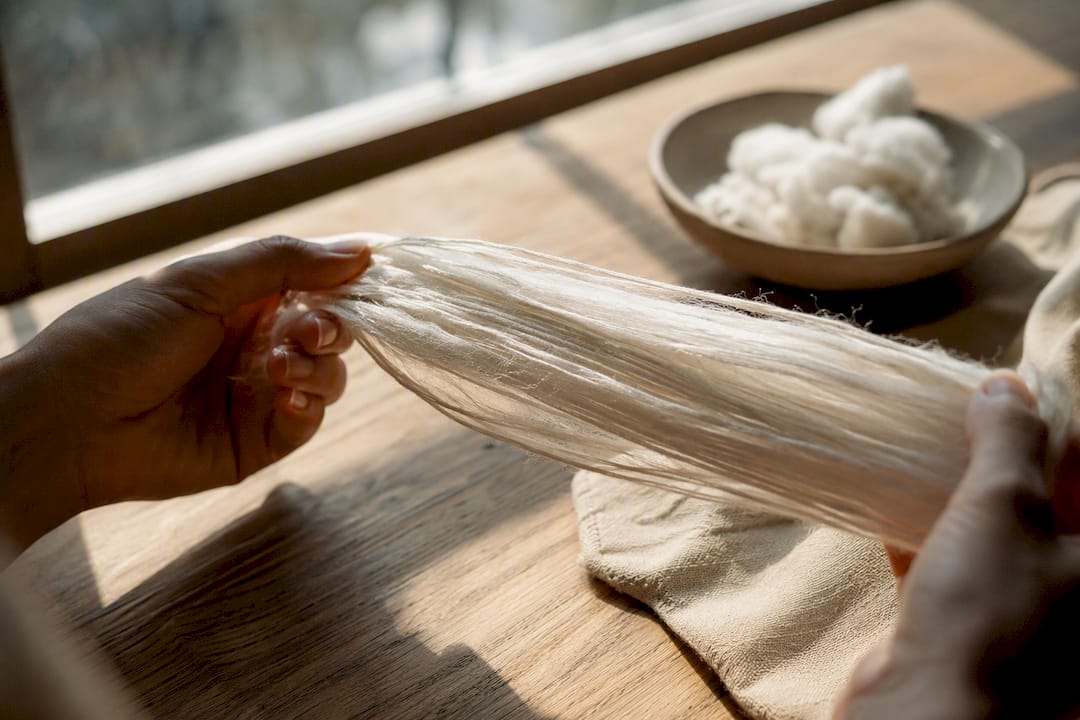
Staple length is the single fiber’s length, measured in millimeters or inches, and it’s the first thing a mill checks before spinning. Longer staples wrap around each other more times per inch of yarn, which means fewer loose fiber ends poking out of the finished fabric. That translates directly into less pilling, more strength, and a smoother handfeel, which is exactly why ELS cotton commands a premium over standard Upland fiber.
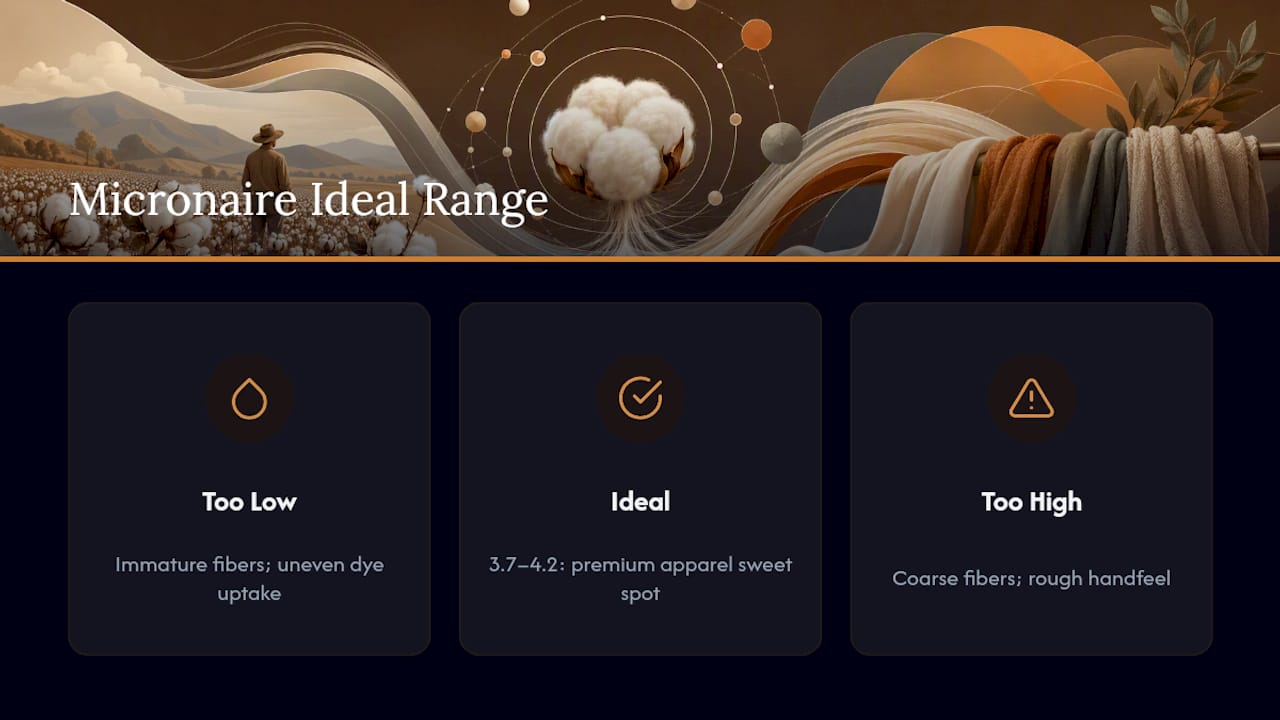
Micronaire (MIC) is the metric most buyers have never heard of but should ask about. It measures a blend of fiber fineness and maturity in a single number, and for premium apparel the sweet spot sits between 3.7 and 4.2. Fall below that range and you get immature fibers that soak up dye unevenly. Climb above it and the fiber turns coarse, giving the fabric a rougher hand no matter how the yarn was spun.
Mills and brands verify all of this with High Volume Instrument (HVI) testing, an industrial method that scores fiber length, length uniformity, strength, micronaire, color grade, and trash content in one pass, according to Cotton Works’ classification guide. These HVI numbers are what separates a marketing claim from a verified spec sheet.
Pro Tip: Ask a supplier for the HVI report on a lot, not just a fabric swatch. A single sample can feel great while the rest of the bale runs uneven, causing dye streaks known in the trade as “barré.”
Which Cotton Fabrics Should You Actually Know?
Fabric names describe how yarn gets constructed, woven, or knit, not which species grew it. Here’s a working lexicon organized by how you’ll actually use each one.
Everyday apparel fabrics
Jersey is a single-knit fabric, the stretchy, soft base of most T-shirts and casual tees. It drapes close to the body, breathes well, and its main weakness is pilling if the staple length is short. Choose combed, long-staple jersey for oversized tees that need to hold shape wash after wash, the kind of heavyweight knit you’ll find in Mrhappinessofficial’s Reminder Oversized Tee.
Popeline (poplin) is a tightly woven, plain-weave fabric with a fine crosswise rib, crisp enough for dress shirts and lightweight enough for summer dresses. Mercerized poplin gets treated to add sheen and strength, so check labels carefully since “poplin” alone doesn’t guarantee that finish.
Batist is a sheer, lightweight plain weave, traditionally made from fine combed cotton yarns. It’s the fabric behind delicate blouses, christening gowns, and handkerchiefs, and it wrinkles easily so it needs gentle ironing while still slightly damp.
Musselin (muslin) is a plain-weave cotton ranging from gauzy sheer to medium weight, used for everything from baby wraps to garment test patterns (“muslin mockups” in sewing). Cheap musselin frays badly at cut edges, so hem or serge raw seams before washing.
Voile is a soft, semi-sheer plain weave, lighter than poplin but with more body than batist, often chosen for curtains, summer scarves, and flowy dresses. It softens noticeably after a few washes.
Lawn sits between batist and voile in weight, a smooth, fine plain weave with a slight sheen, popular for shirting and quilting cottons. It presses crisp and holds print detail well, which is why you’ll see it in fine floral-print garments.
Etamine is an open, loosely woven fabric with a slightly rough texture, traditionally used for curtains and light summer suiting. It’s less common in mainstream retail but still shows up in European home-textile lines.
Organdy is a stiff, sheer, plain-weave cotton treated with a chemical or resin finish for permanent crispness, used in collars, cuffs, and structured trim rather than full garments. It won’t soften in the wash the way voile does, since the stiffness is baked into the finish.
Gaze (gauze) is a loosely woven, open-structure fabric prized for breathability, common in lightweight summer shirts and swaddle blankets. Multiple layers of gauze get stitched together for double-gauze fabric, which adds warmth without sacrificing softness.
Structured and heavy-duty weaves
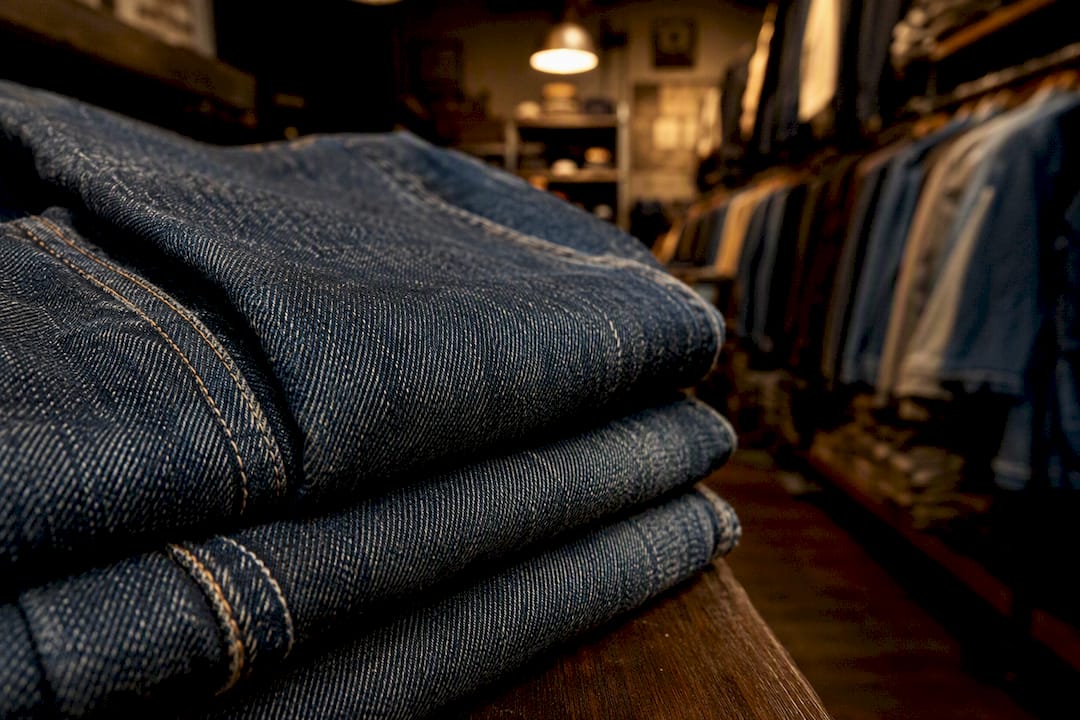
Köper (twill) is a diagonal-rib weave family that includes Denim as its most famous member. Denim’s diagonal twill traps dye (usually indigo) unevenly on purpose, which is why it fades at stress points. Raw, unwashed denim needs a cold soak before its first wear to set the dye and reduce transfer.
Chambray looks like lightweight denim but uses a plain weave, not a twill, giving it a softer drape and less structure. It’s the fabric behind casual button-downs that want denim’s look without the stiffness.
Canvas is a heavy, tightly woven plain or basket weave, the workhorse behind tote bags, sneakers, and structured jackets. Its weight is measured in ounces per square yard, and anything above 10 oz starts to feel more like upholstery than apparel.
Oxford is a basket weave with a slight sheen, one thick yarn crossing two thinner ones, common in button-down “Oxford shirts.” It resists wrinkling better than plain poplin, which is part of why it became a menswear staple.
Piqué has a raised, waffle-like or ribbed texture from a specialized weave, best known as the fabric on classic polo shirts. Its texture holds shape better than flat jersey, so it resists that limp, worn-out look longer.
French Terry is a knit fabric with loops on the inside and a smooth face outside, the fabric behind lighter sweatshirts and joggers that need breathability without a fleece’s bulk. It’s a common choice where brands want structure without excess weight, similar in spirit to the heavyweight cotton used in Mrhappinessofficial’s Signature Zip Hoodie.
How Should You Choose and Care for Cotton Fabric?
Buying cotton well comes down to reading past the fiber-content line on a label. Here’s the practical sequence:
- Check the fiber type claim. Look for “Pima,” “Egyptian,” “Supima,” or “ELS” if you want the longer-staple performance; a plain “100% cotton” tag tells you almost nothing about quality.
- Ask for fiber metrics on bulk orders. Staple length, Micronaire, and an HVI summary should be available from any serious supplier, not just a fabric swatch.
- Match GSM to use case. Lightweight shirting runs roughly 100 to 150 GSM, T-shirt jersey sits around 160 to 220 GSM, and heavyweight hoodie fleece or canvas climbs past 280 GSM.
- Look for certifications. GOTS and OEKO-TEX labels signal verified organic or chemical-safety standards, worth checking if that matters to your purchase.
- Preshrink before cutting. Sewists should wash and dry fabric yardage the same way they’ll treat the finished garment, since cotton can shrink 3 to 5% on its first hot wash.
Care rules vary by fabric weight. Sheer weaves like batist and voile want cool water and low heat. Denim holds color longer with cold washes and inside-out drying. Heavyweight jersey and French terry can handle warm water but benefit from air-drying to avoid over-shrinking the knit structure.
Pro Tip: If a garment feels rough straight out of the package, that’s often a Micronaire or maturity issue, not a design flaw. Quality cotton softens with wash, but it shouldn’t feel scratchy on day one.
Why Does Fiber Quality Actually Matter for What You Wear?
Staple-length classes aren’t a marketing gimmick. The USDA-aligned classification system grades fiber length, uniformity, strength, and micronaire because those four numbers predict yarn breakage rates and dye consistency on an industrial production line, long before a garment reaches a shelf.
A Micronaire reading between 3.7 and 4.2 marks the range where fiber fineness and maturity align well enough for even dye uptake and a soft, consistent hand, according to Baumwollbörse’s cotton quality data. Fall outside it and mills see either weak, immature fiber or an overly coarse one.
This is exactly why heavyweight streetwear built for structure, not just softness, leans on long-staple or ELS-based cotton. Fewer exposed fiber ends mean less pilling under repeated wear, which matters more on an oversized silhouette that’s meant to hold its shape season after season. Sources like Jeeyodee’s breakdown of ELS cotton cover this same fiber-to-durability link in more depth.
A Species-to-Fabric Roadmap for Buyers and Makers
Most buying guides treat “cotton types” as a fabric glossary and stop there. That’s backward. The fabric name is the last decision, not the first. The species and the fiber metrics behind it decide everything the fabric name can’t tell you: how it dyes, how it pills, and how long it holds shape.
It isn’t one. Two garments carrying that exact label can differ enormously depending on whether the fiber came from G. hirsutum or an ELS strain of G. barbadense, and whether the Micronaire landed inside that 3.7 to 4.2 window or drifted outside it.
If you take one thing from this roadmap, prioritize the fiber metrics over the fabric name. A heavyweight jersey tee spun from long-staple cotton will outlast a “premium” poplin shirt made from short, immature fiber, every time. Read the spec before you read the marketing.