
Keep Heavyweight Streetwear Black with Cold Water and Low Spin
Cold water. Inside out. Liquid detergent made for darks. Gentle cycle, low spin, air-dry in shade. That’s the routine. Heat and friction are what pull dye out of fabric, so every step above exists to remove one of those two forces. Heavily faded pieces need more than a good wash. Those call for a color refresher or a proper re-dye, covered further down.
TL;DR:
- Washing black clothes less frequently and avoiding overloading the machine are the most effective ways to prevent accelerated color fading.
- Sorting by fabric weight and turning garments inside out before washing helps protect fibers and surface color from abrasion and friction.
- Maintaining low water temperature, gentle cycles, and air-drying in shade significantly reduces dye loss and preserves deep black hues over time.
- Using liquid detergent formulated for dark fabrics and adding vinegar during the rinse cycle can help minimize detergent residue and graying.
- Heavyweight cotton streetwear retains color longer due to its dense pigment, but proper care routines are essential for lasting vibrancy.
Table of Contents
- How Do You Sort and Prep Black Clothes Before Washing?
- What Wash Settings Actually Prevent Black From Fading?
- How Should You Dry and Store Black Garments to Keep the Color?
- Can You Fix Faded Black Clothes at Home?
- Does Fabric Type Change How You Should Wash Black Clothes?
- What Does a Streetwear Brand Know About Keeping Black Actually Black?
- Is the Standard Laundry Advice for Black Clothes Actually Right?
- Shop Black Streetwear Built to Hold Its Color
- Sources
How Do You Sort and Prep Black Clothes Before Washing?
Fading starts before the machine even turns on. Most damage comes from what gets thrown in together, not just the settings dialed in afterward.
Sort by color first, then by fabric weight. A black hoodie and a pair of raw denim jeans might both be “black,” but denim is abrasive. Tumbling against lighter cotton in the same load sands down the surface fibers and dulls the color, the same “sandpaper effect” laundry experts point to when explaining why dark clothes fade. Keep heavy items, denim, and anything with zippers or hardware in their own load.
Before anything goes in the drum:
- Turn every black garment inside out. This protects the visible surface from abrasion against the drum and other clothes, a step laundry professionals treat as non negotiable for preserving dark colors
- Close all zippers and fasten buttons so they don’t snag or scrape neighboring fabric.
- Empty every pocket. Coins, receipts, and lip balm cause their own kind of damage.
- Use a mesh bag for anything delicate, printed, or embellished.
Not every black item needs a wash after one wear. Airing a garment on a hanger overnight or hitting it with a garment steamer often resets it without touching water at all. That decision alone does more for long-term color retention than any detergent choice, since overwashing is the biggest single driver of premature fading.
Pro Tip: Keep one mesh bag near the hamper specifically for black printed tees and logo pieces. It becomes automatic instead of a step you have to remember.
What Wash Settings Actually Prevent Black From Fading?
This is where most of the damage happens, and where most people get it wrong without realizing it.
1. Set the temperature between 20°C and 30°C. Hot water opens the fabric’s fibers and loosens the bonds holding dye in place, which is exactly why cold water washing is the standard recommendation for anything black. Warm or hot cycles strip color fast, even on the first few washes.
2. Choose a short or delicate cycle with low spin. Cap spin speed to a low, gentle level appropriate for delicate garments. High spin means more mechanical agitation, and agitation is what physically rubs pigment off fiber surfaces over time.
3. Don’t overload the drum. Clothes need room to move freely through the water. A packed machine forces garments to rub against each other under pressure, and that friction accelerates fiber wear and color loss just as much as a hot cycle does.
4. Use a liquid detergent made for dark fabrics. Powder detergents can leave behind a residue that settles into fibers and creates a grayish, hazy cast on black clothing over time. Liquid formulas rinse cleaner. Skip anything with optical brighteners or bleach, since brighteners are literally designed to make whites look whiter by depositing light-reflecting particles, the opposite of what black fabric needs.
A single load with too much detergent residue can dull a black garment faster than several washes at the wrong temperature.
5. Use additives sparingly and with care. A splash of white vinegar (about a quarter cup) added directly to the final rinse cycle can help strip lingering detergent residue that causes graying. Salt or coffee rinses show up often in home remedy lists, but treat them as occasional touch ups, not routine steps, since results vary by fabric and aren’t always even.
Pretreat stains before washing rather than letting a garment soak, and always test any additive on a hidden seam first.
How Should You Dry and Store Black Garments to Keep the Color?
Drying matters just as much as washing, maybe more, since heat and light exposure during drying are where a lot of visible fading actually happens.
- Air-dry black clothing inside out, in the shade. Direct sunlight breaks down dye pigment the same way it fades a car’s paint or a poster left in a window.
- If a dryer is unavoidable, use the lowest heat setting and pull garments out the moment they’re dry. Leaving them to tumble past that point just adds more heat exposure for no benefit.
- Skip dryer sheets on black loads. The waxy coating they leave behind can build up and create a dull film over repeated washes.
- Store finished garments in a cool, dark, breathable spot. A closet away from direct window light works better than a sealed plastic bin, which traps moisture and can encourage both mildew and dye transfer between pieces.
Get the drying and storage habits right, and a black garment can look nearly new well past the point where a carelessly dried one starts looking gray at the seams.
Can You Fix Faded Black Clothes at Home?
Some fading is reversible, some isn’t, and knowing which is which saves a lot of wasted effort.
- Check the fiber content first. Cotton and viscose accept commercial dye and color refreshers well. Polyester and elastane blends resist dye, since synthetic fibers weren’t built to bond with the same pigments as natural ones. A garment that’s mostly polyester usually won’t respond to a re-dye no matter how carefully it’s done.
- Decide between a color refresher and full re-dye. A color booster (added straight into a wash cycle) works for mild, even fading. A full fabric dye is for garments that have gone visibly gray or brown and need deeper pigment restored.
- Try gentle home methods first, with limits in mind. A vinegar rinse can brighten slightly by clearing residue. Salt or a strong coffee soak can deepen color on natural fibers, but results are rarely uniform, and dark coffee can leave an uneven tint on lighter trim or stitching.
- Test on a hidden seam before committing. The inside hem or an interior seam shows how the fabric reacts without risking the visible parts of the garment.
- Follow product instructions exactly, and wash re-dyed items separately for the first few cycles. Fresh dye sheds more than set dye, and it can transfer onto other clothes in the same load.
Pro Tip: If a garment is more than half faded, a professional re-dye service almost always gives a more even result than a home fix. Uneven color is harder to correct than no color.
Does Fabric Type Change How You Should Wash Black Clothes?
Not every black garment behaves the same way in the wash, and treating them all identically is where a lot of damage happens.
- Cotton and viscose hold and lose dye more visibly than synthetics, which is why they need the gentlest handling of the group.
- Polyester and elastane blends resist fading better but trap heat and static, so they still benefit from cold, low-heat cycles even though color loss isn’t the main risk.
- Prints, foil, and embroidered trim need inside out washing every time, since direct drum contact is what cracks and peels these details.
- Denim and heavyweight fabrics should run in their own load or on a dedicated jeans cycle to avoid abrading lighter garments nearby, a point echoed in guidance on separating loads by fabric weight.
- Heavyweight cotton streetwear holds shape and color longest when washed less often and dried on low heat, which keeps both the fabric’s structure and any printed graphics intact over years of wear.
What Does a Streetwear Brand Know About Keeping Black Actually Black?
Heavyweight cotton is unforgiving if you get the care routine wrong, and forgiving if you get it right. That’s the whole story with Mr. Happiness pieces.
Fewer washes, inside out handling, and low heat drying protect both pigment and the fabric’s hand feel. That combination is what keeps a heavyweight tee looking and feeling new after dozens of wears instead of a handful, a point that lines up with Mr. Happiness’s own care guidance for its cotton pieces.
Cheap fabric fades because it has nothing to lose. Heavyweight cotton fades slowly because there’s more pigment and more fiber holding onto it. Care routine decides how much of that advantage a garment actually keeps.
Skip the dryer sheets, skip the high heat, and skip washing after one wear when steaming or airing would do. Printed graphics on heavyweight tees crack fastest under high dryer heat, so that one setting change protects more than color alone.
Is the Standard Laundry Advice for Black Clothes Actually Right?
Most laundry advice for black clothing focuses entirely on the wash cycle. Temperature, detergent, spin speed. All correct, but incomplete. The bigger lever is frequency: washing less often protects color more than any detergent swap ever will, and that’s the part conventional advice buries under product recommendations.
Where the standard advice falls short is fabric weight sorting. Plenty of guides mention “wash darks together” and stop there, without addressing that a heavy denim jacket in the same load as a lightweight tee causes real abrasion damage regardless of water temperature.
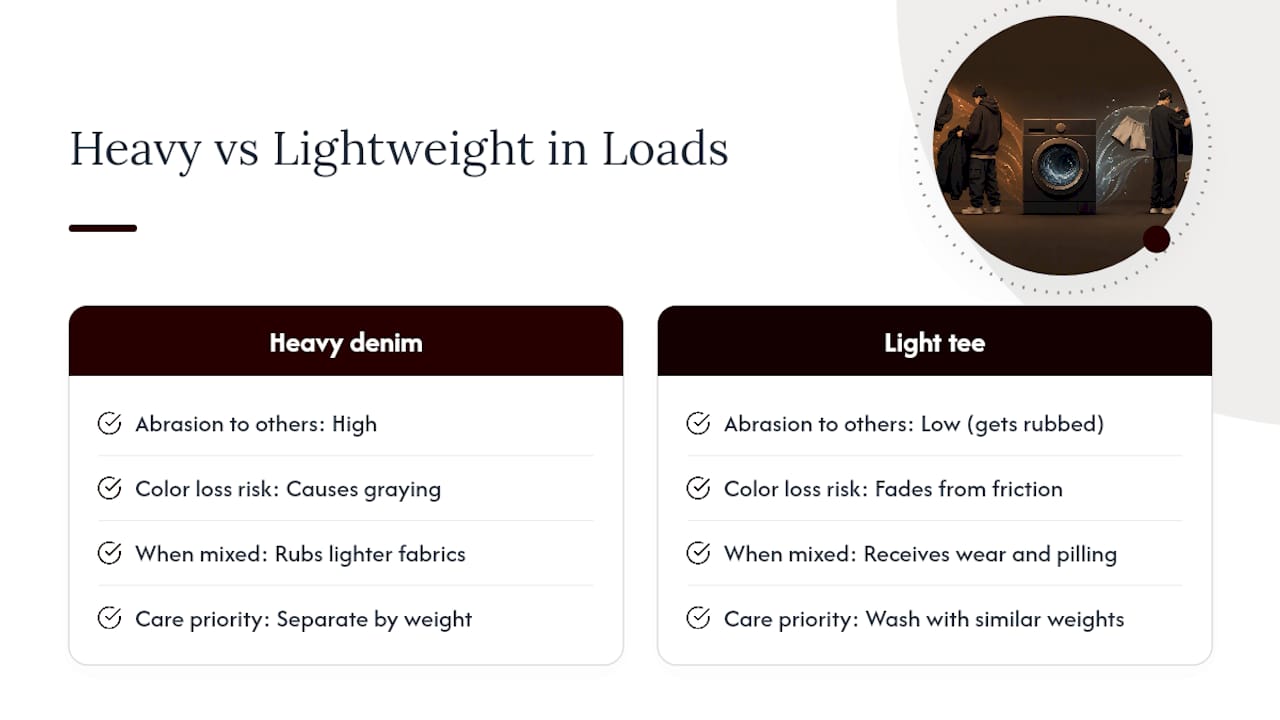
Prioritize in this order: wash less, sort by weight, then worry about detergent and temperature. Get the first two right and even a mediocre detergent choice won’t do much damage. Get them wrong and the best detergent on the market won’t save the color.
Home remedies like vinegar and coffee rinses have a place, but as maintenance, not rescue. Once a garment has visibly grayed, a proper color refresher or professional re-dye almost always outperforms a kitchen fix.
— Kofi
Shop Black Streetwear Built to Hold Its Color
A wash routine only pays off if the garment underneath was built to hold pigment in the first place. Mr. Happiness makes that part easy. Every piece is cut from heavyweight cotton, the kind that resists the graying and thinning that cheaper blends show after a handful of washes.

The Signature Zip Hoodie is built for exactly the routine above: cold wash, inside out, air-dry in shade, and it holds its deep black finish season after season. The Statement Oversized T-Shirt carries the same heavyweight construction, so its print stays sharp even with low heat drying. Both pieces are made to look better with a few years of proper care behind them, not worse.
Browse the full Mr. Happiness shop to find a piece worth building a real care routine around.
Sources
- Schwarze Wäsche waschen: Tipps — dm
- How to keep black & dark-colored clothes from fading — Whirlpool
- Schwarze Wäsche waschen — Wecasa
- Nie wieder ausbleichen — Vanish