
Jogger Materials: What Actually Makes a Pair Worth Buying
For most buyers, the best jogger material is a midweight cotton blend with a high cotton percentage and a small elastane portion, knit as French Terry or a light fleece. That mix gives structure, softness, and enough stretch to hold its shape after a hundred washes.
Here’s why that combination wins for most closets, not just gym bags:
- Comfort without compromise. Cotton breathes. Elastane keeps the waistband and cuffs from sagging by week three.
- Structure that lasts. A blended knit resists the “bag at the knee” look that pure cotton develops fast.
- Low maintenance. No special detergent, no delicate cycle, no ironing required.
Before buying, scan the product page for three things: material percentages, GSM (grams per square meter), and knit type. Those three numbers tell you more than any marketing copy ever will.
Key Takeaways
Choosing the right jogger material comes down to matching fiber content and fabric weight to your actual use case, not chasing marketing language.
| Point | Details |
|---|---|
| Check the numbers first | Material percentages and GSM predict comfort and durability better than brand claims. |
| Blends win for daily wear | Cotton with a small elastane percentage holds shape without sacrificing softness. |
| Match fabric to activity | Polyester and nylon blends outperform cotton for high-intensity training and sweat. |
| Certifications signal real quality | OEKO-TEX Standard 100 and GOTS confirm safety and sourcing claims beyond vague eco language. |
| Mrhappinessofficial fits lifestyle wear | The “Mind Over Noise” joggers use heavyweight cotton with measured elastane for structure and longevity. |
Table of Contents
- Jogger Materialien: A Breakdown of the Main Fabric Types
- Which Jogger Fabric Fits Your Use Case?
- What to Check on the Label Before You Buy
- Caring for Jogger Fabrics Without Wrecking Them
- Sustainability and Certifications Worth Knowing
- Why the “Mind Over Noise” Joggers Get the Material Mix Right
- What Actually Matters Most When You’re Buying
- Ready to Shop by Material, Not Guesswork
- Frequently Asked Questions
- Sources
Jogger Materialien: A Breakdown of the Main Fabric Types
Jogginghosen have traditionally been made from sweatshirt fabric, historically cotton, with French Terry and brushed fleece as the two most common variants. That history still shapes what’s on shelves today, but the category has expanded to include synthetic fibers built for performance rather than comfort alone.
Cotton (including Pima and organic). Soft, breathable, and familiar against skin. Pima cotton has a longer fiber staple, which means less pilling and a smoother hand-feel than standard cotton. Organic cotton skips synthetic pesticides during growing, though it behaves identically to conventional cotton once woven. The downside: cotton holds moisture and takes a while to dry, and without elastane it stretches out at the knees over time.
French Terry. This knit has a smooth outer face and a looped inner surface, which gives it a lighter hand than fleece while still trapping some warmth. Brands favor it for spring and transitional joggers, then switch to brushed fleece once temperatures drop.
Brushed fleece. Heavier, warmer, and cozier against the skin thanks to a brushed inner surface. Great for cold weather, less great for anyone who runs warm. Fleece pills faster than French Terry because the brushed fibers loosen with friction.
Polyester. Dries quickly, resists stretching, and holds its shape wash after wash. Polyester-based fabric is generally the better call for sport, while cotton wins on casual comfort. The trade-off is a slightly plasticky feel against skin and a tendency to trap odor if not washed promptly.
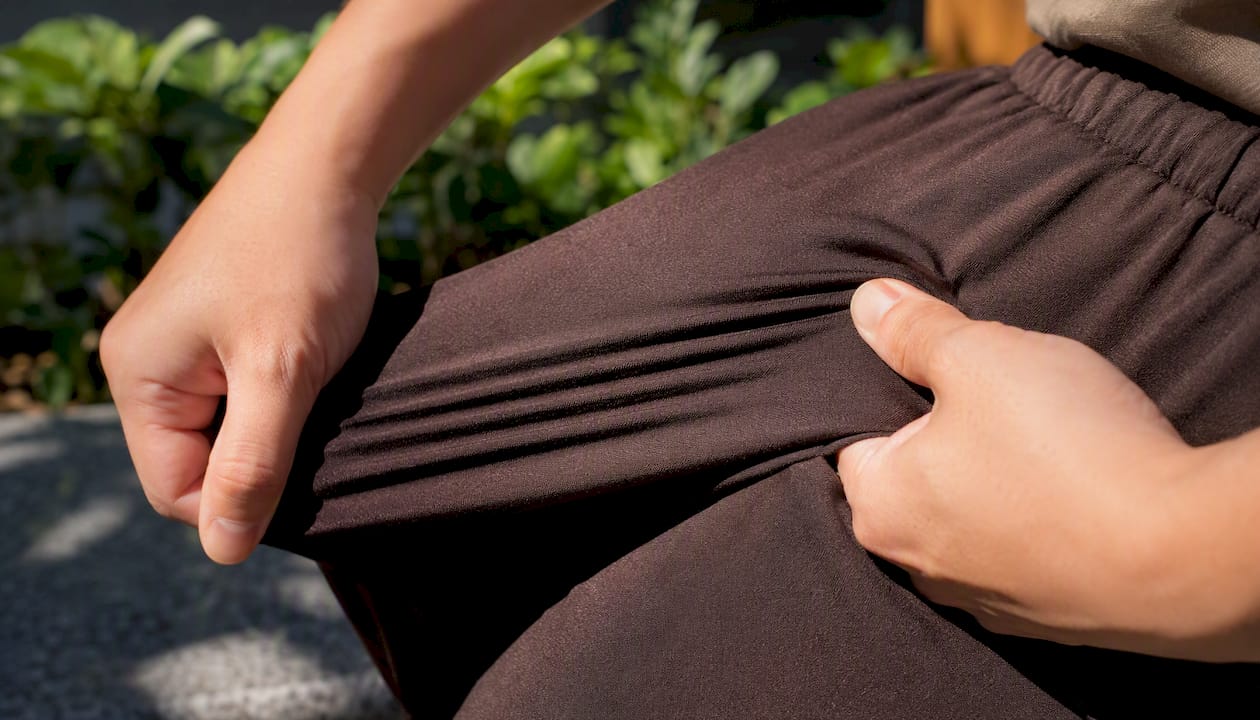
Nylon (polyamide). Tougher and more abrasion-resistant than polyester, often used in performance joggers where durability under repeated stretching matters more than softness.
Elastane (spandex). Rarely worn alone. Even 2 to 5 percent elastane in a blend adds recovery, meaning the fabric snaps back instead of stretching out permanently.
| Attribute | Cotton | French Terry | Fleece | Polyester | Nylon | Elastane blend |
|---|---|---|---|---|---|---|
| Feel | Soft, natural | Soft, light | Plush, warm | Smooth, synthetic | Smooth, durable | Snug, stretchy |
| Breathability | High | High | Moderate | Moderate | Low to moderate | Depends on base fiber |
| Moisture handling | Absorbs, dries slow | Absorbs, dries slow | Absorbs, dries slow | Wicks, dries fast | Wicks, dries fast | Improves with base fiber |
| Warmth | Moderate | Moderate | High | Low to moderate | Low | Neutral |
| Durability | Moderate | Moderate | Moderate | High | Very high | Improves shape retention |
| Best uses | Lounge, streetwear | Everyday, mild weather | Cold weather | Training, running | High-intensity training | Everyday and performance blends |
Check the label for material percentages and GSM before anything else. A tag reading “80% cotton, 20% polyester” tells you far more about how the pants will wear than any product photo.
Which Jogger Fabric Fits Your Use Case?
Not every jogger needs to survive a sprint interval. Match the fabric to what you’ll actually do in it.
- Lounge and streetwear: Heavyweight cotton or a cotton-elastane blend. Structure and drape matter more than moisture control here.
- Everyday commuting: Cotton-polyester blends. You get cotton’s softness with polyester’s shape retention, which matters when you’re sitting, walking, and standing all day in the same pair.
- Light workouts: French Terry with a small elastane percentage. Breathable enough for a walk or light cycling, stretchy enough not to restrict movement.
- High-intensity training: Polyester or nylon with elastane. Technical fibers engineered for moisture transport and breathability outperform cotton once you’re sweating hard.
- Cold-weather wear: Brushed fleece, ideally with a cotton or cotton-poly base for insulation without excess bulk.
Blends win in almost every category except pure performance training, where synthetic fibers engineered for moisture management take precedence.
What to Check on the Label Before You Buy
Product descriptions throw around words like “premium” and “soft” constantly. The numbers on the label are what actually tell you something.
Material percentages. A 95/5 cotton-elastane blend behaves close to pure cotton with just enough stretch to hold shape. An 80/20 cotton-polyester blend shifts noticeably toward durability and away from breathability. Neither is wrong, but they wear differently, and the split shapes your care routine too.
GSM (grams per square meter). This measures fabric weight and density. Lightweight joggers usually sit around 240 to 280 GSM. Midweight, the sweet spot for most buyers, runs 280 to 350 GSM. Heavyweight fleece or structured cotton climbs past 350 GSM. Higher GSM generally means more durability and warmth, but also more bulk.
Knit type. French Terry drapes softer and looks less bulky under other clothing. Fleece adds warmth at the cost of stiffness. Jersey knits (common in lighter joggers) feel closer to a T-shirt fabric and drape looser, with less structure.
Look for tight, even stitch density, reinforced pocket openings, and ribbed cuffs that show visible recovery, meaning they snap back after being stretched rather than staying loose.
Pro Tip: Zoom into product photos of the ankle cuffs and waistband before buying online. If the ribbing looks stretched or wavy in the photo itself, that’s a sign of thin elastane content or aged sample stock, not just a bad camera angle.
Caring for Jogger Fabrics Without Wrecking Them
Every material has its own failure point, and most jogger damage traces back to the wrong wash cycle rather than actual fabric defects.
- Cotton: Wash cool, reshape while damp, and avoid high heat drying, which is the single biggest cause of shrinkage.
- Polyester and nylon: Low-heat drying only. High heat can warp the synthetic fibers and dull the fabric’s finish.
- Blends: Gentle cycle, following the more delicate fiber’s care rule, usually cotton’s.
- Elastane: Avoid high heat entirely; heat breaks down the stretch fibers faster than any other factor, leaving cuffs and waistbands permanently loose.
| Material | Wash temp | Drying | Ironing |
|---|---|---|---|
| 100% cotton | Cool to warm (30 to 40°C) | Low heat or air dry | Medium heat, avoid prints |
| French Terry / fleece | Cool (30°C) | Low heat, tumble briefly | Not recommended |
| Polyester / nylon | Cool | Low heat or air dry | Low heat only |
| Elastane blends | Cool | Air dry preferred | Avoid direct heat |
Pilling shows up first on brushed fleece, since the raised fibers rub against themselves in the wash. Losing shape at the knees and waistband usually means there’s little or no elastane in the blend. Fading on polyester blends often points to lower-quality dyeing rather than the fiber itself.
With reasonable care, a well-made pair of joggers typically lasts multiple years of regular wear, with cotton-heavy pairs generally lasting less time than blended, higher-weight fabrics with elastane.
Sustainability and Certifications Worth Knowing
Not every “eco-friendly” label means much. A few certifications actually verify something specific.
- GOTS (Global Organic Textile Standard): Confirms organic fiber content and restricts harmful processing chemicals through the entire supply chain.
- OEKO-TEX Standard 100: Screens for harmful substances in the finished fabric. Some French Terry jogger listings note OEKO-TEX Standard 100 verification directly on the product page, along with construction details like elasticized ankle hems and internal drawcords.
- Bluesign: Focuses on chemical input management across manufacturing, a stronger signal for factory-level responsibility than fiber origin alone.
Recycled polyester reduces reliance on new petroleum extraction, though it still sheds microplastics in the wash, same as virgin polyester. Organic cotton uses less synthetic pesticide during growing but doesn’t inherently use less water than conventional cotton. Blended fabrics, cotton mixed with polyester and elastane, are harder to recycle than single-fiber garments since separating the fibers at end of life is neither cheap nor common yet.
Statistic Callout: Product pages that mention OEKO-TEX Standard 100 verification alongside specific construction details tend to signal genuine quality control rather than vague “eco-friendly” marketing language, according to how certified French Terry joggers present their material claims.
Look for post-consumer recycled percentages stated as a number, not a phrase. “Made with recycled materials” tells you nothing. “40% post-consumer recycled polyester” tells you exactly what you’re buying.
Why the “Mind Over Noise” Joggers Get the Material Mix Right
Mrhappinessofficial built the “Mind Over Noise” joggers around the exact trade-off this guide keeps circling back to: heavyweight cotton for structure and hand-feel, with a measured elastane percentage so the fit holds instead of sagging by month two.
- Fabric composition: Midweight to heavyweight cotton blend, structured knit for drape without stiffness.
- Construction highlights: Reinforced seams at stress points, ribbed cuffs built for recovery rather than one season of wear.
- Care advice: Cool wash, low-heat drying, no ironing needed given the knit structure.
This isn’t a performance legging built for interval training. It’s a jogger built for the other 90 percent of your week, sitting, walking, working, existing in something that feels as good as it looks.
A jogger that holds its shape after the twentieth wash says more about its construction than any tag ever could.
Pair the joggers with the Signature Zip Hoodie for a matching set, or browse the full Signature Collection to see how the same fabric philosophy carries across every piece.
What Actually Matters Most When You’re Buying
The single most useful thing a buyer can learn from all this: the fabric percentage and GSM on a product page predict comfort and durability far better than the brand name printed on the waistband.
Retailers know shoppers respond to words like “premium” and “buttery soft,” which is why plenty of retail sweatshirt collections lean on that language over hard numbers. But a 60/40 cotton-polyester blend at 260 GSM will behave the same whether it costs $30 or $90. The number doesn’t lie. The adjective might.
Conventional shopping advice tells you to “feel the fabric” in store, which is fine advice if you’re buying in person. Online, that option disappears. What replaces it is reading the spec sheet like it actually matters, because it does. Skip the percentages and GSM, and you’re gambling on a description written to sell, not to inform.
Here’s the part most guides skip: fit problems people blame on sizing are frequently fabric problems in disguise. A pair that “runs small after washing” usually has too little elastane and too much heat exposure in the dryer. A pair that “feels cheap” within a month often had a GSM low enough that it was never going to hold structure past a handful of washes.
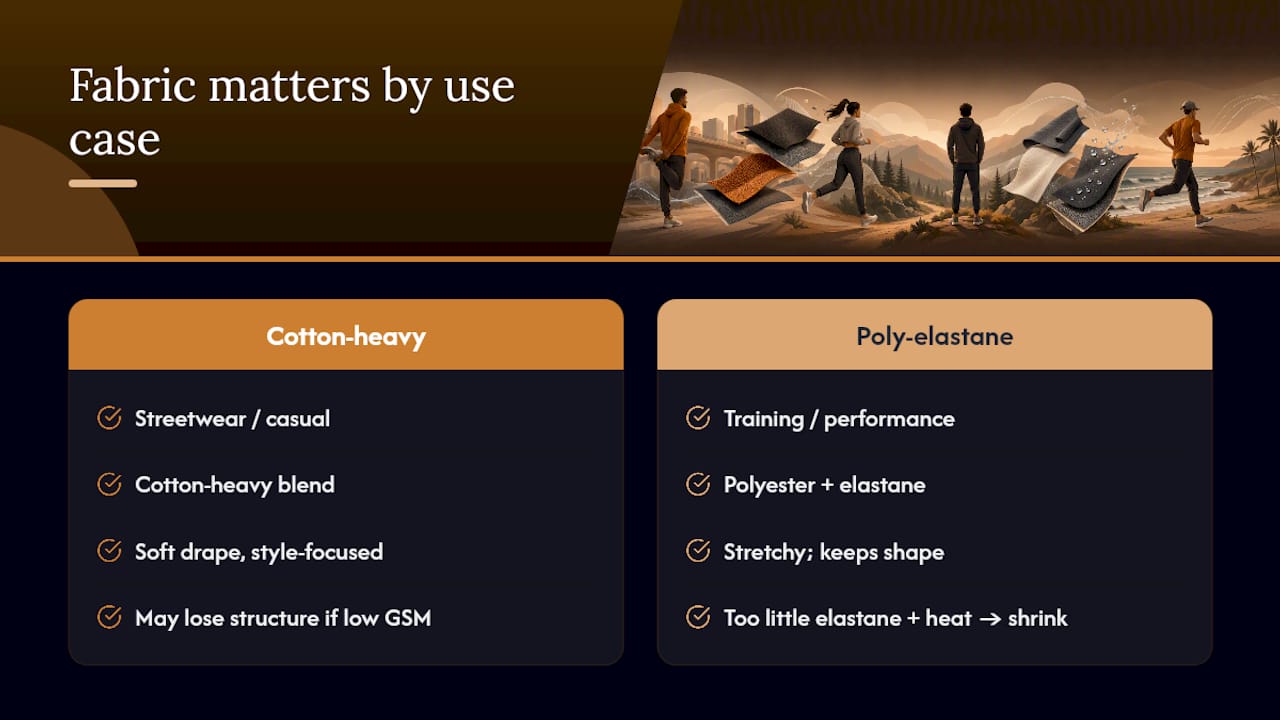
If there’s one thing worth prioritizing above all else, it’s this: buy for your primary use case first, then let softness and style follow. A cotton-heavy streetwear jogger and a polyester-elastane training jogger solve two different problems, and no single fabric solves both well.
Ready to Shop by Material, Not Guesswork
Mrhappinessofficial builds every piece around fabric choices that actually hold up, not just look good on a hanger. The “Mind Over Noise” joggers use the heavyweight cotton blend and measured elastane percentage this entire guide points toward: structure that survives repeated washing, softness that doesn’t disappear after week three.

If you’re building out a full rotation rather than a single pair, The Happiness Set pairs the joggers with a matching hoodie cut from the same fabric logic, same GSM philosophy, same construction standards. No mismatched materials, no guessing whether pieces will wear evenly against each other over time.
For readers who want to browse everything at once, the Signature Collection shop page lets you filter by piece and see the same material transparency across hoodies, tees, and shorts. Pick your primary use case, check the fabric details on the product page, and add the pair that matches how you’ll actually wear it.
Frequently Asked Questions
What is the best jogger material for everyday wear? A cotton blend with 5 to 10 percent elastane, knit as French Terry, handles daily wear best. It balances softness, breathability, and shape retention without needing special care.
Is cotton or polyester better for joggers? Polyester dries faster and resists stretching better, making it the stronger choice for training, while cotton offers superior softness for casual, everyday wear.
What does GSM mean on a jogger label? GSM stands for grams per square meter and measures fabric weight. Lightweight joggers run around 240 to 280 GSM, midweight sits at 280 to 350 GSM, and heavyweight fleece exceeds 350 GSM.
Does elastane make joggers wear out faster? No. A small elastane percentage, typically 2 to 5 percent, actually extends the life of a jogger by helping cuffs and waistbands recover their shape instead of stretching out permanently.
Are certified fabrics worth paying more for? Certifications like OEKO-TEX Standard 100 and GOTS verify specific claims about chemical safety and organic sourcing, which makes them a more reliable signal than generic “eco-friendly” marketing language.
Sources
- Jogginghose
- 6 Arten von Sporthosen: Der ultimative Leitfaden – Goal Sports Wear
- Baumwolle oder Polyester was ist bei Trainingshosen besser?
- Funktionskleidung: Die Materialien für Sportbekleidung
- French Terry Jogger – Eberjey