
Hoodie Pflege: The Right Way to Wash and Store Your Hoodie
The quickest way to keep a hoodie soft, shaped, and print-intact is to wash it infrequently on a gentle, cold cycle, inside out, with a mild detergent. Secure the drawstrings. Air-dry and reshape while damp. Skip the dryer’s high heat.
- Wash cold (30°C), gentle program, inside out
- Mild, color-safe detergent. No bleach. No overloading the drum
- Air-dry flat or on a broad hanger. Reshape while damp
Key Takeaways
The single most reliable rule for hoodie longevity is washing infrequently on a cold, gentle cycle, inside out, followed by air drying and reshaping while damp.
| Point | Details |
|---|---|
| Default wash temperature | Use 30°C on a gentle cycle; reserve 40°C for label-approved, heavily soiled loads. |
| Protect prints first | Turn hoodies inside out, skip fabric softener, and use a laundry bag for printed pieces. |
| Dry without heat damage | Air-dry flat or on a broad hanger, reshaping while damp instead of using high dryer heat. |
| Wash less, air out more | Rely on airing between wears and spot-cleaning to stretch the interval between full washes. |
| Match care to fabric | Fleece needs low spin and flat drying; stretch blends need low heat to protect elastic fibers. |
Table of Contents
- Hoodie Pflege Starts Before You Press “Start”
- How Do You Get Stains Out Without Ruining the Fabric?
- What Washing Machine Settings Protect a Hoodie Best?
- What’s the Best Way to Dry a Hoodie Without Shrinking It?
- Do Fleece and Blended Hoodies Need Different Care?
- What Small Habits Slowly Wreck a Hoodie?
- Mr. Happiness Care Notes for Heavyweight Cotton Hoodies
- How Often Should You Actually Wash a Hoodie?
- How Do You Freshen a Hoodie Without Washing It Every Time?
- Can You Safely Iron or Steam a Hoodie?
- An Editorial Take on Hoodie Care That Actually Holds Up
- Sources
Hoodie Pflege Starts Before You Press “Start”
Good hoodie pflege happens before the machine ever spins. Check the care label first. The symbols tell you the maximum temperature, whether tumble drying is allowed, and if bleach is off the table entirely.
- Read the label. If two symbols seem to conflict, always follow the more conservative one. A 40°C symbol next to a “low heat only” dryer icon means treat the whole garment gently.
- Turn it inside out. This single step protects prints, embroidery, and the fleece interior from friction against zippers or rough fabric. Nike’s own washing guide makes this the first step for a reason: turning garments inside out and securing zippers or cords reduces the abrasion that fades prints over time.
- Secure the drawstrings. Knot the two ends together or tuck them fully into the hood. Loose cords get pulled into the drum and can fray or knot permanently.
- Sort by weight and color. Heavyweight cotton hoodies shed lint that clings to lighter garments. Wash dark colors separately for the first few cycles.
- Use a laundry bag for printed pieces. A mesh bag cuts down on the tumbling action that cracks vinyl or screen prints.
Pro Tip: Loop the drawstring through a soft hair tie instead of knotting it tight. It’s just as secure and won’t leave a crease once the hoodie dries.
How Do You Get Stains Out Without Ruining the Fabric?
Test any stain remover on an inside seam first. Blot, never scrub. Rubbing pushes the stain deeper into the fibers and can rough up a printed surface.
- Oil or grease: Blot excess, then work a small amount of dish soap into the spot before washing.
- Sweat or protein-based stains: Soak briefly in cold water with an enzyme-based pre-wash treatment. Hot water sets protein stains permanently, so skip it here.
- Grass: A dab of rubbing alcohol on a cloth, blotted rather than rubbed, lifts most grass stains before the wash cycle.
- Ink: Same approach. Alcohol on a cloth, dabbed from the outside of the stain inward.
- Printed areas: Avoid harsh solvents and aggressive scrubbing directly on the design. A print-specific care guide recommends treating stains near a print with the mildest method available and testing first.
For collar and cuff sweat rings that keep coming back, proven sweat stain removal methods built for sportswear apply just as well to hoodie fabric. If a stain survives two treatment attempts, stop. Repeated home treatment on the same spot weakens fibers faster than a professional cleaner would.
What Washing Machine Settings Protect a Hoodie Best?
Cold water, gentle cycle, mild detergent. That is the entire formula for most hoodies, and deviating from it is where fabric damage starts.
- Temperature: 30°C is the safe default for nearly every hoodie. Care guidance for hoodies treats 30°C as the standard, with 40°C reserved only for heavily soiled loads when the care label explicitly allows it.
- Detergent: Choose a mild, color-safe or delicate formula. Skip bleach entirely, and measure the dose rather than eyeballing it.
- Program: Delicate or gentle cycle, shorter wash time, low mechanical action.
- Spin speed: Keep it in the 600 to 800 RPM range where the machine allows a choice.
Statistic Callout: Standard household washers vary in spin speed depending on the setting, with delicate cycles using lower speeds and normal cycles using higher speeds. The higher end of that range twists and stretches knit fibers, which is exactly why textile care guidance points to high spin speeds as a direct cause of a rough, felted inner nap over time.
Overloading the drum matters just as much as the settings. A packed drum means more friction between garments, more pilling, and more stress on printed surfaces. Give the hoodie room to move, and a mesh laundry bag further shields prints from rubbing against zippers or buttons on other clothes in the load.
What’s the Best Way to Dry a Hoodie Without Shrinking It?
Air drying wins, every time, if shape and softness matter to you.
- Pull the hoodie out promptly after the spin cycle ends. Damp fabric left balled up in the drum wrinkles and can develop a musty smell.
- Reshape it while still damp: smooth the shoulders, straighten the sleeves, square off the hem.
- Lay heavy knits flat on a towel. Hanging a wet, heavyweight hoodie stretches the shoulders and neckline under its own weight.
- Keep it out of direct sun. UV exposure fades color faster than almost anything else in the care routine.
- If you must use a dryer, low heat only, and only if the label permits tumble drying at all.
- Wool dryer balls cut drying time and reduce clumping, but pull the hoodie out slightly damp rather than running a full high-heat cycle.
Pro Tip: Once it’s dry, give the hoodie a gentle shake and run a soft garment brush against the nap in one direction. It fluffs the interior back up without stressing the fibers the way a hot dryer cycle does.
Do Fleece and Blended Hoodies Need Different Care?
Printed hoodies, fleece-lined pullovers, and stretch blends each have their own failure points, and treating them all the same way is how damage creeps in.
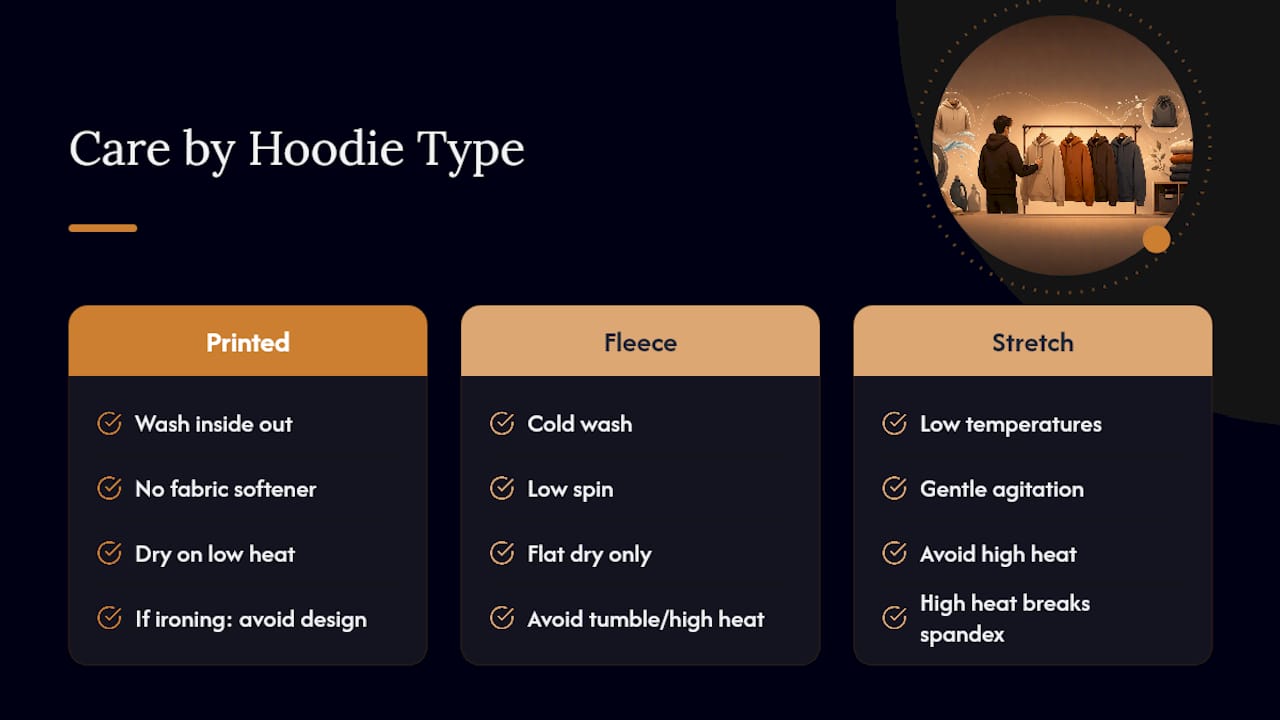
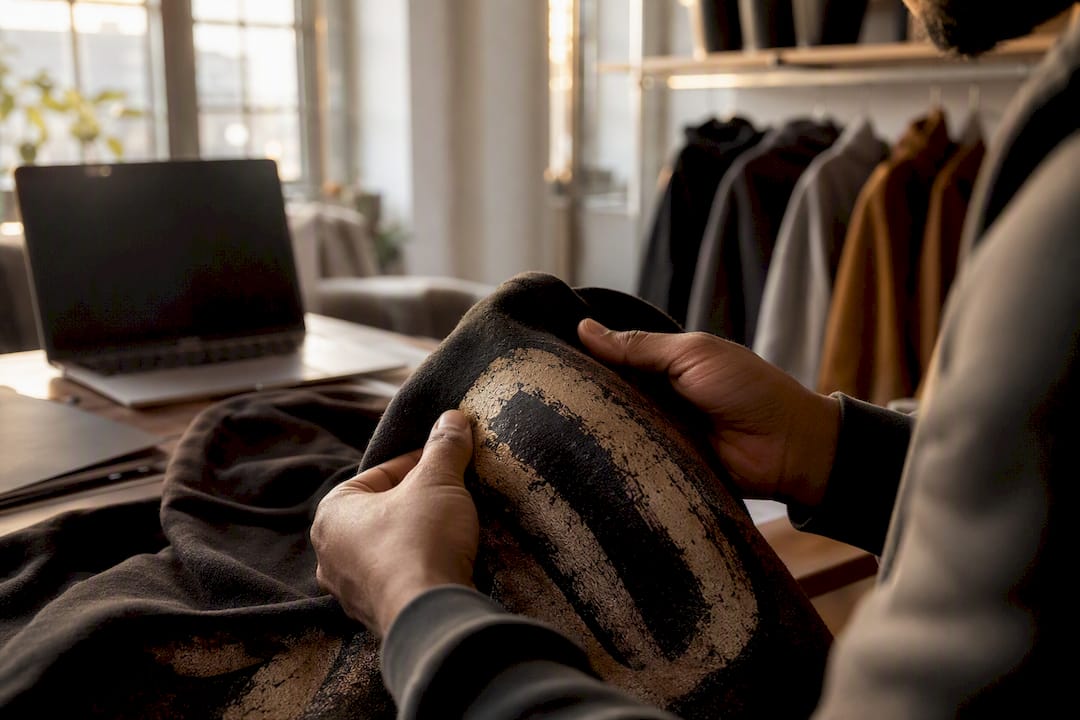
Printed hoodies: Always wash inside out. Skip fabric softener entirely. Guidance for printed garments is specific on this point: softener leaves a film that can weaken print adhesion over repeated washes. Dry on low heat, and if ironing is unavoidable, never press directly on the design.
Fleece and raised-nap fabric: Cold wash, low spin, flat drying only. Fleece is prone to matting when it tumbles on high heat, and once the nap flattens, it doesn’t fully recover.
Stretch blends with elastane or spandex: Low temperatures and gentle agitation preserve the elastic fibers. High heat breaks down spandex over time, which is why a blend hoodie loses its recovery and starts sagging at the cuffs and hem.
When to call a professional cleaner: Deep-set stains that survive two home treatments, delicate embroidery, or a print that’s already showing cracking are all signs it’s time to hand the garment to someone who works with textiles for a living.
What Small Habits Slowly Wreck a Hoodie?
Most hoodie damage isn’t dramatic. It’s death by a thousand small habits.
- Washing after every single wear. Air the hoodie out on a hanger instead. Most casual wears don’t need a full wash cycle.
- Overusing detergent or fabric softener. Extra product doesn’t mean extra clean. It just leaves residue that stiffens the fabric and dulls the softness you’re trying to protect.
- Running aggressive cycles by default. Save the normal or heavy-duty cycle for towels, not hoodies.
- Tossing it in with rough textiles. Denim and zippered jackets abrade knit fabric in the wash.
- Hanging heavyweight hoodies long-term. Fold them instead to keep the shoulders from stretching out of shape.
Quick check before every wash: inside out, drawstrings secured, zippers closed, mild detergent measured, cold cycle selected.
Mr. Happiness Care Notes for Heavyweight Cotton Hoodies
Heavyweight cotton holds its shape best when it’s treated with a light touch. A few notes from how we build our own hoodies:
- Wash inside out on a cold, gentle cycle to protect the interior brushed fleece and any printed graphics.
- Keep the spin speed low. Heavyweight cotton absorbs more water than lighter blends, and a high spin stresses the seams.
- Air-dry flat. Heavyweight fabric holds moisture longer, so patience here pays off in shape retention.
The Signature Zip Hoodie and the “Be Unforgettable” Hoodie are both built from heavyweight cotton designed for daily wear, and they respond best to exactly this kind of gentle, infrequent wash routine.
How Often Should You Actually Wash a Hoodie?
There’s no single number that fits every hoodie, but usage and fabric weight both push the answer in a clear direction.
A hoodie worn over a t-shirt for a few hours, without direct skin contact or heavy sweat, can go several wears before it needs a wash. One worn directly against skin during a workout needs attention sooner, since sweat and oils break down fibers faster than dirt ever does.
Fabric weight matters just as much as usage. Heavyweight cotton hoodies, the kind built for structure and drape, hold their shape and resist odor longer between washes than thin, lightweight cotton. Fleece-lined hoodies fall somewhere in between: the fleece traps warmth and moisture against the body, which means it picks up odor faster than the smooth cotton exterior lets on.
A practical rule: wash after visible staining, after intense physical activity, or after roughly four to five regular wears, whichever comes first. Between those washes, air the hoodie out on a hanger in a well-ventilated space rather than folding it straight back into a drawer. That single habit does more to extend a hoodie’s life than any detergent choice.
Printed hoodies deserve slightly more caution on the low end of that range. Every wash cycle, however gentle, puts some wear on a printed design, so stretching the interval between washes protects the graphic as much as it protects the fabric underneath it.
How Do You Freshen a Hoodie Without Washing It Every Time?
Odor and dirt are not the same problem, and treating them the same way wastes wear on the fabric.
Hang the hoodie in a room with open airflow for a few hours. Odor molecules trapped in fibers dissipate faster than most people expect once the garment isn’t balled up in a closet or gym bag.
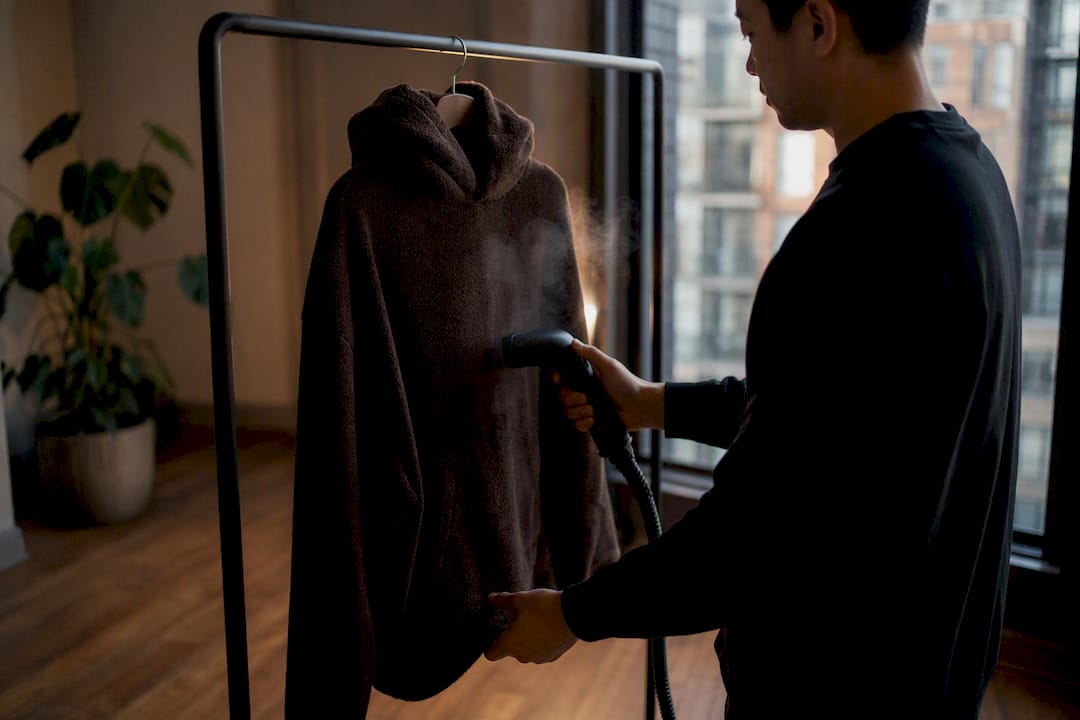
A light mist of a fabric refresher, sprayed evenly and allowed to air-dry, handles mild odor without a full wash cycle. Steam works even better for genuinely stubborn smells: hang the hoodie and pass a garment steamer a few inches away. The heat and moisture loosen odor-causing residue trapped deep in the fibers, particularly in a fleece interior, without the mechanical stress of a wash.
Baking soda is a reliable low-tech option too. Sprinkle it lightly on the interior, let it sit for a couple of hours, then shake or brush it out. It absorbs odor rather than masking it.
Spot-cleaning small areas, like underarms, with a damp cloth and a touch of mild detergent handles localized odor sources without committing the entire hoodie to a wash cycle. Save the full wash for when odor persists after airing out, or when visible dirt actually calls for it.
Can You Safely Iron or Steam a Hoodie?
Steam is almost always the safer choice over direct ironing, especially for anything with a print or embroidery.
If ironing is genuinely necessary, use the lowest heat setting your iron offers and always place a thin cloth between the iron and the fabric. Never press an iron directly onto a printed design. Heat can soften vinyl and screen-print adhesives to the point where the design cracks or peels on the very next wash.
A handheld garment steamer is the better tool for hoodies in almost every case. Hang the hoodie, keep the steamer a few inches from the fabric, and move it in slow, even passes. Steam relaxes wrinkles in cotton and fleece without the direct heat contact that risks scorching or flattening a raised print.
Focus ironing or steaming on the plain panels, sleeves, and hood, and treat any printed or embroidered section with extra distance. If a hoodie is wrinkled mainly from storage rather than washing, a few minutes on a hanger in a steamy bathroom often does the job with zero equipment at all.
An Editorial Take on Hoodie Care That Actually Holds Up
Most hoodie care advice treats every hoodie like it’s disposable streetwear, which is exactly backwards. The garments worth this much attention to care are the ones built from heavyweight cotton with real construction behind them, and those are precisely the pieces that reward patience.
The conventional wisdom oversells frequency. Wash less, and most hoodies age better, not worse. The interior nap, the print adhesion, the shape at the shoulders: all of it degrades faster from repeated washing than from wear itself. Airing a hoodie out is not a shortcut. It’s the more disciplined choice.
If there’s one priority to take from this guide, it’s temperature control over everything else. Cold water and low heat solve more problems than any specialty detergent or fabric treatment ever will. Get that right, and the rest of the routine, drawstrings, laundry bags, gentle cycles, just protects the gains you’ve already made.
Sources
- So wäschst Du Deinen Hoodie richtig: Eine Anleitung für ewige Weichheit
- Bedruckter Hoodie: Material wählen & richtig pflegen
- Hoodie richtig waschen: So bleibt die Innenseite weich und flauschig