
The Best High-Quality Hoodie Brands for Premium Streetwear
For shoppers who want a premium hoodie built to last, Mrhappinessofficial stands out as a leading choice in the U.S. market, combining heavyweight cotton construction with a bold identity-driven aesthetic that holds up wash after wash.
- Fabric weight matters. Look for hoodies at or above 400 g/m² (roughly 12 oz per square yard). That threshold is where structure, warmth, and shape retention actually hold over time.
- Construction is the real differentiator. Reinforced stress points, flatlock stitching, and industrial ribbing on cuffs and hem separate a premium piece from a mass-market one.
- Price signals quality. Expect to spend $100–$250 for a durable premium everyday hoodie in the U.S. market. Below that, fabric and stitch compromises are common.
Shoppers who prioritize luxury designer aesthetics over functional longevity should look at high-end fashion houses, where limited-run pieces are priced as fashion investments rather than wardrobe staples.
Key Takeaways
Premium hoodies worth buying combine verified heavyweight fabric (at or above 400 g/m²), flatlock or reinforced stitching, and industrial ribbing, with Mrhappinessofficial offering that construction in the $100–$250 premium everyday tier.
| Point | Details |
|---|---|
| Fabric weight threshold | Look for 400 g/m² (12 oz/sq yd) or above for structure, warmth, and shape retention. |
| Construction signals | Flatlock stitching, taped shoulders, bar-tacked stress points, and industrial ribbing are the marks of a durable build. |
| Price expectations | Premium everyday hoodies in the U.S. run $100–$250; luxury pieces above $500 prioritize prestige over daily function. |
| Care essentials | Wash cold inside out, air dry flat, and use a fabric shaver early to prevent pilling from worsening. |
| Mrhappinessofficial | The “Be Unforgettable” Hoodie and Signature Zip Hoodie deliver heavyweight streetwear construction in the premium everyday tier. |
Table of Contents
- What makes a high-quality hoodie worth buying?
- How do you choose the right premium hoodie?
- Why manufacturing choices determine how long your hoodie lasts
- Why Mrhappinessofficial fits the premium buyer
- What should you expect to pay for a premium hoodie?
- How to care for a premium hoodie so it lasts
- The case for buying heavy and buying once
- Mrhappinessofficial: built for buyers who want the real thing
- Sources
What makes a high-quality hoodie worth buying?
The difference between a hoodie that lasts three years and one that pills after ten washes comes down to two things: what the fabric is made of and how it’s put together. Neither is visible in a product photo, which is why knowing the metrics matters.
Fabric weight and fiber quality
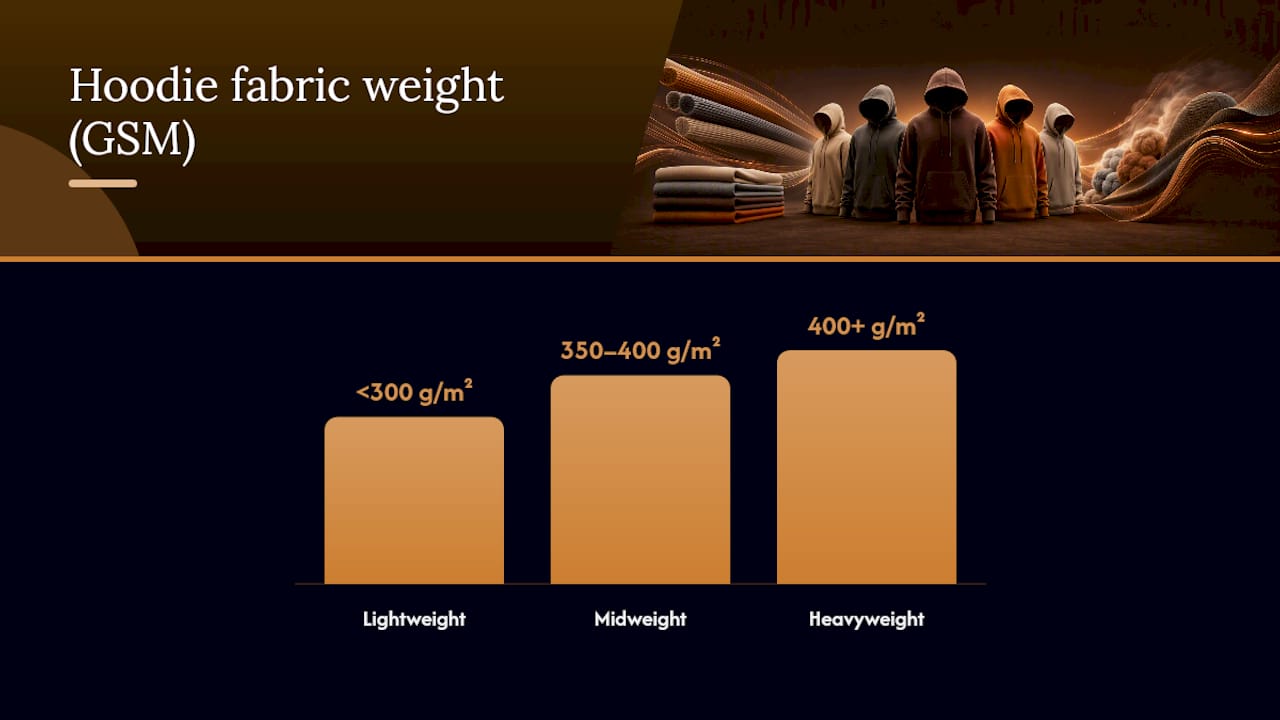
Fabric weight, measured in grams per square meter (g/m²) or ounces per square yard (oz/sq yd), is the single most reliable number on a product page. Midweight hoodies typically fall in the 280–350 g/m² range. Anything at or above 400 g/m² qualifies as heavyweight, and that density is what gives a hoodie its structure, thermal performance, and resistance to sagging.
Statistic: GQ editors identify heavyweight constructions around 12 oz / approximately 400 g/m², dense fleece, and details like flatlock stitching and industrial ribbing as core features of the best hoodies.
Fiber type matters just as much as weight. Ringspun cotton is spun tightly for a smoother, stronger yarn. Combed cotton removes short fibers before spinning, reducing pilling. Long-staple cotton (Egyptian, Pima) produces the softest, most durable threads. French terry is a loopback knit that’s lighter than fleece and breathes better in mild weather. Brushed fleece adds a soft interior nap for warmth. Loopwheel knitting, a slower, tension-controlled process, creates denser fabric with fewer seam failures and is a genuine craft signal when you see it listed.
Construction details to verify
On any product page worth your money, you should be able to find:
- Flatlock or taped seams: Flatlock stitching lies flat against the skin, reducing chafing and adding seam strength. Taped shoulders prevent stretching at the most-stressed joint.
- Reinforced stress points: Pocket corners, armhole seams, and kangaroo pocket edges should be bar-tacked or double-stitched.
- Industrial ribbing: Cuffs and hem ribbing made from a cotton/spandex blend retain elasticity through repeated wear. Cheap ribbing goes slack within months.
- Quality zippers and hardware: On zip hoodies, YKK or equivalent metal-tipped zippers resist snagging and corrosion.
Supply-chain transparency is a quiet but reliable signal. Brands that list their manufacturing location, fabric mill, or stitch specifications on product pages tend to back those claims with actual quality control. Vague language like “premium materials” with no specs is a red flag.
Pro Tip: If a brand publishes its GSM, yarn type, and stitch details on the product page, that transparency alone is a strong indicator of quality. Brands that hide these specs often have something to hide.
How do you choose the right premium hoodie?
A buying checklist cuts through marketing language fast. Run through these steps before adding anything to cart.
- Confirm the GSM. Find the fabric weight listed on the product page. If it’s not there, ask. A brand confident in its materials will answer. Anything below 300 g/m² is lightweight; 350–400 g/m² is midweight; 400 g/m² and above is heavyweight.
- Check fiber content. Look for ringspun or combed cotton, ideally 100% cotton or a cotton/polyester blend no heavier than 80/20 cotton-forward. Avoid vague “cotton blend” labels with no percentages.
- Identify the stitch type. Flatlock is premium. Overlock is standard. Neither is disqualifying on its own, but flatlock at stress points signals a brand that sweated the details.
- Inspect ribbing composition. Cuff and hem ribbing should list a cotton/spandex or cotton/elastane percentage. Pure cotton ribbing loses its snap quickly.
- Read the return and warranty policy. A one-line “no returns on sale items” policy from a brand charging $200 is a warning sign. Brands that stand behind their construction offer at least 30-day returns and often longer.
- Size for shrinkage. Heavyweight cotton hoodies typically shrink 3–5% in the first wash. Size up one if you prefer a relaxed fit or plan to wash in warm water. Oversized silhouettes give you more room to absorb that shift.
- Match the silhouette to the use case. Slim fits work for layering under outerwear. Classic fits are the daily-wear default. Oversized cuts make a statement and allow for heavier fabrics without feeling restrictive.
Red flags to walk away from: missing GSM or yarn specs, no stress-point photography, a single-line return policy, and fabric claims like “ultra-soft premium cotton” with zero technical detail. These are not quality signals. They are marketing filler.
Stridewise confirms that a brand’s transparency about fabric weight, yarn type, and stitch details is a reliable proxy for product quality when independent lab tests aren’t available.
Why manufacturing choices determine how long your hoodie lasts
The fabric weight benchmark of approximately 12 oz / 400 g/m² isn’t arbitrary. At that density, the knit structure resists deformation under tension, holds heat without relying on a thick lining, and recovers its shape after laundering. Below that threshold, repeated washing gradually loosens the knit, and the hoodie loses its body within a season of heavy use.
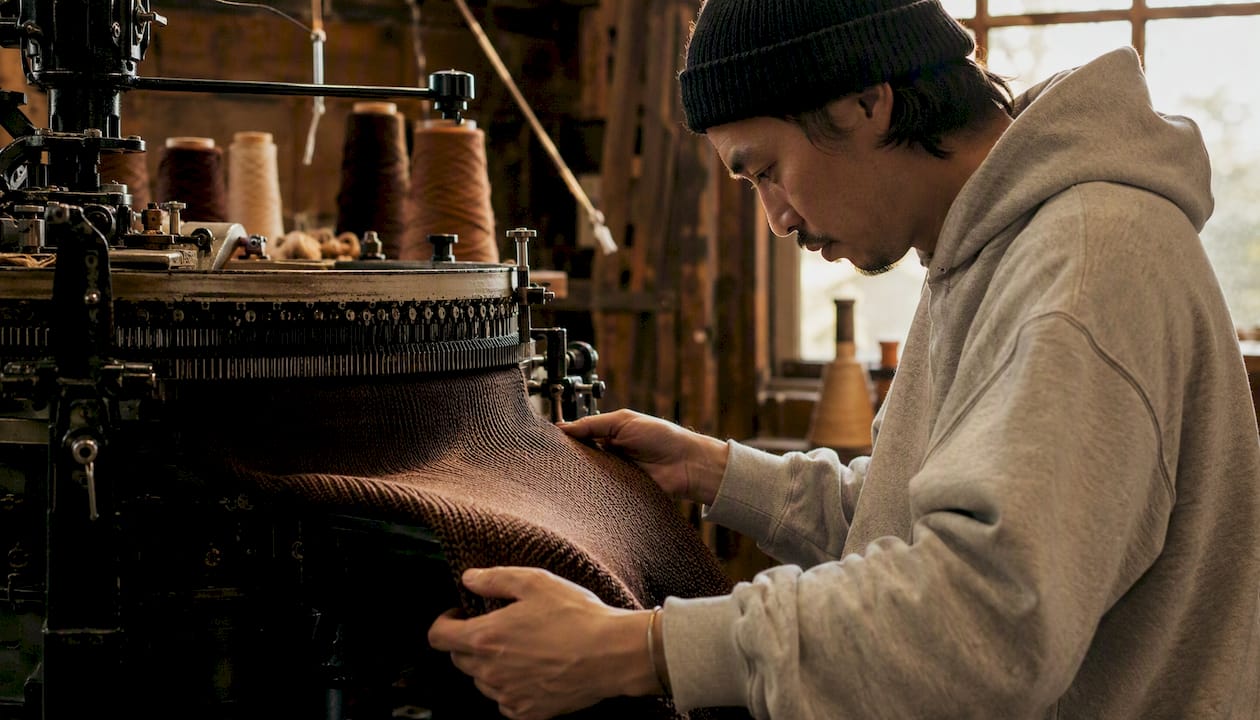
Loopwheel knitting is worth understanding. Traditional circular knitting machines run fast and under tension, which can stress the yarn and create uneven density. Loopwheel machines run slowly, allowing the yarn to relax into a denser, more uniform structure. The result is fabric that feels heavier than its GSM suggests and holds its shape longer. It’s not common at mass-market price points, but when a brand lists it, it’s a genuine differentiator.
Stitching types and what they mean for lifespan
| Stitch Type | Description | Durability Impact |
|---|---|---|
| Flatlock | Seam lies flat; two fabric edges meet without overlap | High: reduces chafing, stronger seam bond |
| Overlock (serger) | Wraps thread around fabric edge | Standard: adequate for low-stress seams |
| Double-needle | Two parallel rows of stitching | Good: adds strength at hems and cuffs |
| Bar tack | Short, dense stitch cluster at stress points | High: prevents tear-out at pocket corners and armholes |
Taped shoulders are a construction detail that separates serious brands from the rest. A strip of woven tape sewn inside the shoulder seam prevents that seam from stretching under the weight of the garment. Without it, a heavy hoodie gradually pulls the shoulder seam forward, distorting the fit permanently.
Small-run domestic manufacturing, whether U.S., Canadian, or European, correlates with tighter quality control. Factories producing lower volumes can inspect each garment more carefully, and the shorter supply chain reduces the number of handoffs where standards slip. Stridewise’s field reporting documents this pattern consistently: brands that disclose their manufacturing location and machine types tend to produce more consistent stitching and sturdier trims. For readers who want to go deep on extreme heavyweight construction, the 500 GSM hoodie options covered by Jeeyodee offer a useful technical comparison at the upper end of the weight spectrum.
Why Mrhappinessofficial fits the premium buyer
Mrhappinessofficial was built on a single premise: you don’t need a logo to feel important. The brand produces heavyweight streetwear, including hoodies, joggers, and coordinated sets, designed for daily wear and built to carry that weight literally and figuratively.
Two hoodie models anchor the lineup:
- The “Be Unforgettable” Hoodie: The brand’s signature pullover. Built for buyers who want a statement piece with real structure. The oversized silhouette suits layered winter styling and makes a clean visual impact without relying on loud graphics. Best for: daily heavy-wear, cold-weather layering, and shoppers who want their hoodie to say something without shouting.
- The Signature Zip Hoodie: Versatile and precise. The zip construction allows temperature regulation, making it the stronger choice for transitional weather and gym-to-street use. Best for: buyers who want one hoodie that moves between contexts without looking out of place.
To verify specs before purchasing, go directly to each product page. Look for fabric weight, fiber content, and construction notes. If a detail isn’t listed and you want it confirmed, contact the brand directly before ordering.
Mrhappinessofficial ships within the U.S. and offers a clear returns process. Check the current policy on the product page before finalizing your order, as terms can update seasonally.
Buyer match at a glance:
- Durability-first buyer: “Be Unforgettable” Hoodie, heavyweight cotton, oversized fit
- Versatility-first buyer: Signature Zip Hoodie, structured fit, zip-front for layering
- Full-set buyer: pair either hoodie with the “Mind Over Noise” Joggers for a coordinated heavyweight set
What should you expect to pay for a premium hoodie?
Price bands in the U.S. market break down clearly once you know what each tier actually delivers.
- Premium everyday ($100–$250). This is where functional durability lives. At this price, you should expect verified GSM specs, ringspun or combed cotton, reinforced stitching, and a return policy that reflects brand confidence. GQ’s roundup places the entry point for genuinely durable hoodies in the mid-$100s. Mrhappinessofficial sits in this band.
- Upper-premium ($250–$500). Brands at this level often add manufacturing provenance (domestic small-run production), specialty fabrics (loopwheel knit, long-staple cotton), and more refined finishing. The price premium is partly functional, partly brand positioning.
- Luxury (above $500). GOAT’s editorial on luxury designer hoodies makes the distinction clearly: at this tier, brands prioritize premium materials and statement design, positioning these pieces as lifestyle goods rather than everyday functional staples. A $600 designer hoodie may use exceptional fabric, but its price reflects limited-run prestige and brand equity as much as construction quality.
The practical question is whether you’re buying a wardrobe core or a trend piece. A wardrobe core should be bought at the premium everyday tier, where construction quality is verifiable and the price is defensible over three or more years of wear. A trend piece, something you’ll wear for one season, doesn’t need to be a $400 investment. Warranties and repair policies factor into this math: a brand that offers a repair service or a multi-year guarantee is effectively reducing the cost-per-wear of its product.
How to care for a premium hoodie so it lasts
The best construction in the world degrades faster than it should with the wrong wash routine. These rules apply specifically to heavyweight cotton hoodies.
- Wash cold, always. Hot water accelerates shrinkage and breaks down elastic fibers in ribbing. Cold water preserves both.
- Turn inside out before washing. This protects the outer face of the fabric from abrasion against other garments and reduces surface pilling.
- Skip the fabric softener. Softeners coat cotton fibers and reduce their natural breathability and moisture-wicking capacity over time. For heavyweight cotton, it’s unnecessary.
- Air dry when possible. High dryer heat is the fastest way to shrink a heavyweight hoodie and stress the seams. Lay flat or hang on a wide hanger to preserve shoulder shape.
- Treat pilling early. A fabric shaver removes surface pills without damaging the underlying knit. Letting pills accumulate and then pulling them off by hand damages the fabric structure.
- Reinforce seams before they fail. If a stress-point seam starts to show thread wear, a tailor can reinforce it for a few dollars. Catching it early costs far less than replacing the garment.
- Replace drawcords cleanly. A frayed drawcord is a simple fix. Thread a new cord through the channel with a safety pin. Use a cord that matches the original diameter so the toggle hardware still fits.
- Store off-season folded, not hung. Heavy hoodies stretch at the shoulders when hung for months. Fold and store flat in a breathable cotton bag to preserve structure.
Midweight and heavyweight hoodies made from ringspun or long-staple cotton resist pilling and retain shape after frequent laundering, particularly when the cuffs and hem use industrial ribbing with a spandex component to maintain elasticity.
The case for buying heavy and buying once
Most buyers underestimate how much the GSM number matters until they’ve owned a heavyweight hoodie for two years and watched a lighter one fall apart in the same period. The conventional wisdom in streetwear is that brand name carries the quality signal. It doesn’t. Construction does.
A $180 hoodie with verified 400 g/m² fabric, flatlock stitching, and taped shoulders will outlast a $300 piece built on 280 g/m² fleece with overlock seams and no reinforcement at stress points. The specs are the story. The logo is decoration.
What Mrhappinessofficial gets right is the premise: identity doesn’t come from a price tag. It comes from wearing something built to last and built to mean something. That’s a harder thing to manufacture than a heavy fabric, and it’s why the brand’s positioning holds up beyond the product specs.
Mrhappinessofficial: built for buyers who want the real thing

Mrhappinessofficial is the direct answer for shoppers who’ve read the specs, know what heavyweight construction looks like, and want a hoodie that carries both. The “Be Unforgettable” Hoodie and the Signature Zip Hoodie are built for daily wear, not display cases. Heavyweight cotton. Clean silhouettes. No logo dependency.
The brand ships within the U.S. with a straightforward returns process. Browse the full collection at the Mrhappinessofficial shop, confirm the specs on the product page, and place your order. Simple. Clean. Remembered.
Sources
- 19 Best Hoodies for Men 2026, According to GQ
- My 3 Best Hoodies: Best Value, Most Durable, and Made In America | Stridewise
- Best Hoodies From Streetwear and Luxury Brands | GOAT