
French Terry Fabric Explained: Structure, Uses & Sewing Tips
French Terry is a knitted “sommersweat” with a smooth outer face and a looped interior — lighter and more flexible than classic brushed sweatshirt fabric, and one of the most versatile materials in casual and streetwear construction. According to Stofftime, it sits between single jersey and brushed sweat in weight, hand, and warmth.
Three things to know right away:
- Structure: Smooth, jersey-like face on the outside; soft, uncut loops on the inside.
- Feel: Midweight, breathable, and soft — not as warm as fleece-lined sweat, not as thin as jersey.
- Main uses: Hoodies, sweatshirts, joggers, casual dresses, and transitional-season layering pieces.
Key Takeaways
French Terry is a midweight loopback knit with a smooth face and uncut interior loops, making it the most practical fabric choice between lightweight jersey and heavy brushed sweat.
| Point | Details |
|---|---|
| Fabric structure | Smooth outer face, soft uncut loops on the inside — produced as an RL knit with a secondary lining yarn. |
| Weight and composition | Ranges in weight; available in 100% cotton, cotton-polyester, or cotton + elastane blends. |
| Main uses | Hoodies, joggers, sweatshirts, casual dresses, and transitional-season layering pieces. |
| Care essentials | Wash at 30–40°C inside out; air-dry or tumble-dry low; pre-wash fabric before sewing to account for shrinkage. |
| Mrhappinessofficial | The brand’s hoodies and joggers are built on the same midweight, clean-face construction principles French Terry is known for. |
Table of Contents
- How is French Terry knitted, and where do the loops come from?
- What fibers and weight classes does French Terry come in?
- How does French Terry actually feel and perform?
- French Terry vs. jersey, brushed sweat, and terry cloth
- What is French Terry typically used for?
- How should you wash and dry French Terry?
- How do you sew French Terry at home?
- How Mrhappinessofficial uses French Terry-style fabrics in streetwear
- When French Terry is the right call, and when it is not
- Mrhappinessofficial hoodies and joggers built for everyday wear
- Sources
How is French Terry knitted, and where do the loops come from?
The loops are not decorative. They are structural. French Terry is produced as an RL knit (right/left knit), where a slightly thicker secondary yarn — called a Futtergarn in German textile production — is fed alongside the main yarn during the knitting process. That extra yarn forms the characteristic loops on the reverse side. The face stays smooth because only the main yarn is visible on the outside. CorpoTex’s textile lexicon describes this as giving the fabric extra volume without the need for brushing.
What to look for when inspecting a swatch: Run your finger across the face — it should feel smooth and slightly stretchy, like a fine jersey. Flip it over and you will see soft, uncut loops sitting flat against the backing. Those loops are what distinguish French Terry from both plain jersey (no loops) and brushed sweat (loops that have been raised and cut into a fleece-like nap).
The looped back is also why the fabric holds its shape well. The extra yarn layer adds body without adding stiffness.
What fibers and weight classes does French Terry come in?
French Terry can be produced from cotton, viscose, polyester, or blends, and is often marketed as “Sommersweat” because it suits both warm and cool-season garments, as House of U explains. Common compositions include pure cotton for a natural feel, cotton-polyester blends for added durability and shape retention, and blends with a small proportion of elastane to add stretch recovery.
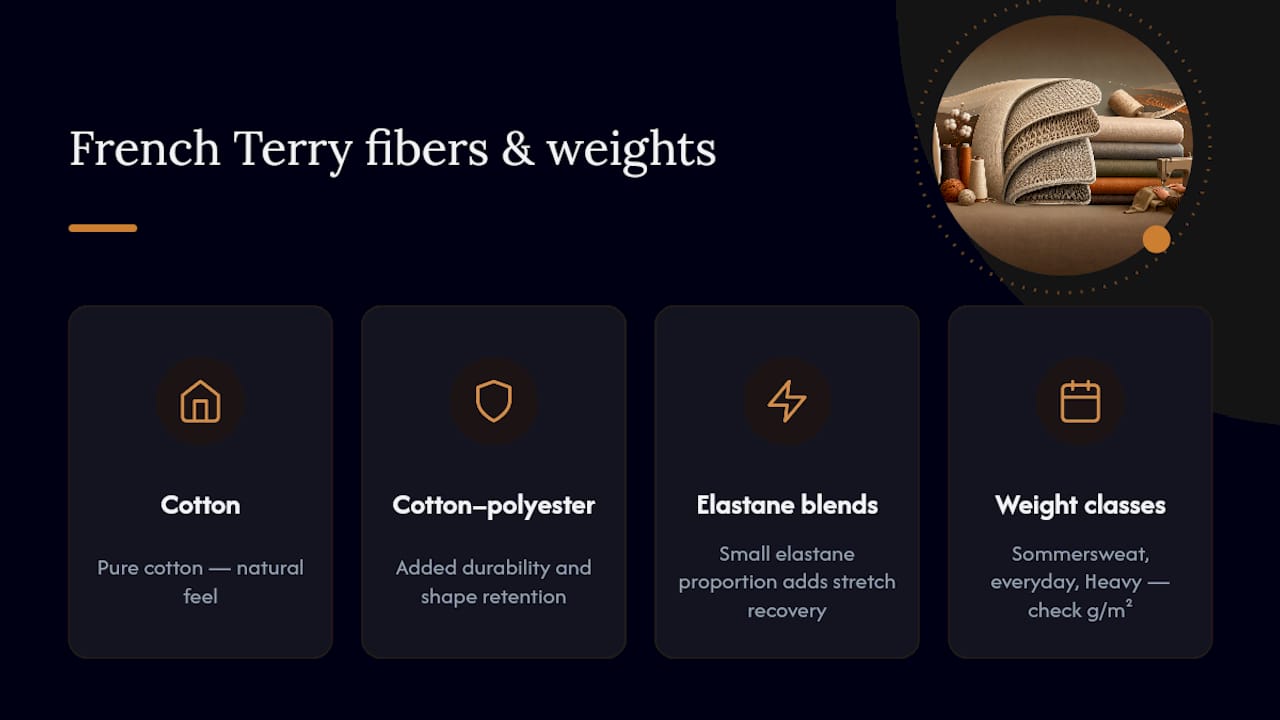
Weight classes matter when you are shopping or ordering fabric by the meter. French Terry is commonly available in a range of weights suitable for summer pieces, everyday sweatshirts, and more structured outerwear, each often labeled accordingly (e.g., “Sommersweat” or “Heavy French Terry”).
When scanning product listings, look for the g/m² value alongside the fiber content.
How does French Terry actually feel and perform?
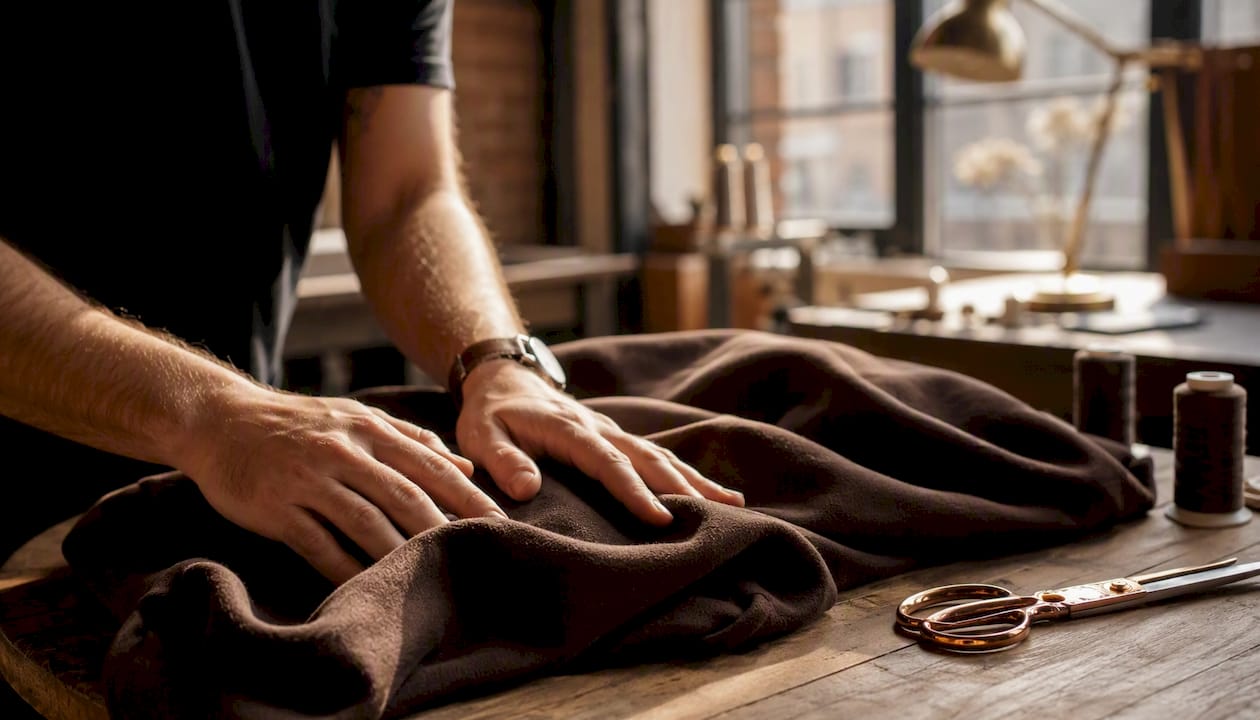
Soft from the first wear. The smooth face sits comfortably against skin or a base layer, while the looped back traps a thin layer of air that provides light insulation. It is not a winter fabric on its own, but it handles a cool evening or an air-conditioned room without issue.
A few practical properties worth knowing:
French Terry breathes better than brushed sweat because the loops are open rather than raised into a dense nap. Moisture can move through the structure, which makes it a reasonable choice for athletic warmup tops or post-workout layers.

Drape is relaxed but not limp. A 240 g/m² French Terry hoodie falls cleanly off the shoulder without clinging. Lighter versions (around 190 g/m²) drape more softly and work well for casual dresses or oversized silhouettes. One limitation worth noting: lower-quality fiber blends can pill at friction points (collar, cuffs, underarms) after heavy washing. Choosing a tightly knit, higher-gauge fabric reduces that risk.
French Terry vs. jersey, brushed sweat, and terry cloth
| Feature | French Terry | Single Jersey | Brushed Sweat | Terry Cloth (Frottee) |
|---|---|---|---|---|
| Face appearance | Smooth, jersey-like | Smooth, fine | Smooth | Looped or cut pile |
| Back appearance | Soft, uncut loops | Flat, no loops | Raised, brushed nap | Looped or cut pile |
| Weight feel | Midweight | Lightweight | Medium-heavy | Heavy |
| Insulation | Moderate | Low | High | High |
| Best uses | Hoodies, joggers, layering | T-shirts, base layers | Winter sweatshirts, fleece | Towels, bathrobes, spa wear |
Quick guidance on when to choose each:
- French Terry for transitional-season pieces, casual streetwear, and sew-friendly projects where you want body without bulk.
- Single jersey for lightweight tees, base layers, and anything that needs to drape close to the body.
- Brushed sweat when warmth is the priority — cold-weather hoodies, heavy pullovers, winter joggers.
- Terry cloth (Frottee) for absorbent applications: towels, robes, sports accessories. Note that terry cloth and French Terry share a name root but are structurally different fabrics used for entirely different purposes.
What is French Terry typically used for?
The fabric’s midweight body and clean face make it a natural fit for a wide range of garments. Common uses include:
- Pullover and zip hoodies
- Joggers and sweatpants
- Casual sweatshirts and crew-neck tops
- Lightweight casual dresses and skirts
- Kidswear (comfortable, durable, easy to wash)
- Transitional outer layers and light jackets
- Streetwear sets (matching hoodie and jogger combinations)
One less obvious application: reversing the fabric so the looped side faces out increases surface absorbency, which is useful for sports towels, gym accessories, or promotional textiles. On the design side, the smooth face takes screen printing and heat-transfer graphics cleanly, which is why it appears frequently in branded streetwear. The Reminder Oversized Tee from Mrhappinessofficial is a good example of how a smooth-face knit surface holds print detail without distortion.
How should you wash and dry French Terry?
Care is straightforward, but a few habits protect the fabric long-term.
- Wash at 30–40°C on a gentle cycle; higher temperatures accelerate shrinkage, especially in 100% cotton versions.
- Turn garments inside out before washing to protect the face and any printed graphics.
- Use a mild detergent; avoid fabric softeners on elastane blends, as they degrade the elastic fibers over time.
- Air-dry flat or on a hanger to preserve shape; if you use a tumble dryer, choose a low-heat setting and remove the garment slightly damp.
- Reshape the garment while wet, particularly around cuffs and hems, to prevent distortion as it dries.
For pilling: it usually appears at friction points after repeated washing. A fabric shaver removes surface pills quickly and restores the original look. Loss of loft in the loops is typically caused by high-heat drying; switching to air-drying usually prevents it from recurring.
Pro Tip: *Pre-wash your French Terry fabric before cutting and sewing.
How do you sew French Terry at home?
French Terry is one of the more beginner-friendly knit fabrics because it has less edge roll and more body than lightweight jersey. According to Sewsimple, the recommended setup is a jersey or stretch needle, a stitch length of 2.5–3.5 mm, and an overlock or serger finish to control loop fraying on the cut edges.
- Choose the right needle. Use a jersey or stretch needle (size 75/11 or 90/14 depending on fabric weight). A ballpoint tip pushes knit loops aside rather than piercing and breaking them.
- Set your stitch. A narrow zigzag (1.5–2.0 mm wide, 2.5–3.0 mm long) or a stretch stitch on a standard machine works well. A serger/overlocker handles both seaming and edge finishing in one pass.
- Cut carefully. Use sharp rotary cutters or fabric scissors. Lay the fabric flat without stretching it; French Terry’s weight means it stays put better than jersey.
- Stabilize key seams. Shoulder seams and necklines benefit from a strip of clear elastic or stay tape to prevent stretching out during wear.
- Finish the edges. An overlock stitch on the looped back prevents the loops from fraying or catching. If you do not have a serger, a three-step zigzag on a standard machine is a solid alternative.
- Press carefully. Use a pressing cloth and medium heat; direct high heat can flatten the loops permanently.
Pro Tip: When embroidering or printing on French Terry, use a cutaway stabilizer on the back rather than a tearaway. The looped structure needs firm backing to prevent the design from sinking into the fabric during stitching.
How Mrhappinessofficial uses French Terry-style fabrics in streetwear
French Terry’s combination of smooth face, midweight body, and clean drape makes it a natural fit for premium streetwear construction. Hoodies and joggers benefit from the fabric’s structure: enough body to hold a clean silhouette, enough softness for all-day wear, and a surface that takes branding and print detail without distortion.
Mrhappinessofficial builds its core collection around exactly these product types:
- Signature Zip Hoodie — structured, clean-faced, suited to French Terry-weight construction.
- “Be Unforgettable” Hoodie — pullover silhouette where midweight fabric holds the oversized shape.
- “Mind Over Noise” Joggers — relaxed-fit bottoms where loopback-style fabric delivers comfort without bulk.
The brand’s focus on heavyweight cotton and clean construction aligns directly with what French Terry does best: quality you can feel, a silhouette that holds, and a surface that stays sharp wash after wash.
When French Terry is the right call, and when it is not
French Terry is the strongest choice for transitional-season layering, casual streetwear, and beginner sewing projects. It handles well, looks clean, and performs across a wide temperature range. For anyone building a capsule wardrobe or a first knit-sewing project, it is the most forgiving midweight option available.
That said, it is not always the answer. For heavy winter wear where warmth is the primary requirement, brushed sweat or a fleece-lined fabric delivers more insulation. For lightweight tees and base layers, single jersey moves better against the skin and drapes more fluidly. French Terry sits in the middle, and that middle is exactly where most everyday streetwear lives.
One note on sustainability: when possible, look for French Terry certified by OEKO-TEX, which indicates the finished textile has been tested for harmful substances. Recycled-content blends (recycled polyester + organic cotton) are increasingly available and carry a lower production footprint without sacrificing hand or performance.
Mrhappinessofficial hoodies and joggers built for everyday wear
The qualities that make French Terry worth understanding are the same ones Mrhappinessofficial builds into its core pieces. Smooth face. Clean silhouette. Fabric with enough weight to hold its shape and enough softness to wear all day.

The Signature Zip Hoodie and “Mind Over Noise” Joggers are the clearest examples: premium construction, heavyweight cotton, and a fit that does not need a label to announce itself. The full collection is at Mrhappinessofficial. Browse it, pick what fits your identity, and wear the reminder.
Sources
A short list of authoritative references used in this article, each worth bookmarking if you want to go deeper:
- French Terry Stoff – Eigenschaften, Verarbeitung & Pflege
- French Terry erklärt im Textil Lexikon | CorpoTex
- Mit French Terry nähen: Materialkunde & Anleitung
- Was ist French Terry? Sommersweat oder Futterstoff | House of U
- OEKO-TEX