
Embrace Bold Self-Expression Confidently in 2026
Bold self-expression is defined as the authentic presentation of your unique identity through style, communication, and daily choices. When you embrace bold self-expression confidently, you stop performing for others and start living in alignment with who you actually are. Research confirms that authentic expression improves life satisfaction and reduces anxiety by removing the constant friction of maintaining a false persona. Confidence, in this context, is not a fixed trait you either have or lack. It is a practice built through small, deliberate acts repeated over time. Fashion, mindset, and communication all feed into it.
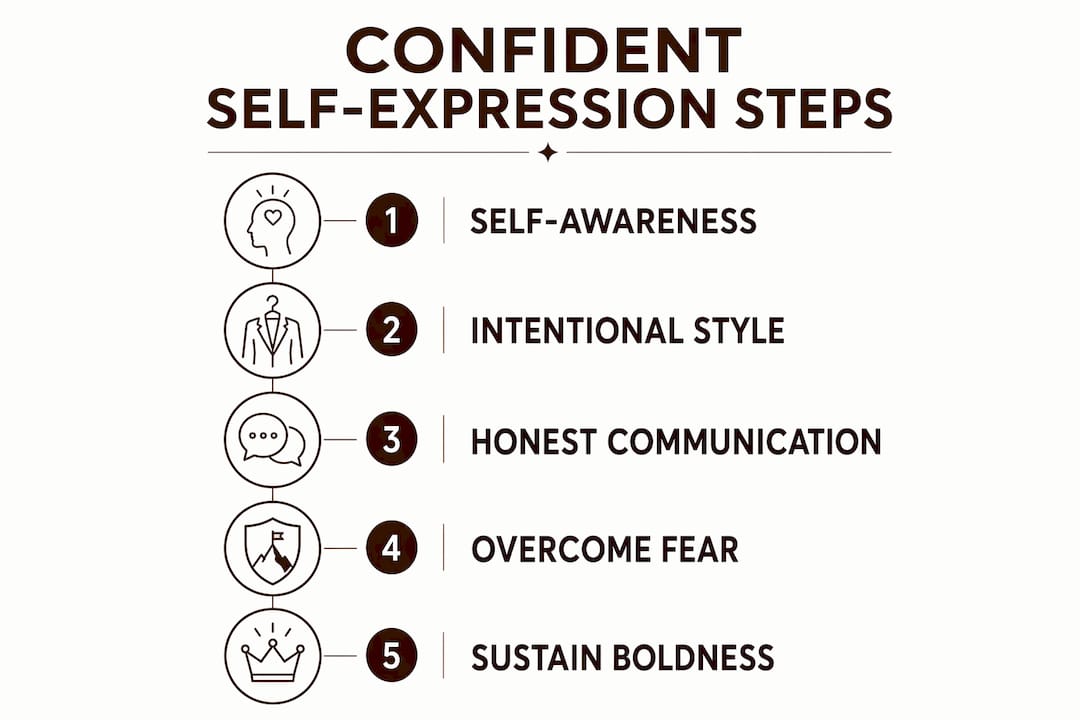
How to embrace bold self-expression confidently through self-awareness
Self-awareness is the foundation of authentic, confident expression. You cannot express who you are if you do not know who you are. Most people skip this step and go straight to the outfit or the statement, which is why their expression feels hollow or borrowed.
Emotional clarity comes before visible boldness. Journaling is one of the most direct tools for building that clarity. Writing without editing forces you to confront what you actually value, what you actually feel, and what you have been suppressing to fit in. Mindful check-ins, even brief ones, help you notice the gap between how you present yourself and how you actually feel inside.
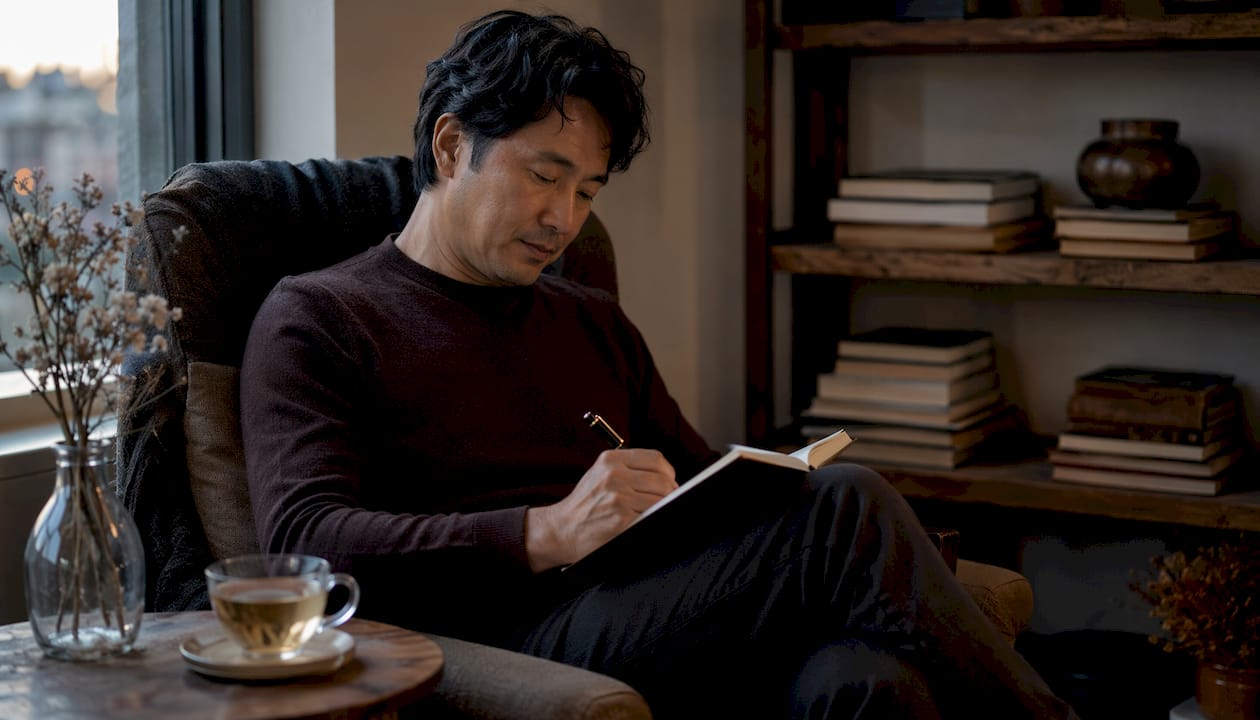
Authenticity is different from impulsive expression. Posting a provocative opinion because you are angry is not bold self-expression. It is reaction. True authentic self-identity comes from a grounded, consistent alignment between your inner values and your outer behavior. That alignment takes time to develop.
Start in private. Low-stakes practices build comfort before you take expression public:
- Write one honest sentence about how you feel each morning
- Wear something that reflects your mood at home before wearing it outside
- Practice saying your actual opinion in low-pressure conversations
- Notice which environments make you shrink and which ones let you expand
Pro Tip: Set a two-minute timer each evening and write one thing you expressed honestly that day. This single habit builds a confidence feedback loop faster than any external validation.
How do you use bold style to reflect your unique identity?
Fashion is the most visible form of self-expression, and it is also the most misunderstood. Most people think bold style means loud, expensive, or trend-driven. It does not. Maximalist style is about intentional curation around one standout piece, not following every trend or spending more money.
The standout item methodology works like this: choose one anchor piece that genuinely reflects your personality, then build the rest of the outfit around it. A textured coat, a graphic tee with a message you believe in, or a pair of statement pants can carry an entire look. The rest stays clean and simple. This approach creates a distinctive personal uniform rather than a costume.
Bold personal style does not require a full wardrobe overhaul. Small, specific choices signal identity more powerfully than an entire new wardrobe:
- One bold color worn consistently becomes your signature
- A single accessory, like a cap or an oversized piece, anchors your look
- Texture and silhouette communicate personality without a single word
- Wearing pieces with meaning, not just aesthetics, adds depth to your style
Pro Tip: Before buying anything new, ask: “Does this reflect who I am, or who I think I should be?” That one question eliminates most impulse purchases and keeps your wardrobe honest.
Adapting bold style to different contexts does not mean abandoning it. A workplace does not require you to disappear. It requires you to be intentional. A statement oversized tee worn with clean trousers reads as confident, not careless. The key is wearing the piece with conviction.
| Context | Bold style approach | What to anchor on |
|---|---|---|
| Everyday casual | Full expression, personal uniform | Graphic tee, bold color, statement cap |
| Workplace | Toned down but present | One standout piece, clean silhouette |
| Social events | Maximalist anchor piece | Textured coat, signature hoodie |
| Creative spaces | Full creative range | Layering, color, mixed textures |
How does intentional communication build confidence in self-expression?
Style is visible. But confidence in creativity and expression also lives in how you speak, what you say, and how honestly you show up in conversation. Communication is where most people hold back the most.
“I” statements are the most direct tool for honest communication. Saying “I feel overlooked when my ideas are dismissed” is more powerful and more authentic than “You never listen.” It keeps you in your own experience without attacking others. This technique, drawn from conscious communication practice, reduces defensiveness and opens real dialogue.
Vulnerability is not weakness. Brené Brown’s research confirms that vulnerability is the clearest path to courage, connection, and meaningful engagement. Sharing an honest opinion, admitting uncertainty, or expressing a feeling you usually hide are all acts of bold self-expression.
Practice small honest acts daily to desensitize the fear of judgment:
- Share one genuine opinion in a low-stakes conversation
- Disagree respectfully once per day instead of defaulting to agreement
- Ask for what you actually want instead of what seems acceptable
- Name a feeling out loud instead of suppressing it
“Visibility is a result of movement. Expression comes first, and confidence follows through being seen. Waiting until you feel ready is the longest route to never starting.”
Fear of expression often shows up physically. Tight chest, shallow breathing, and a racing heart are all somatic responses to the perceived threat of being seen. Grounding breath techniques, such as slow inhales followed by extended exhales, calm the nervous system before a high-stakes moment. Humming activates the vagus nerve and signals safety to the body. These are not soft suggestions. They are physiological tools.
Pro Tip: Before any conversation where you plan to express something real, take three slow breaths and hum quietly for ten seconds. Your body will register safety before your mind catches up.
What are the biggest fears around expressing yourself boldly?
Fear of judgment is the most common barrier to bold self-expression. It is also one of the most misunderstood. Most people treat it as a rational concern, something to think through and reason away. But fear of judgment is a somatic response, not a logical one. The body reacts before the mind decides.
Reframing discomfort changes everything. Discomfort during self-expression is not a warning sign. It is a signal that you are doing something that matters. Courageous living, by definition, involves feeling the discomfort and moving anyway. Confidence develops through courageous participation, not through waiting until the fear disappears.
Choosing the right environment matters, especially early on. Not every room deserves your full expression. Start with people who have already demonstrated that they can hold space for honesty. Build your confidence there before expanding to wider, less predictable audiences.
Practical strategies for moving past common expression fears:
- Name the fear specifically. “I am afraid they will think I am trying too hard” is more manageable than a vague sense of dread
- Set one boundary per week that reflects your actual values, not what others expect
- Separate the outcome from the act. Expression has value regardless of how it is received
- Self-acceptance reduces the need for external approval, replacing the hunger for applause with internal steadiness
Social conformity pressure is real. But the cost of suppressing your identity over time is higher than the discomfort of expressing it. Anxiety, low self-worth, and a persistent sense of invisibility are the long-term results of chronic self-suppression.
How do you sustain bold self-expression over time?
Sustainable bold self-expression is built on micro-habits, not grand gestures. Overhauling your style or personality at once leads to burnout. Small daily acts, like wearing one bold accessory or sharing one honest thought, compound into a new baseline of confidence.
Expression is allowed to evolve. Who you are at 22 is not who you are at 35. Your style, your voice, and your values will shift. That is not inconsistency. That is growth. Authentic self-identity is not a fixed destination. It is a living, breathing practice.
Habits that sustain bold, authentic living:
- Wear one piece each day that you genuinely love, not just what seems safe
- Review your wardrobe seasonally and remove anything that no longer reflects you
- Practice one act of honest communication per day, no matter how small
- Celebrate imperfect expression. A stumbled sentence or an outfit that did not land is still an act of courage
The joy of authentic living is not found in the applause. It is found in the quiet alignment between who you are and how you show up. Creative expression through style increases dopamine and reduces cortisol. That is not a metaphor. It is a measurable shift in how your body feels when you stop hiding.
Key Takeaways
Embracing bold self-expression confidently requires self-awareness, intentional style choices, honest communication, and consistent micro-habits that build courage over time.
| Point | Details |
|---|---|
| Self-awareness comes first | Journaling and mindful check-ins reveal your true values before you express them outwardly. |
| Bold style is intentional, not loud | One standout anchor piece builds a personal uniform more powerfully than a full wardrobe overhaul. |
| Communication is expression too | “I” statements and small honest acts build the same confidence muscle as bold fashion choices. |
| Fear is somatic, not rational | Breathing techniques and grounding practices calm the nervous system before high-stakes expression. |
| Micro-habits sustain confidence | Small daily acts of expression compound into a new baseline of authentic, visible identity. |
What I have learned about living boldly and authentically
By Kofi
The most common mistake I see is treating bold self-expression as a performance. People think they need to be louder, more dramatic, or more visually striking to qualify as bold. That is not what I have found to be true. The most unforgettable people I have encountered are the ones who are simply, completely themselves. No apology. No performance. Just alignment.
What actually holds most people back is not a lack of style or confidence. It is the unexamined belief that their real self is not enough. That belief is the only thing worth challenging. Once you start questioning it, everything else, the outfit, the conversation, the creative risk, becomes much easier to attempt.
Fashion is where I see this play out most visibly. Wearing something that genuinely reflects your identity, even something as simple as a hoodie with a message you believe in, changes how you carry yourself. It is not about the garment. It is about the decision to stop dressing for approval and start dressing for yourself.
The psychological blocks are real, but they are not permanent. Compassion for yourself during the awkward early stages of expression is not optional. It is the whole practice.
— Kofi
Wear your identity. Mrhappinessofficial has the pieces.
Mrhappinessofficial was built for people who are done chasing labels and ready to own their identity. Every piece in the collection is designed to remind you of one thing: you do not need the world’s permission to be unforgettable.
The Signature Zip Hoodie and the “Mind Over Noise” Joggers are built for people who want wearable boldness without the noise. Clean. Premium. Intentional. The full signature collection is available now. Wear the reminder.
FAQ
What does bold self-expression actually mean?
Bold self-expression is the authentic presentation of your unique identity through style, communication, and daily choices. It is not about being loud. It is about alignment between who you are and how you show up.
How do I start expressing myself more confidently?
Start with low-stakes private practices like journaling or wearing one bold piece at home. Confidence builds through small, repeated acts of honest expression, not through waiting until you feel ready.
Can bold style work in a professional setting?
Yes. One standout anchor piece worn with a clean silhouette reads as confident and intentional in most workplaces. Bold style adapts to context without disappearing entirely.
Why does fear of judgment feel so physical?
Fear of judgment is a somatic response, meaning the body reacts before the mind decides. Grounding breath techniques and humming activate the vagus nerve and signal safety, making expression feel less threatening.
How do I keep bold self-expression sustainable over time?
Build micro-habits rather than making sweeping changes at once. One honest act per day, one bold piece per outfit, and one boundary per week compound into a lasting, authentic way of living.